

How Dynamic Pricing Moved From the Skies to the Shelves
For most of retail history, a price tag meant exactly what it said. The loaf of bread cost what the sign indicated, whether you bought it at 9 a.m. or 5 p.m., on a Tuesday or a Sunday. That predictability is quietly eroding.
Dynamic pricing - the practice of adjusting prices in real time based on algorithmic signals - has long been standard in travel. Airlines pioneered yield management in the 1980s, varying fares based on seat availability, booking timing, and route demand. Hotels followed the same logic. If you've ever refreshed a flight search and watched fares jump, you've experienced it firsthand. See also: how airline fares work.
What's changed is the scale of expansion. The same underlying logic - charge more when demand is high, less when it isn't - has migrated into e-commerce, then into physical retail. Major online platforms have used algorithmic pricing for years. Now grocers, big-box retailers, and fast-food chains are testing or expanding the practice, enabled by a new generation of technology that makes real-time price changes operationally feasible even in physical stores.
The Technology Making It Possible
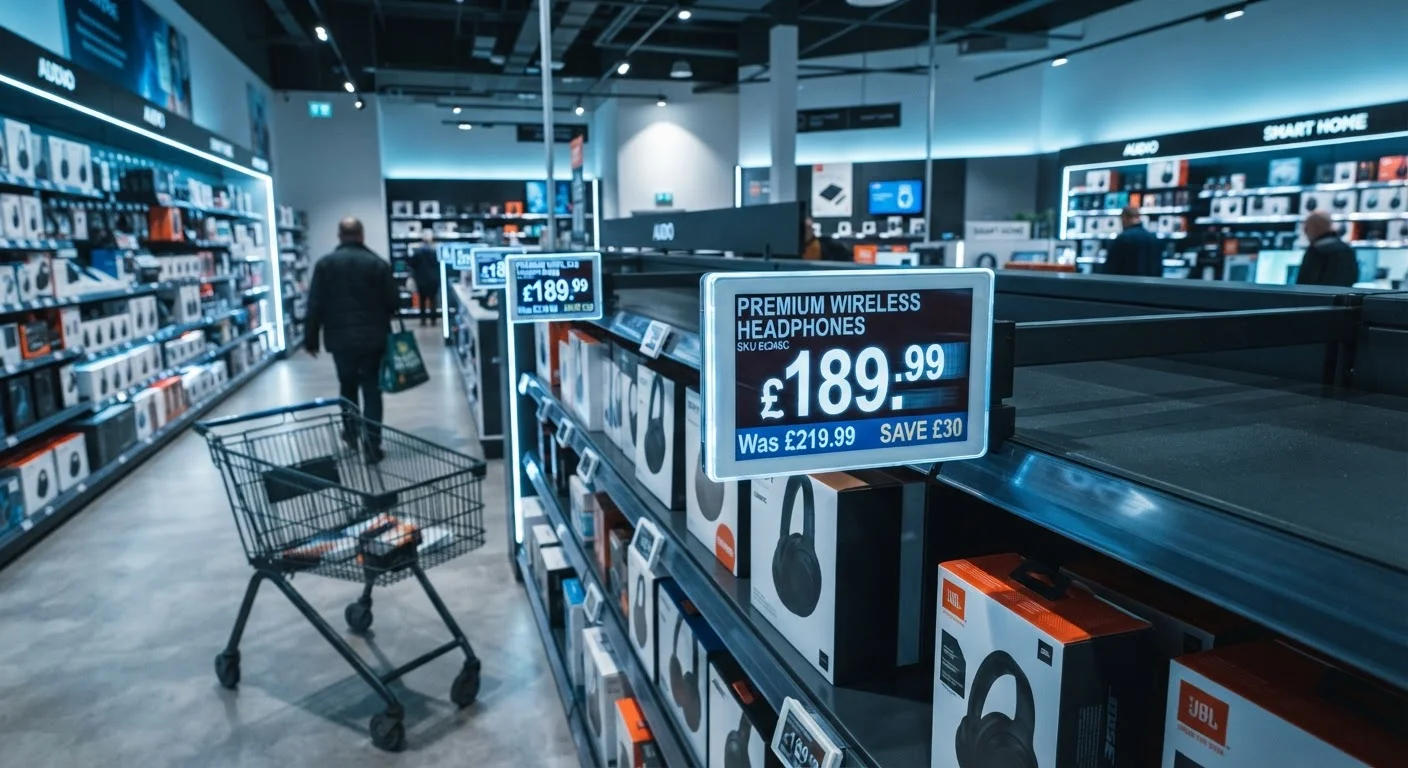
Two developments have accelerated retail adoption of dynamic pricing. The first is sophisticated pricing software that continuously ingests data - competitor prices, local inventory, sales velocity, weather forecasts, even time of day - and adjusts prices automatically. The second is electronic shelf labels (ESLs), small digital displays that replace paper price tags and can be updated centrally within seconds.
ESLs eliminate the labor bottleneck that previously made frequent in-store price changes impractical. A store with tens of thousands of products and paper tags would need staff to physically swap labels for every change. Digital displays remove that friction entirely, bringing the price flexibility of a website to a physical aisle.
~$1B+
Global ESL market size, projected to grow rapidly
Market research firms tracking electronic shelf label adoption estimate the global market has surpassed one billion dollars and is expanding as large retailers accelerate rollouts.
Decades
Years airlines have used yield management pricing
Airline yield management - the precursor to modern retail dynamic pricing - has been in widespread use since the 1980s, establishing the algorithmic pricing model now spreading to other sectors.
Multiple/day
Potential price update frequency for online listings
Research into large e-commerce platforms has found that some product listings can be updated several times within a single day in response to competitor and demand signals.
This convergence of software and hardware is why dynamic pricing is no longer just an online phenomenon. It's part of the broader transformation described in retail's shift toward omnichannel operations, where the line between digital and physical shopping continues to blur.
What Drives a Price Change?
Dynamic pricing algorithms typically respond to several overlapping signals:
- Demand spikes: A product trending on social media or tied to a weather event (umbrellas before a storm, for example) may see prices rise automatically as sales velocity increases.
- Inventory levels: Low stock and high interest often trigger price increases; surplus inventory can trigger markdowns.
- Competitor pricing: Retailers monitor rivals continuously and adjust to stay competitive or protect margins.
- Time of day or week: Some retailers experiment with peak-hour pricing, particularly in food service and delivery.
- Personalization: Some platforms factor in a user's browsing history or location, raising questions about whether different shoppers see meaningfully different prices for identical items.
This complexity means the price you see reflects a calculation, not just a cost-plus markup. Understanding that prices are outputs of algorithms - not fixed decisions - is covered further in why price tags have gotten harder to trust.
What Shoppers Should Understand
Dynamic pricing isn't inherently deceptive, but it does shift the informational balance between retailers and consumers. A few key points are worth keeping in mind.
First, prices you see online or on a digital shelf label are not guaranteed to hold. The figure displayed at 10 a.m. may differ from what you encounter at checkout if you delay a purchase.
Second, the practice interacts with other pricing tactics already in widespread use. Retailers also use psychological pricing techniques - like charm pricing and artificial urgency - that can compound the confusion. Retail pricing psychology is a separate but related layer shaping what consumers perceive as a fair price.
Third, knowing that prices follow demand patterns can inform timing. While dynamic pricing makes things less predictable than seasonal cycles, seasonal price patterns still exist and can help shoppers identify lower-demand windows.
Finally, comparing prices across multiple retailers before purchasing remains one of the most straightforward ways to navigate a market where individual store prices shift constantly. The convenience-versus-savings trade-off becomes especially relevant when one-click purchases may carry a dynamic premium that a short comparison search would have revealed.
Frequently Asked Questions
Yes, dynamic pricing is generally legal in the U.S. Retailers are not required to charge uniform prices, provided they do not violate anti-discrimination laws or engage in deceptive pricing practices. Regulators have begun paying closer attention to surge pricing in consumer goods, but as of now there is no federal law banning the practice outright.
There is no fixed limit. Online retailers can technically change prices multiple times per day, and the technology increasingly allows physical stores to do the same through electronic shelf labels. The frequency depends on the retailer's pricing strategy and software.
Historically, dynamic pricing affected online shoppers most because digital prices are easier to update. However, as physical stores adopt electronic shelf labels, in-store prices can also shift more frequently. The gap between online and in-store pricing experiences is narrowing.
Awareness is the most important step. Knowing when demand spikes tend to occur - holidays, weather events, product launches - can help you time purchases. Comparing prices across retailers and understanding that prices fluctuate gives you a more realistic picture of value.
Grocers face thin profit margins and use dynamic pricing to manage perishable inventory, match competitor prices quickly, and optimize revenue. The rollout of electronic shelf labels makes the technology more accessible for stores that previously relied on printed paper price tags.
The content on this site is provided for informational purposes only and should not be considered a substitute for professional advice. While we strive to provide accurate and up-to-date information, we make no guarantees regarding its completeness or accuracy. Always consult a qualified professional for advice specific to your circumstances before making any decisions.