

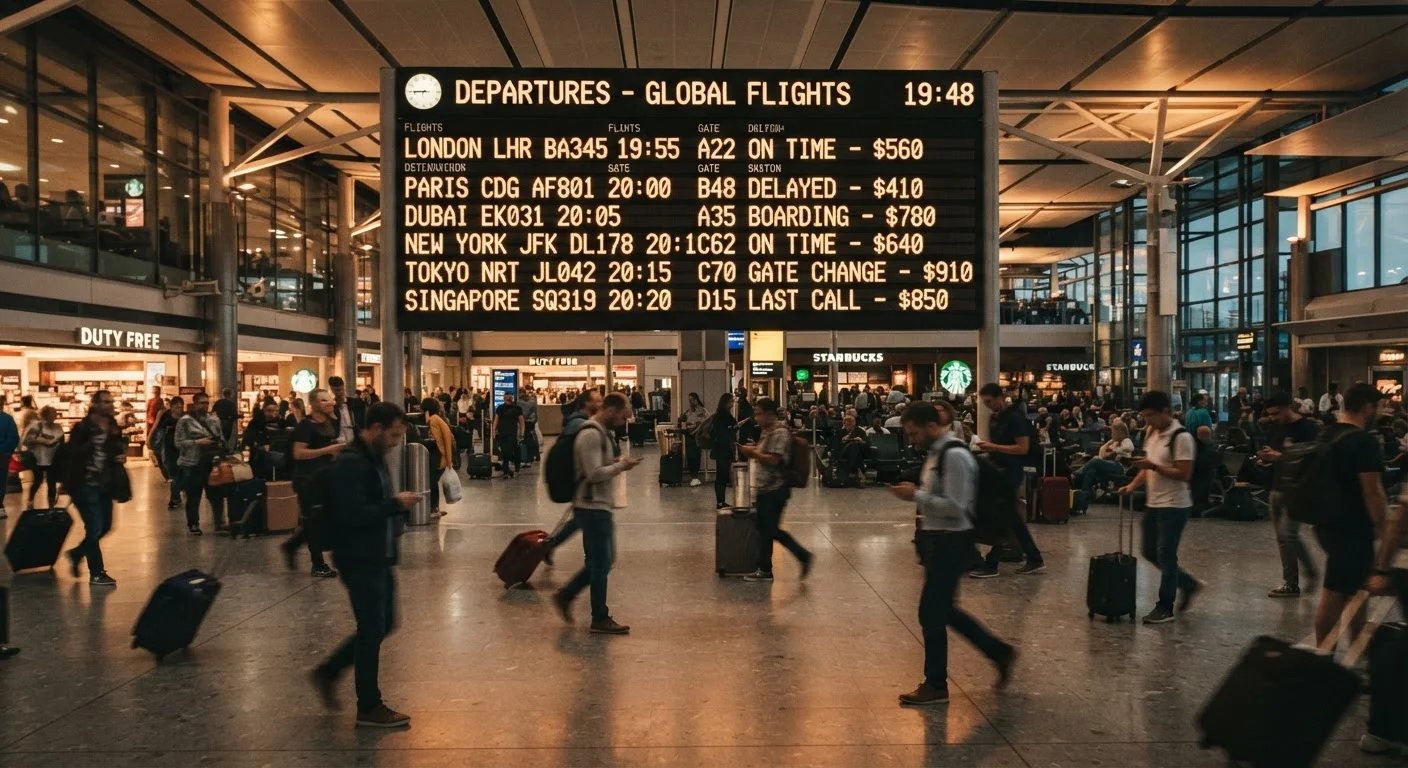
The Mechanics Behind Every Fare You See
When you search for a flight and see a price, you're not seeing a fixed retail number - you're seeing a snapshot of a constantly moving system. Airlines divide the seats on every flight into groups called fare buckets, each priced differently. The cheapest buckets sell first. Once they're gone, the next tier activates at a higher price point. This is why a ticket that cost $180 on Monday might show $260 by Wednesday, even though nothing about the flight itself changed.
This approach is called yield management - a strategy airlines pioneered to maximize revenue on every flight by selling the right seat to the right traveler at the right price. Sophisticated software analyzes historical booking patterns, current demand, competitor pricing, and remaining inventory to make these adjustments automatically, sometimes dozens of times per day.
It's the same underlying philosophy driving price changes across many industries. For context on how this plays out in retail, see our piece on dynamic pricing in retail - the logic is strikingly similar.
Fare Buckets Are Invisible to You
When you search for flights, you see a final price - not which fare bucket it comes from or how many seats remain in that tier. This is intentional. Airlines don't publicly disclose inventory levels per fare class. What you can observe, however, is how the price changes across days, which gives you indirect insight into how quickly inventory is moving on a given route.
The Key Factors That Push Fares Up or Down
Several forces combine to determine what you'll pay on any given search:
- How far out you book. Fares typically start moderate, drop slightly in a sweet-spot window (often one to three months for domestic routes), then climb sharply as departure nears and remaining inventory shrinks.
- Day of travel. Flights departing on Fridays and Sundays - peak days for leisure travelers - tend to carry premium pricing. Mid-week departures on Tuesday, Wednesday, and Saturday are frequently lower-demand and therefore lower-priced.
- Seasonality and events. Holiday travel windows, school breaks, and major local events drive demand sharply upward. Fares on routes to popular beach destinations spike in summer; ski destinations peak in winter.
- Route competition. On routes served by multiple carriers, competition tends to put downward pressure on fares. Thin routes with a single dominant airline often see higher base pricing.
- Fuel costs and operational pressures. While travelers rarely see this line-itemized, underlying operating costs influence the floor below which airlines won't discount.
Understanding these levers means you're less likely to be caught off guard by a sudden price jump. For a fuller picture of what drives the total cost of a trip, hidden travel costs are worth understanding alongside the base fare.
Myths That Cost Travelers Real Money
A few stubborn beliefs about flight pricing lead people to make decisions that work against them:
"Last-minute fares are always cheaper." This was occasionally true in an earlier era when airlines offloaded unsold seats at a discount. Today, yield management fills most popular flights well before departure, and last-minute prices are frequently the highest of the entire booking cycle. Our coverage of cheap travel myths breaks this down in detail.
"Incognito mode gets you lower prices." There is no confirmed evidence that airlines reliably inflate prices based on individual browser history. Prices change because inventory changes - not because the algorithm identified you personally.
"Booking on a specific day of the week saves money." Fare sales sometimes land mid-week, but treating Tuesday as a magic booking day is not a dependable strategy. The booking window and your travel dates matter far more.
Fare literacy also means knowing that the advertised price is rarely the complete price. Airline fees for bags, seat selection, and other add-ons can significantly widen the gap between the number you see and what you actually pay.
Track Fares Before You Book
Rather than booking on a whim after a single search, spend a week or two watching how a specific route's price moves using a fare alert tool. This gives you a real sense of what "normal" looks like for that route, so you'll recognize a genuine dip when one appears - rather than just assuming any price you see is a deal.
How to Use This Knowledge When Booking
You can't control airline algorithms, but you can work with them more intelligently. A few practical principles hold up across most booking situations:
- Set fare alerts. Most flight search tools allow you to track a specific route over time. Watching a fare move over several weeks gives you a real baseline, rather than relying on a single search snapshot.
- Be flexible on travel dates when possible. A one-day shift in departure can sometimes produce meaningfully different fares, particularly around peak travel periods.
- Understand the full price before committing. The base fare is the starting point. Factor in baggage fees, seat selection, and other charges before comparing options. Why prices are harder to trust explores this broader trend across consumer purchases.
- Know your route's competitive landscape. If you're flying a major hub-to-hub corridor, there's likely more pricing competition than on a smaller regional route. Adjust your expectations accordingly.
None of these steps guarantee the lowest possible fare - no system can. But they replace guesswork with a reasoned approach, which is the most useful thing any traveler can bring to the booking process.
Frequently Asked Questions
Airlines update fares continuously using automated yield management systems. As seats in a specific fare "bucket" sell out, the system moves remaining seats into a higher-priced tier. High search volume on a route can also trigger upward price adjustments in some systems.
This is a popular belief, but the data behind it has become less reliable as airline pricing has grown more dynamic. Any fare advantage once associated with a specific booking day tends to be marginal and inconsistent. Focusing on your booking window - how far in advance you buy - is generally more impactful.
Flights on Tuesdays, Wednesdays, and Saturdays often carry lower fares because demand from both leisure and business travelers is lighter on those days. Airlines price accordingly to fill seats they'd otherwise struggle to sell.
This is a widely repeated theory, but there is no verified evidence that repeated searches from the same device reliably inflate prices. Price changes during your session are almost always driven by seat inventory selling out in real time, not by tracking your behavior.
General industry observations suggest domestic fares tend to be more competitive in a window of roughly one to three months before departure, though this varies by route and season. Very early bookings and last-minute bookings are often more expensive on popular routes.
Airlines don't target individual travelers, but their algorithms do respond to aggregate demand signals. If a route is heavily searched or a particular date is filling fast, fares across all bookings on that route will rise - not because of you specifically, but because of collective demand pressure.
The content on this site is provided for informational purposes only and should not be considered a substitute for professional advice. While we strive to provide accurate and up-to-date information, we make no guarantees regarding its completeness or accuracy. Always consult a qualified professional for advice specific to your circumstances before making any decisions.