

Our Verdict
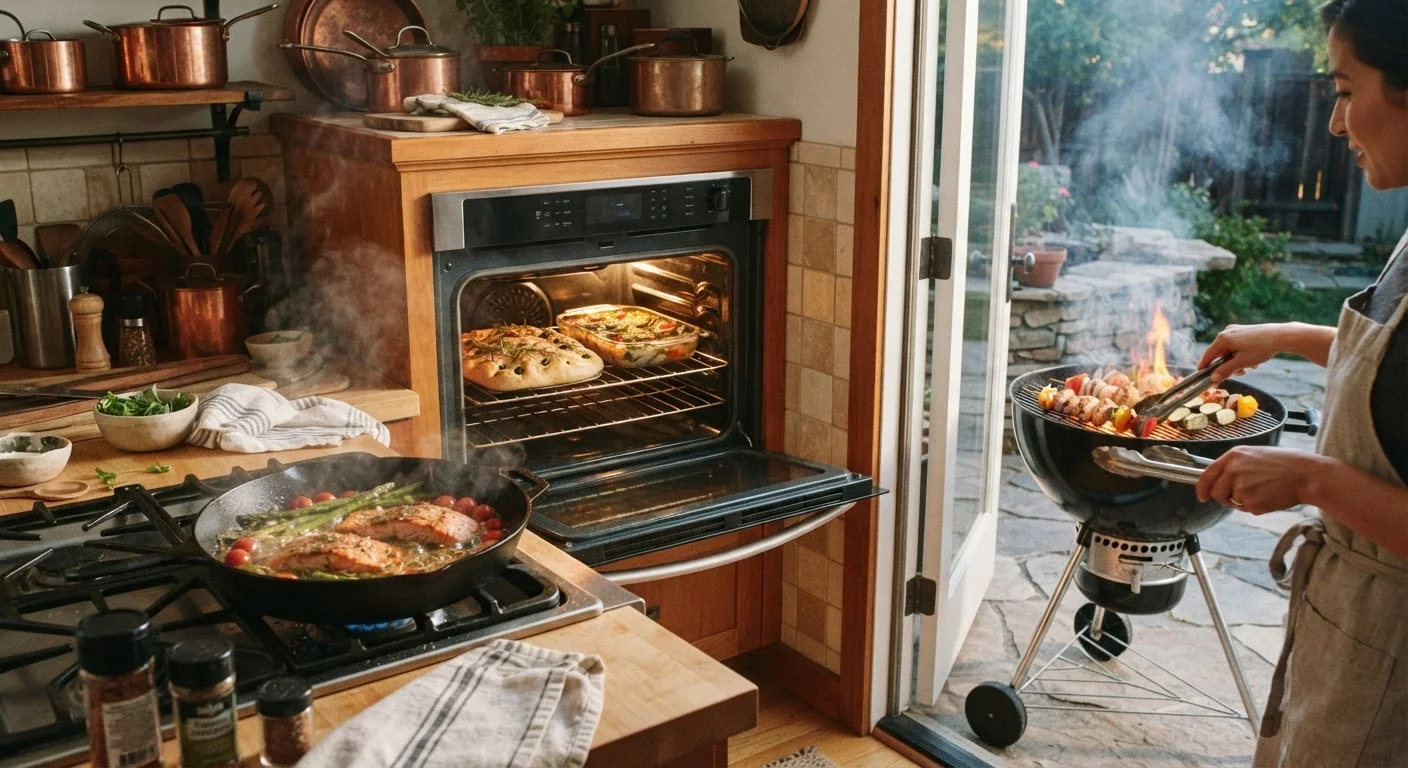
No single cooking method is universally superior. The stovetop offers speed and control, the oven delivers even, hands-off heat, and the grill produces bold, smoky results nothing else matches. Understanding what each method does to food - rather than following habit - is what separates confident cooks from frustrated ones.
| Best for | Recommended |
|---|---|
| Quick weeknight meals requiring precise heat control | Stovetop |
| Roasts, casseroles, and baked goods needing sustained even heat | Oven |
| Proteins and vegetables where smoky char and outdoor flavor matter | Grill |
| Thick cuts needing a crust and fully cooked interior | Stovetop to Oven |
Why the Method Matters as Much as the Ingredient
Choosing the wrong cooking method is one of the most common - and most fixable - sources of kitchen disappointment. A chicken breast cooked correctly on the stovetop is juicy and golden; the same breast cooked the wrong way turns rubbery or pale. The ingredient hasn't changed. The technique has.
Every method transfers heat differently, and food responds to that difference in very specific ways. The stovetop heats through direct contact with a hot pan. The oven surrounds food with hot, circulating air. The grill uses radiant heat from below, plus smoke and flame. Each of these environments does something distinct to texture, moisture, and flavor - which is why the method you choose shapes the result almost as much as the ingredients themselves.
For a broader foundation in how heat and technique interact, see The Cooking Fundamentals That Make Every Recipe Easier to Follow. This article focuses specifically on matching the three most common cooking environments to the foods they suit best.
The Stovetop: Speed, Control, and Direct Heat
The stovetop is your most responsive cooking tool. You can raise or lower heat instantly, watch what's happening in the pan, and adjust mid-cook. That makes it ideal for anything that cooks quickly or needs ongoing attention.
Best for: sautéed vegetables, eggs, pancakes, stir-fries, sauces, pan sauces, pasta (boiling), fish fillets, and searing proteins before finishing elsewhere.
The stovetop's weakness is uneven heat distribution - the center of a pan is often hotter than the edges - and the fact that large, thick items can't cook through without burning the outside. A thick pork chop seared in a hot skillet, for instance, will develop a beautiful crust but may still be raw in the center. That's where combining methods becomes valuable.
Understanding how to calibrate your burner makes a real difference here. Heat Levels Explained: What Low, Medium, and High Really Mean on Your Stove covers what those knob settings actually do to food. And for liquid-based stovetop cooking, Boiling vs. Simmering: The Difference That Changes Everything explains why temperature precision matters for soups, stocks, and sauces.
| Stovetop | Oven | Grill | |
|---|---|---|---|
| Heat type | Direct contact via pan | Circulating hot air | Radiant heat and smoke |
| Best food types | Eggs, fish, sauces, stir-fries | Roasts, casseroles, baked goods | Steaks, burgers, bone-in chicken |
| Cook time | Minutes - very fast | 30 minutes to several hours | Varies; typically 10-45 minutes |
| Hands-on attention | High - frequent monitoring | Low - mostly hands-off | Moderate - watch for flare-ups |
| Flavor contribution | Browning and fond (drippings) | Mild caramelization | Char and smoke |
| Limitations | Uneven heat; thick cuts undercook | Slow; no crust on its own | Hard to control; delicate foods at risk |
The Oven: Even Heat for Larger, Longer Cooks
The oven's strength is consistency. Once it reaches temperature, it surrounds food with stable, even heat - which means you can walk away without stirring, flipping, or adjusting. That hands-off quality makes it the right tool for foods that need time to cook through gently and evenly.
Best for: whole roasts, casseroles, baked potatoes, bread, cookies, sheet-pan vegetables, quiche, and anything stuffed or layered.
The oven also excels at finishing thick cuts that were started on the stovetop. A seared chicken thigh or thick-cut steak can go directly from the pan into a hot oven to complete cooking without burning the exterior. This two-step approach is a foundational technique worth adding to your repertoire.
One nuance beginners often miss: roasting and baking are not the same, even though both use the oven. Roasting vs. Baking: Same Oven, Different Results explains what separates the two and how each method affects texture and moisture differently.
The Grill: Char, Smoke, and High Radiant Heat
The grill operates differently from any indoor method. Food sits above a heat source - charcoal or gas - receiving intense radiant heat from below while being exposed to smoke and open air above. That combination creates something neither the stovetop nor oven can fully replicate: deep char marks, a slightly smoky flavor, and a dry, caramelized exterior.
Best for: steaks, burgers, bone-in chicken pieces, fish with skin, corn on the cob, bell peppers, zucchini, and stone fruits like peaches.
The grill's challenge is that it's harder to moderate. Flare-ups from dripping fat can scorch food quickly, and hot spots vary between grills. Thin, delicate items - fish fillets without skin, small shrimp, chopped vegetables - can fall through the grates or overcook before you can react. Using a grill basket or skewers helps manage smaller pieces.
Knowing when food is actually done is especially important on the grill, where you can't cut into a piece repeatedly without losing juice. Understanding Doneness: Using Your Senses Instead of Only a Timer walks through the visual and tactile cues that tell you the food is ready.
Use Two Zones on the Grill
Set up your grill with a direct heat zone (coals or burners on) and an indirect zone (no heat directly below). Sear proteins over direct heat first to build char, then move them to the indirect zone to finish cooking through without burning. This two-zone approach gives you much more control over thick cuts and reduces flare-up risk significantly.
When to Combine Methods
Some of the most reliable cooking results come not from choosing one method but from combining two. This isn't advanced technique - it's practical problem-solving.
- Stovetop → Oven: Sear proteins in an oven-safe pan, then transfer the whole pan to finish in the oven. Works well for thick chicken breasts, pork chops, and duck legs.
- Oven → Grill/Broiler: Slow-roast ribs or chicken in the oven until tender, then finish briefly on the grill or under the broiler for caramelization and char.
- Stovetop → Rest: For delicate fish, pull it from the pan a moment before it looks fully done and let carryover heat finish the job off the burner.
If you want to sharpen your ability to read recipe instructions that call for these combined approaches, Reading a Recipe Without Getting Tripped Up by Cooking Terminology is a useful companion reference. And for the specific challenge of getting a good sear before an oven finish, Getting a Proper Sear: What Goes Wrong and How to Fix It addresses the most common beginner mistakes.
The content on this site is provided for informational purposes only and should not be considered a substitute for professional advice. While we strive to provide accurate and up-to-date information, we make no guarantees regarding its completeness or accuracy. Always consult a qualified professional for advice specific to your circumstances before making any decisions.