

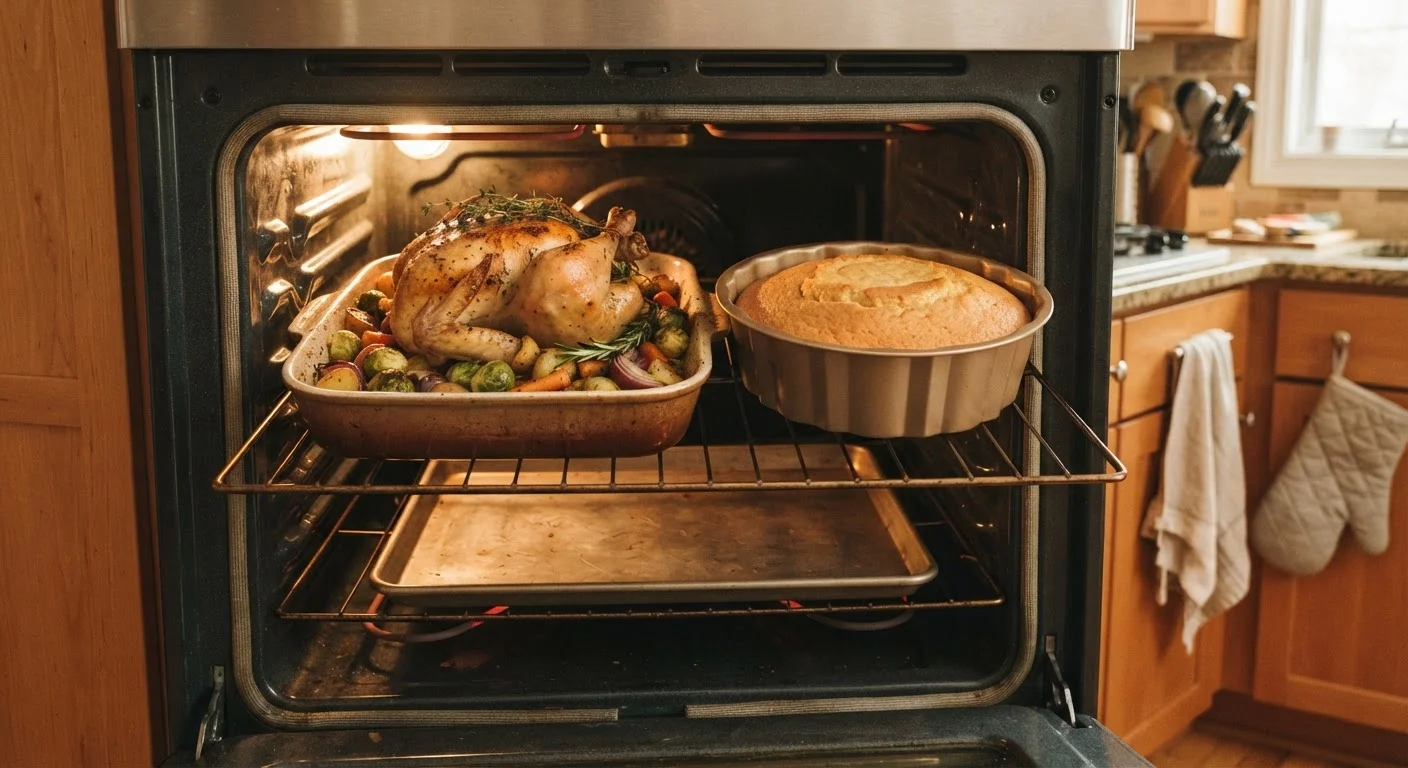
Option A
Roasting
High-heat browning for savory, structured foods.
Best for: Meats, poultry, root vegetables, and anything that benefits from a caramelized exterior and concentrated flavor.
Option B
Baking
Controlled heat for foods that transform through structure.
Best for: Breads, pastries, cakes, casseroles, and dishes whose texture depends on a precise chemical or physical change during cooking.
Why the Distinction Matters
Open almost any cookbook and you'll find both roasting and baking instructions for oven-cooked dishes. At first glance, they look identical: preheat the oven, put the food in, wait. But the two methods produce noticeably different results because they work on different types of food in different ways.
Understanding the difference isn't about memorizing rules - it's about knowing what's actually happening to your food so you can make smart decisions in the kitchen. Once that clicks, you'll instinctively know whether to roast your potatoes or bake your bread, and why it matters.
For a broader look at how oven cooking fits alongside other techniques, see our guide to matching cooking methods to foods.
What Roasting Actually Does
Roasting typically uses higher oven temperatures - generally between 375°F and 450°F - to cook foods that already have a firm, solid structure. Think whole chicken, beef tenderloin, pork shoulder, or cut vegetables like Brussels sprouts and sweet potatoes.
The key process in roasting is surface browning. At high heat, the exterior of the food loses moisture quickly and undergoes two chemical reactions: the Maillard reaction (a browning of proteins that creates deep savory flavor) and caramelization (a browning of sugars). Both produce color, complexity, and the satisfying crust that makes roasted food so craveable.
Roasted foods are almost always coated in fat - olive oil, butter, or cooking spray - before they go into the oven. The fat conducts heat evenly across the surface and promotes browning. The food is typically uncovered, which lets steam escape and keeps the exterior dry enough to brown rather than steam.
| Criterion | Roasting | Baking |
|---|---|---|
| Typical temperature range | 375°F - 450°F | 325°F - 375°F |
| Food state when it enters the oven | Solid, structured | Liquid, batter, or dough |
| Primary goal | Brown exterior, concentrate flavor | Set internal structure, create rise |
| Role of fat | Applied to surface for browning | Mixed into batter as ingredient |
| Pan coverage | Usually uncovered | Often covered or enclosed |
| Key chemical reaction | Maillard reaction, caramelization | Protein setting, starch gelatinization, leavening |
| Common foods | Chicken, beef, root vegetables | Bread, cakes, muffins, casseroles |
| Recipe precision needed | Moderate - some flexibility | High - temperature and ratios matter |
What Baking Actually Does
Baking typically operates at lower, more controlled temperatures - often 325°F to 375°F - and it suits foods that are liquid or semi-liquid when they go into the oven: cake batter, bread dough, muffin mix, custard. The heat causes a structural transformation: proteins set, starches gelatinize, leavening gases expand, and the food transitions from raw batter to a solid, sliceable form.
This transformation is chemistry-dependent. A degree or two can determine whether a soufflé rises or collapses, or whether a cake bakes evenly or sinks in the center. That's why baking recipes tend to be more precise about temperature and time than roasting recipes.
Fat plays a different role in baking - it's incorporated into the batter or dough as an ingredient rather than applied to the outside. Baked goods often bake covered or in enclosed pans to trap steam and support an even rise.
When you're judging whether your baked or roasted dish is truly done, sensory cues matter as much as the timer. Our guide to reading doneness walks you through what to look, smell, and feel for.
The Overlap - and How to Navigate It
Here's where it gets slightly complicated: the line between roasting and baking isn't perfectly rigid. Some foods - like stuffed bell peppers, baked potatoes, or layered casseroles - get called either depending on who's writing the recipe. Culinary tradition and convention play a role in the labeling, not just food science.
A useful rule of thumb: if the food goes in solid and comes out more concentrated and browned, it's roasted. If the food goes in loose or liquid and comes out set and structured, it's baked. When a dish fits neither description neatly, focus on the temperature and desired outcome rather than the label.
You might also notice that some foods shift methods midway - a bread loaf that starts covered to trap steam (baking behavior) and finishes uncovered to crisp the crust (roasting behavior). These are intentional hybrids, not mistakes.
For a comparison of how wet-heat cooking techniques differ from both roasting and baking, see our article on boiling vs. simmering.
The content on this site is provided for informational purposes only and should not be considered a substitute for professional advice. While we strive to provide accurate and up-to-date information, we make no guarantees regarding its completeness or accuracy. Always consult a qualified professional for advice specific to your circumstances before making any decisions.