

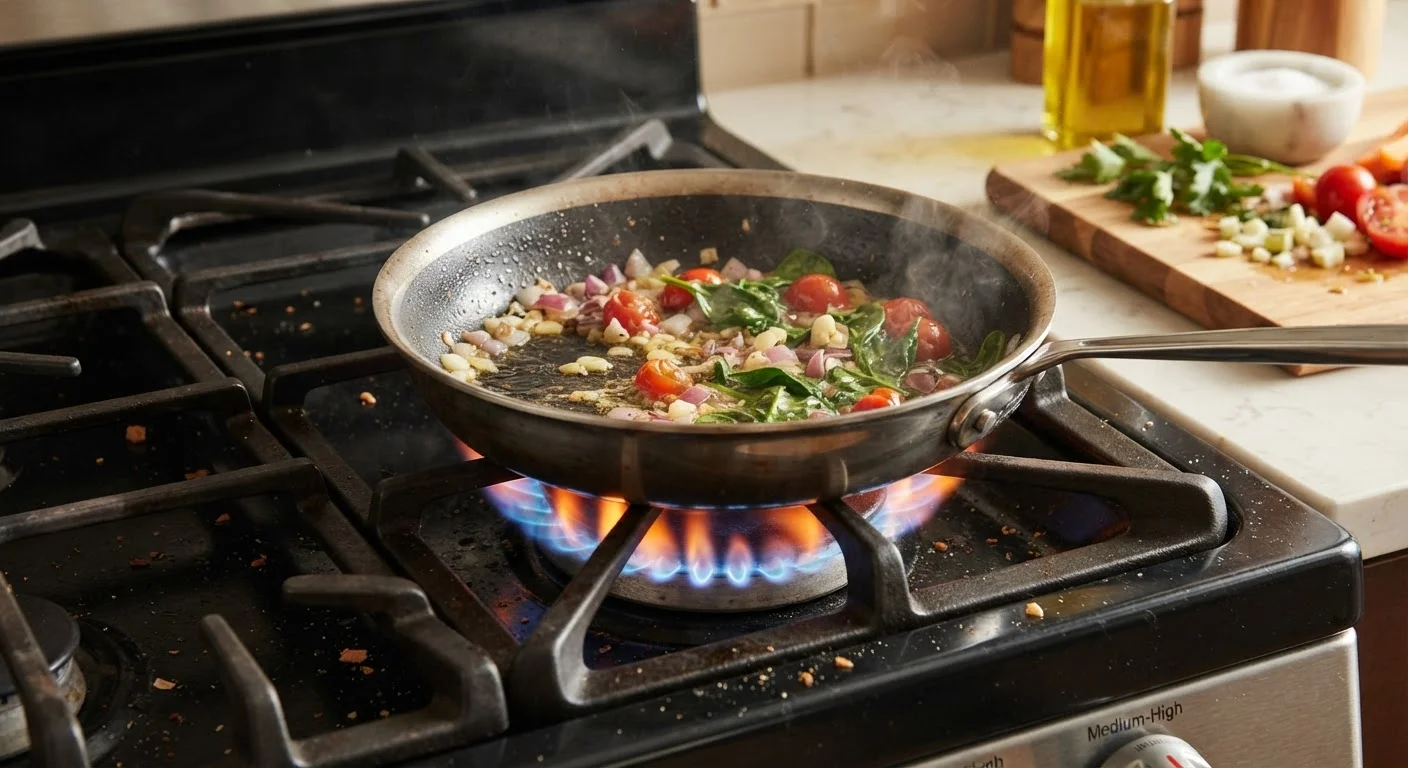
Why Stove Heat Settings Don't Have a Universal Guide
If you've ever followed a recipe that says "cook on medium heat" and ended up with burned onions or underdone chicken, you're not alone. Stove knobs labeled Low, Medium, and High are more like approximate zones than precise settings - and every stove behaves a little differently.
Gas stoves respond instantly when you turn the dial; electric coil burners retain heat even after you lower the setting; induction cooktops are highly precise but require compatible cookware. Add in variables like pan thickness, oil type, and altitude, and it becomes clear why beginners often feel confused.
The good news: once you understand what each heat level actually does to food - rather than just what the knob says - you'll have the confidence to adjust on the fly, regardless of the stove you're using. That skill matters more than memorizing numbers.
Low Heat: Gentle and Patient
Low heat typically brings a pan surface to around 200-300°F. At this range, food changes slowly and gently, making it ideal for tasks where control matters more than speed.
- Melting butter or chocolate - high heat scorches both quickly; low heat keeps them smooth
- Keeping sauces or soups warm without overcooking or reducing them further
- Cooking eggs low and slow for a creamy, custard-like texture
- Sweating vegetables - softening onions or garlic without browning them
The most common mistake with low heat is impatience. Cooks crank the dial up when food isn't moving fast enough, accidentally crossing into a temperature range that changes the outcome entirely. Resist the urge - low heat is doing real work, just quietly.
Use a Lid to Trap Heat on Low
When cooking on low heat, placing a lid on the pan creates a mini steam environment that speeds cooking without raising the burner temperature. This is especially useful for delicate foods like fish or eggs that can dry out at higher settings. Just leave a small gap to let excess steam escape and avoid sogginess.
Medium Heat: The Everyday Workhorse
Medium heat - roughly 300-375°F - is the most-used setting in everyday cooking, and for good reason. It's hot enough to brown food and develop flavor, but forgiving enough to give you time to react before things go wrong.
Common tasks that suit medium heat include:
- Sautéing vegetables until tender and lightly golden
- Pan-cooking chicken breasts or fish fillets through to the center
- Making pan sauces after searing meat
- Scrambling eggs at a pace that keeps them soft
Medium-high heat (between medium and high) is also worth knowing. It's the sweet spot for tasks like cooking burgers or thicker proteins that need both browning and interior doneness without burning. Many recipes say "medium" when they actually mean medium-high, so use your eyes and ears as much as the dial.
For a deeper dive into one of the most important medium-heat distinctions, see our guide on boiling vs. simmering.
High Heat: Fast, Fierce, and Purposeful
High heat pushes a pan surface to 375°F and beyond. At this range, food undergoes rapid browning reactions - including the Maillard reaction, which creates the crust on a seared steak or the char on stir-fried vegetables. High heat is powerful, and it's also unforgiving.
Use high heat intentionally for:
- Searing meat - you want a hot, dry pan to create a caramelized crust fast
- Boiling water for pasta or blanching vegetables
- Stir-frying - quick cooking over intense heat keeps vegetables crisp and proteins tender
What high heat is not for: cooking food all the way through. A thick pork chop on high heat will char on the outside while staying raw inside. The standard approach is to sear on high, then finish on medium or in the oven.
350°F
Approximate Maillard reaction start temperature
Food science literature broadly identifies 300-350°F as the threshold where browning reactions that create flavor and crust begin to occur in proteins and sugars.
212°F
Boiling point of water at sea level
Water boils at 212°F (100°C) at standard sea-level pressure; at higher altitudes, water boils at lower temperatures, which can affect cooking times.
Understanding when to switch methods mid-cook is a key step in becoming a more confident home cook. Our guide on matching cooking methods to your ingredients explores this in more detail.
How to Read Your Food, Not Just Your Dial
The most reliable heat guide isn't the stove knob - it's the food itself. Learning to read visual and audio cues gives you real-time feedback that no recipe can fully replicate.
- Sizzling sound
- A steady, moderate sizzle indicates medium heat. A violent, spattering sizzle suggests high heat. Silence usually means the pan isn't hot enough yet.
- Color development
- Browning happening within 2-3 minutes signals medium-high or high heat. No color after several minutes suggests low or medium-low.
- Smoke
- A little shimmer in oil is normal at medium-high. Visible smoke means you're at or past the oil's smoke point - reduce heat or remove the pan briefly.
Over time, these cues become instinctive. The goal isn't to monitor a thermometer - it's to build the awareness that lets you adjust heat confidently, no matter what stove or pan you're using.
Frequently Asked Questions
Several factors can cause burning even at medium heat: a thin pan with hot spots, oil that's already at its smoke point, or food left unattended. Try using a heavier pan, reducing heat slightly, and keeping the food moving or stirring regularly.
Medium heat generally falls between 300-375°F at the pan surface. However, this varies by stove type, pan material, and whether you're using oil or water. A drop of water that sizzles and evaporates quickly is a good informal indicator of medium heat.
Yes, in most cases. Preheating the pan (usually 1-2 minutes on medium) ensures even heat distribution before food touches the surface. Adding food to a cold pan often leads to sticking and uneven cooking.
A simmer typically sits at the lower end of medium heat - around 180-205°F in a liquid - where you see occasional small bubbles. True low heat is below a simmer and is used for keeping food warm or gently melting ingredients.
Not always. High heat cooks the exterior of food quickly, which is great for searing, but it can leave the interior undercooked. Many foods benefit from starting on high and finishing on lower heat, or vice versa.
The content on this site is provided for informational purposes only and should not be considered a substitute for professional advice. While we strive to provide accurate and up-to-date information, we make no guarantees regarding its completeness or accuracy. Always consult a qualified professional for advice specific to your circumstances before making any decisions.