

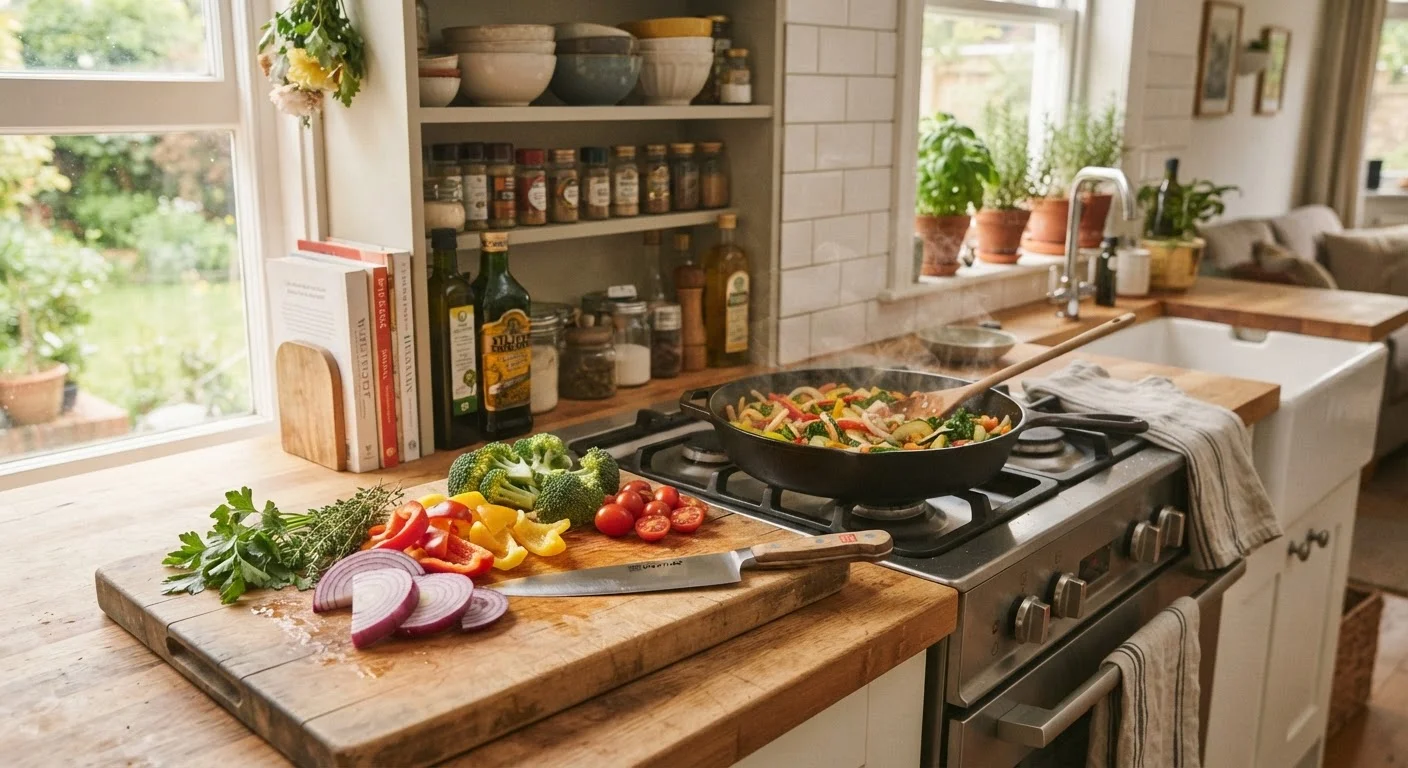
Why Fundamentals Matter More Than Recipes
Most cooking frustration comes not from a bad recipe but from gaps in foundational knowledge. When you understand why a technique works, a recipe becomes a loose guide rather than a rigid script - and that shift changes everything.
Fundamentals are the transferable layer beneath every dish. A cook who understands heat management can sauté vegetables, sear a steak, and reduce a pan sauce without needing separate instructions for each. That same cook can spot a mistake mid-recipe and correct it rather than panic.
This guide walks through the core pillars - heat, seasoning, timing, technique, and kitchen habits - that make any recipe easier to follow, regardless of cuisine or complexity. If you're also working on tool selection, our guide to essential kitchen equipment covers the tools that support these skills without cluttering your drawers.
Understanding Heat: The Core of All Cooking
Heat transforms raw ingredients into food - and mismanaging it is the root cause of most cooking failures. Burnt garlic, rubbery eggs, and gray meat are all heat problems, not ingredient problems.
There are three heat levels worth internalizing:
- Low heat - ideal for gentle rendering, simmering sauces, and melting butter without browning.
- Medium heat - the workhorse setting for sautéing, cooking eggs, and building flavor in a pan.
- High heat - used for searing proteins, boiling water, and achieving browning quickly.
One of the most overlooked habits is preheating the pan before adding food. A properly heated pan creates better browning, prevents sticking, and shortens cook time. A cold pan produces steamed, gray, unevenly cooked results.
Dry heat and moist heat are also distinct cooking environments. Roasting and searing use dry heat to create surface browning through a process called the Maillard reaction. Braising and poaching use liquid to transfer heat more gently. Choosing the right environment matters as much as the temperature setting - our article on matching cooking methods to your ingredients goes deeper on this decision.
Let your pan tell you when it's ready: add a drop of water and if it evaporates immediately with a sharp sizzle, the surface is at the right temperature for searing.
This simple test removes the guesswork from heat management - a critical gap for beginners who rely too heavily on dial settings, which vary across stoves.
When in doubt about seasoning, add a small amount of salt, stir, wait 30 seconds, then taste again before adding more - salt needs a moment to fully integrate.
Over-salting usually happens because cooks don't wait long enough between additions for the seasoning to distribute evenly through the dish.
Seasoning With Intention
Salt is not just a finishing touch - it's an active ingredient that should be incorporated throughout cooking. Adding a pinch of salt when sweating onions draws out moisture and begins building flavor early. Seasoning pasta water, blanching liquid, and marinades all contribute to a dish's overall depth.
Beyond salt, acid (citrus juice, vinegar) and fat (butter, olive oil) are the other two levers cooks use to balance a dish. If food tastes flat, it usually needs salt or acid. If it tastes harsh or thin, a small amount of fat often rounds it out.
Taste as you go. This sounds obvious, but many beginners follow recipes without ever tasting until the plate is on the table. Developing a habit of tasting at multiple stages - raw, mid-cook, and before plating - trains your palate and catches imbalances early enough to fix them.
Timing and Mise en Place
Mise en place is a French culinary term meaning "everything in its place." In practice, it means measuring, chopping, and organizing all ingredients before turning on the stove. Professional kitchens treat it as non-negotiable, and home cooks who adopt it consistently report that cooking feels calmer and more controlled.
Timing falls apart when cooks are chopping onions while garlic is burning in the pan. Preparation eliminates that scramble. Our dedicated article on setting up your kitchen before you cook explains how to build this habit from scratch.
For multi-component meals, working backward from the finish time helps. Identify which element takes longest and anchor your schedule around it. Side dishes and sauces can often be held or finished quickly; proteins usually cannot wait.
Knife Skills and Kitchen Habits That Save Time
Uniform cuts are not about aesthetics - they ensure that every piece of food finishes cooking at the same time. Thick chunks of carrot in the same pan as thin slices will produce some that are raw and some that are mushy.
You don't need advanced knife technique to cook well. Three cuts cover most everyday recipes:
- Dice - even cubes used for aromatics, vegetables, and proteins.
- Slice - consistent flat cuts for proteins, peppers, onions, and citrus.
- Mince - very fine cuts used for garlic, ginger, herbs, and chiles.
A sharp knife is safer and faster than a dull one. A dull blade requires more force, which increases the chance of slipping. Honing your knife on a steel before each session keeps the edge aligned and extends time between full sharpenings.
Other habits that pay off quickly: keep a small bowl near your cutting board for scraps, wipe your knife between cuts when switching ingredients, and clean as you go to avoid an overwhelming pile at the end.
Reading a Recipe Like a Cook, Not a Student
Before you start cooking, read the entire recipe once through. This preview surfaces any steps that require advance prep - marinating overnight, soaking dried beans, or bringing meat to room temperature - that you might otherwise miss mid-execution.
Pay particular attention to technique words: fold, deglaze, blanch, reduce. These are not decorative language; they describe specific actions with specific results. If any term is unfamiliar, our reference on cooking terminology explains the most common ones in plain language.
Finally, understand that recipes are guidelines calibrated for average conditions. Your stove runs hotter or cooler than average. Your pan is thicker or thinner. Your garlic cloves are larger or smaller than the author's. A cook who understands fundamentals adjusts for these variables rather than following numbers blindly - and that adaptability is ultimately what separates confident cooking from anxious cooking.
This article provides general cooking education and is intended for informational purposes only. Results will vary based on equipment, ingredients, and individual skill level.
The content on this site is provided for informational purposes only and should not be considered a substitute for professional advice. While we strive to provide accurate and up-to-date information, we make no guarantees regarding its completeness or accuracy. Always consult a qualified professional for advice specific to your circumstances before making any decisions.