

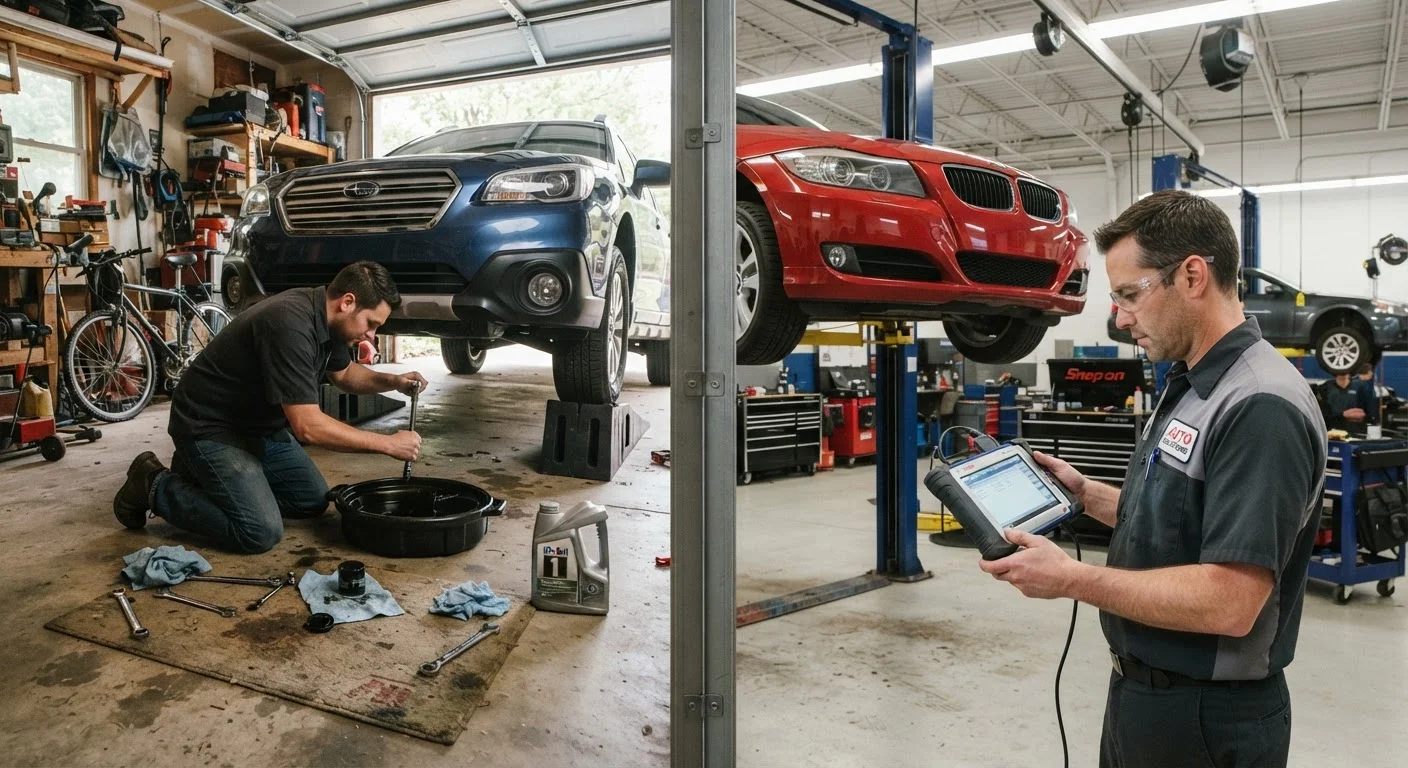
Our Verdict
DIY maintenance makes clear sense for simple, well-documented tasks where the cost of error is low. For anything touching safety systems, complex electronics, or components where an incorrect repair can cascade into serious damage, a qualified mechanic is the right call. Knowing the boundary between those two categories is itself a valuable skill.
| Best for | Recommended |
|---|---|
| Drivers comfortable with basic tools who want to reduce routine maintenance costs | DIY |
| Brake work, suspension, airbag systems, or complex electrical diagnosis | Professional mechanic |
| Modern vehicles with advanced driver-assistance systems or hybrid powertrains | Professional mechanic |
| Fluid checks, cabin air filters, and wiper blade replacements | DIY |
Why This Decision Matters More Than Most Drivers Realize
Vehicle maintenance sits at the intersection of safety, cost, and convenience - and making the wrong call on any given task can have real consequences. Do too little yourself and you hand over thousands of dollars annually to shops for jobs any careful adult can handle. Take on too much and you risk misdiagnosis, improperly torqued components, or safety system failures that endanger everyone in the vehicle.
The good news: most maintenance tasks fall clearly into one camp or the other. The challenge is knowing which is which before you start. For a broader picture of what routine upkeep your vehicle actually needs, this overview of often-skipped maintenance tasks is a useful starting point.
| DIY at Home | Professional Mechanic | |
|---|---|---|
| Air filter replacement | Well-suited for DIY | Unnecessary for most drivers |
| Wiper blade swap | Easy, no tools needed | Unnecessary for most drivers |
| Fluid checks and top-offs | Straightforward with guidance | Included in most service visits |
| Oil change | Feasible with proper equipment | Recommended without jack/tools |
| Brake system service | Not recommended - safety risk | Required - specialized skill |
| Electrical/software diagnosis | Limited without scan tools | Required for accurate diagnosis |
| Hybrid/EV high-voltage work | Never - serious injury risk | Required - certified technician |
Tasks That Are Reasonable for a Home Mechanic
Several routine jobs are well-documented, require minimal specialized tools, and carry a low risk of serious error if something goes slightly wrong:
- Engine and cabin air filter replacement: Typically involves opening a housing with basic clips or screws. Cabin filters on most vehicles are accessible without lifting the hood at all.
- Wiper blade replacement: Manufacturers design these for consumer self-service. Most blades swap in under five minutes.
- Fluid top-offs: Checking and topping off windshield washer fluid, coolant reservoirs, and power steering fluid is straightforward. A practical guide to checking your vehicle's fluids walks through each one clearly.
- Battery terminal cleaning: Corrosion on battery terminals is common and easy to address with a wire brush and protective spray.
- Tire pressure checks: Takes two minutes and a $10-$15 gauge. Proper tire care habits can meaningfully extend tire life and improve fuel efficiency.
These jobs share a common trait: clear instructions exist, the margin for error is visible, and the fix if something goes wrong is usually simple.
Tasks That Belong in a Professional Shop
Some repairs demand professional attention - not because they're inherently mysterious, but because the consequences of doing them incorrectly are severe or the tools required are genuinely specialized:
- Brake system repairs: Brake pads, rotors, calipers, and brake lines are safety-critical. Improper installation can cause brake failure. A professional should inspect and service these components.
- Suspension and steering components: Incorrect alignment or improperly installed control arms, tie rods, or struts affect handling in ways that may not be immediately obvious but become dangerous at highway speeds.
- Airbag system work: Airbag components can deploy unexpectedly during service. This is explicitly a job for trained technicians with the proper disabling procedures.
- Complex electrical and software diagnosis: Modern vehicles rely on interconnected modules. Reading an OBD-II trouble code tells you which system flagged an issue - not necessarily why. Misdiagnosis here leads to replacing parts that aren't actually faulty.
- Hybrid and EV high-voltage systems: High-voltage battery packs in hybrids and electric vehicles require specialized training and protective equipment. This is not a gray area.
Before handing over your keys, prepare for the shop visit with this checklist to make sure you can clearly describe symptoms and ask the right questions.
The Gray Zone: Jobs That Depend on Your Skill Level
Oil changes sit in an interesting middle ground. They're straightforward in principle - drain old oil, replace the filter, add fresh oil - but require getting safely under the vehicle, correctly torquing a drain plug, and disposing of used oil properly. For a mechanically inclined person with a floor jack and jack stands, this is routine. For someone without that equipment or experience, the risk of injury or an improperly sealed drain plug outweighs the savings.
Similarly, spark plug replacement is manageable on many older engines where plugs are easily accessible - but on some modern V6 and V8 engines, rear cylinder plugs sit in tight spaces that make overtorquing or cross-threading a real risk. Understanding what a tune-up actually covers on modern vehicles helps clarify what's actually involved before you commit.
The honest framework: if a task requires special tools you don't own, involves components where an error creates a safety risk, or requires vehicle-specific knowledge you haven't verified, lean toward professional help. Being aware of common DIY assumptions that make things worse is equally useful before starting any repair.
Making the Call: A Practical Decision Framework
Before starting any maintenance task, run through these four questions:
- Is this safety-critical? If the component directly affects braking, steering, or occupant protection, default to a professional.
- Do I have the right tools? Improvising with the wrong socket size or skipping a torque wrench on critical fasteners causes problems that cost more to fix than the original job would have.
- Can I find reliable, vehicle-specific instructions? Generic YouTube videos aren't always accurate for your specific make, model, and year. Manufacturer service manuals or reputable model-specific forums are more dependable sources.
- What's the cost of being wrong? A misaligned wiper arm is annoying. A misaligned caliper bracket is dangerous. Weight the stakes, not just the difficulty.
Keeping up with a seasonal maintenance rhythm helps you stay ahead of issues before they escalate, whether you're handling them yourself or delegating to a shop. And if you're heading out on a long trip, a pre-trip inspection checklist gives you a practical walkthrough of what to verify before you leave.
The content on this site is provided for informational purposes only and should not be considered a substitute for professional advice. While we strive to provide accurate and up-to-date information, we make no guarantees regarding its completeness or accuracy. Always consult a qualified professional for advice specific to your circumstances before making any decisions.