

Where the Term 'Tune-Up' Came From
Before the 1980s, keeping a car running smoothly required frequent hands-on adjustments. Carbureted engines had mechanical contact points in the distributor that wore down, affecting ignition timing. Mechanics replaced those points, the condenser, the distributor cap, and rotor regularly - and while they were in there, they'd also set the ignition timing with a timing light. That whole process became known as a tune-up.
Electronic fuel injection and computerized engine management changed everything. Modern engines don't have points to gap, timing to manually set, or carburetors to adjust. The engine control module (ECM) handles fueling and ignition timing automatically, adapting thousands of times per second. The old tune-up checklist simply doesn't apply anymore.
The word stuck around, though - and that creates confusion at the shop counter when drivers ask for a tune-up without knowing what they're actually asking for.
What a Modern Tune-Up Actually Covers
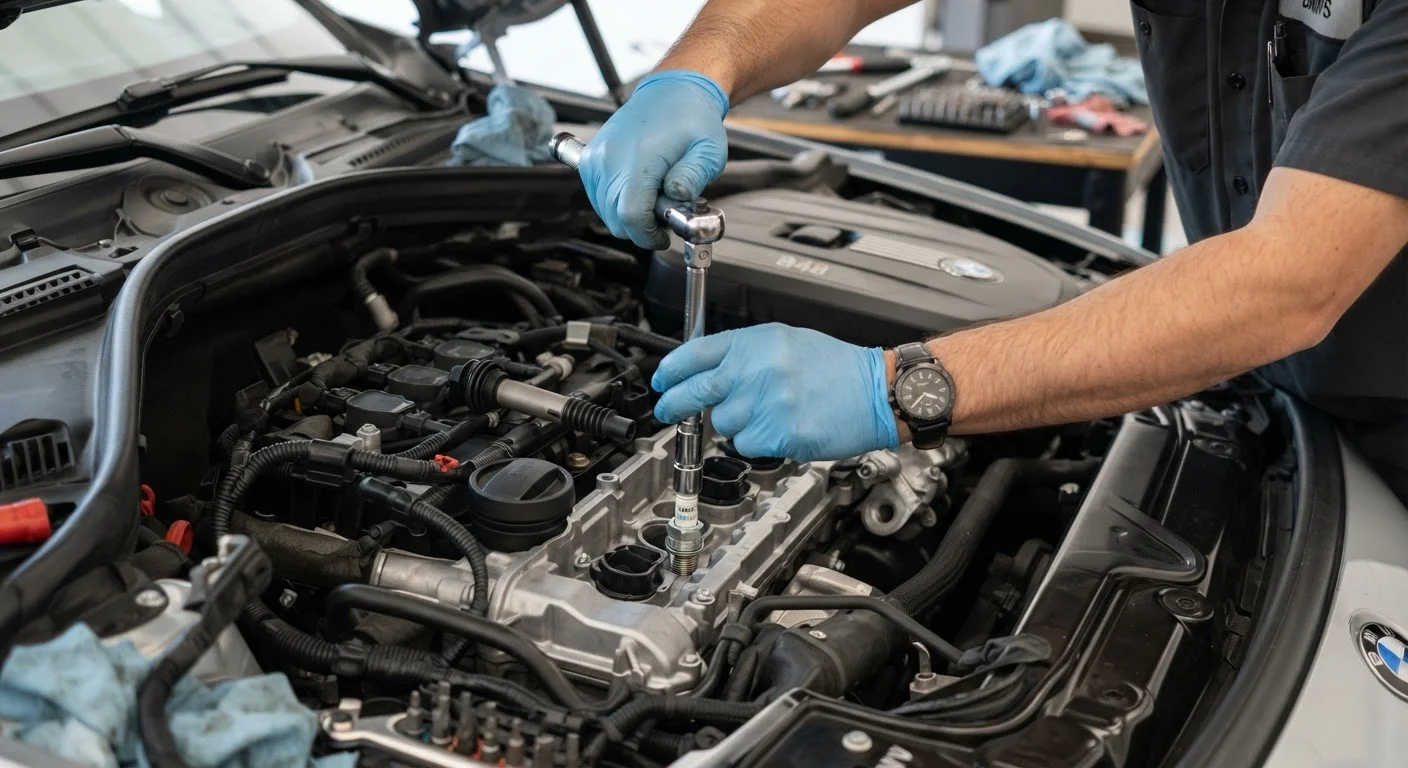
On today's fuel-injected vehicles, a tune-up centers on replacing components that genuinely wear out over time and affect combustion quality. Here's what's typically involved:
- Spark plugs: These are the heart of a modern tune-up. Worn spark plugs fire less reliably, reducing combustion efficiency and potentially causing misfires. Most manufacturers specify replacement at 30,000-100,000 miles depending on plug material (copper, platinum, or iridium).
- Engine air filter: A clogged air filter restricts airflow into the engine, hurting fuel economy and throttle response. This is a simple, inexpensive replacement often bundled into tune-up services.
- Fuel filter: On vehicles with a serviceable inline fuel filter (not all modern cars have one), replacement helps maintain fuel pressure and protects injectors.
- Throttle body cleaning: Carbon deposits can build up on the throttle plate and bore over time, causing rough idle or hesitation. A chemical cleaning restores smooth airflow.
- Ignition coil inspection: Coil-on-plug systems eliminate ignition wires, but the coils themselves can degrade. Shops often inspect or test them during a tune-up.
100,000 mi
Typical iridium spark plug service life
Many vehicle manufacturers specify iridium or double-platinum plugs at intervals of up to 100,000 miles, compared to 30,000 miles for conventional copper plugs.
~4%
Fuel economy loss from worn spark plugs
The U.S. Department of Energy has noted that misfiring spark plugs can reduce fuel economy by as much as 4%, costing drivers measurably more at the pump over time.
$1,000+
Potential catalytic converter repair cost
Persistent misfires from neglected ignition components can damage a catalytic converter, with replacement costs frequently exceeding $1,000 depending on the vehicle.
Some shops also perform a visual inspection of belts, hoses, and the PCV (positive crankcase ventilation) valve as part of the service. It's worth asking exactly what's included - "tune-up" packages vary widely between shops.
Signs Your Car May Be Due for Tune-Up Services
Modern vehicles are good at masking gradual performance decline - you might not notice degradation until it's significant. Watch for these signals:
- Rough or uneven idle: The engine shudders or hunts at a stop light.
- Reduced fuel economy: You're filling up more often without a change in driving habits.
- Hesitation on acceleration: The car feels sluggish or stumbles when you press the gas.
- Misfires or "bucking": Particularly noticeable at highway speeds or under load.
- Check engine light: Misfire codes (P0300-P0308 range) often point to spark plug or ignition coil issues.
That said, none of these symptoms automatically mean a tune-up is the answer. A proper diagnostic scan should come before any parts replacement - particularly if the check engine light is on. See our preparation checklist for how to approach a shop visit with confidence.
Always Scan Before You Swap Parts
If your check engine light is on, get the diagnostic trouble code read before authorizing any tune-up work. Many auto parts retailers will read codes at no charge. Knowing the specific fault code helps you have a more informed conversation with your mechanic and avoid paying for components that aren't causing the problem.
Using Your Owner's Manual - Not the Service Counter
The most reliable guide for maintenance intervals isn't a shop's recommendation or a mileage sticker in your windshield - it's your vehicle's owner's manual. Manufacturers publish specific replacement intervals for spark plugs, filters, and other serviceable components based on actual engineering data for your engine.
Many drivers are surprised to learn their iridium spark plugs aren't due until 100,000 miles. Replacing them at 30,000 "just to be safe" wastes money without providing meaningful benefit. Equally, skipping the 60,000-mile service because the car seems fine can let minor wear turn into a rough idle or a misfire that damages a catalytic converter - a far costlier repair.
For a broader view of what service milestones tend to get overlooked, see routine maintenance schedules most drivers quietly skip. Staying ahead of the intervals in your manual is the simplest, most cost-effective maintenance strategy available.
Frequently Asked Questions
It depends on your spark plug type. Copper plugs may need replacement every 30,000 miles, while iridium or platinum plugs can last 60,000-100,000 miles. Check your owner's manual for the manufacturer's recommended interval.
Core items are typically spark plugs and an engine air filter. Many shops also clean the throttle body, inspect ignition coils, and replace the fuel filter if it's an in-line serviceable type.
Not necessarily. A check engine light should be diagnosed with a scan tool first. Misfires from worn spark plugs can trigger the light, but so can dozens of unrelated issues - don't assume a tune-up is the fix without reading the fault code.
Costs vary considerably by vehicle and region. A basic spark plug replacement on a 4-cylinder with accessible plugs might run $100-$200 in labor and parts. Vehicles with V6 or V8 engines, or plugs buried under intake manifolds, can cost significantly more.
Replacing spark plugs and an air filter is within reach for a careful home mechanic on many vehicles. However, some engines require removing substantial components to access plugs - consult a service manual and see our guide on <a href="/autos-vehicles/car-maintenance/diy-car-maintenance-vs-taking-it-to-a-mechanic">DIY vs. professional maintenance</a> before starting.
No. An oil change is a separate, more frequent service focused on the lubrication system. A tune-up addresses ignition and fuel delivery components. Both are important but serve completely different purposes.
The content on this site is provided for informational purposes only and should not be considered a substitute for professional advice. While we strive to provide accurate and up-to-date information, we make no guarantees regarding its completeness or accuracy. Always consult a qualified professional for advice specific to your circumstances before making any decisions.