

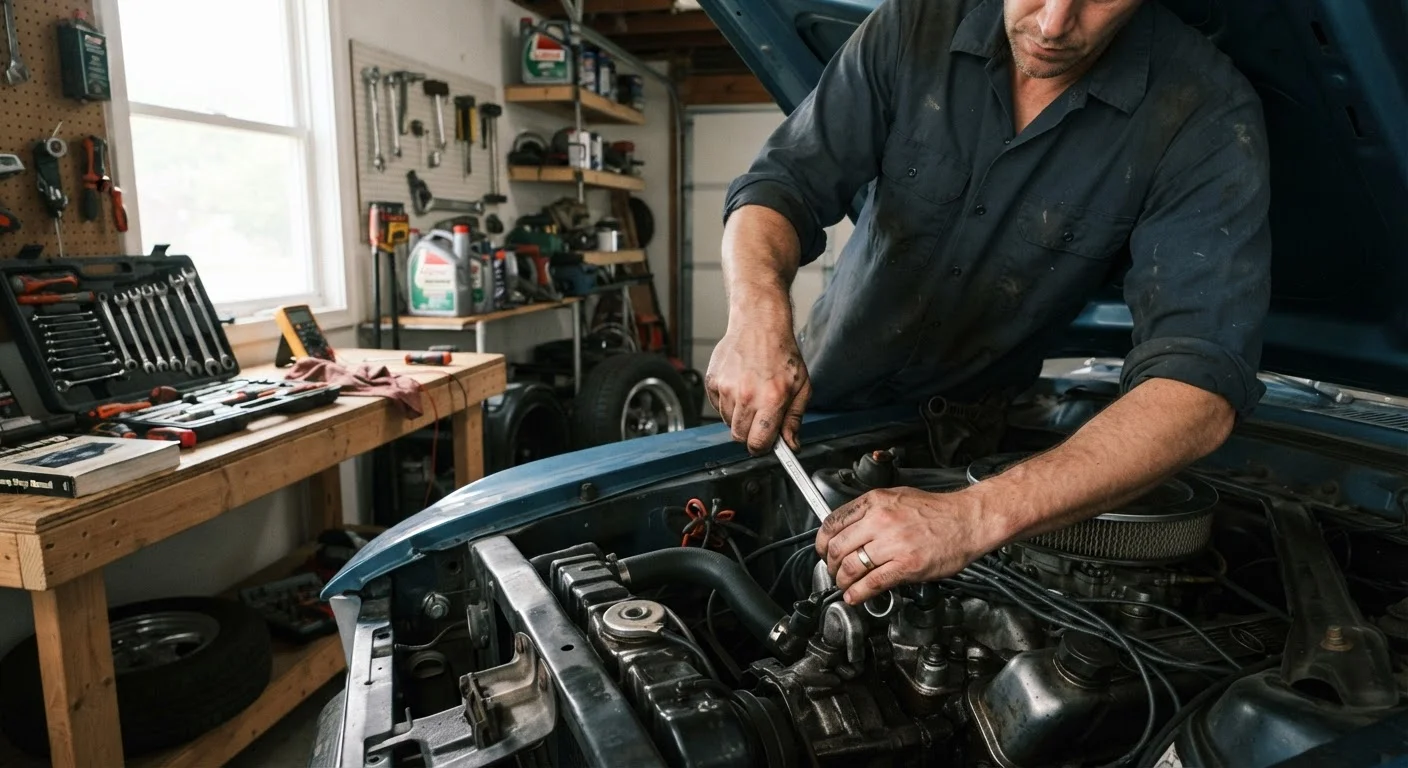
Why DIY Confidence Can Outpace DIY Competence
The appeal of fixing your own vehicle is real: it can save labor costs, build useful skills, and give you a better understanding of how your car works. But confidence built from one successful repair doesn't always transfer cleanly to the next. Each job introduces new variables - different components, tighter spaces, and unfamiliar tolerances - and the consequences of getting it wrong can be far more expensive than the original repair would have been.
The difference between tasks you can handle and tasks you shouldn't often comes down to tools, systems knowledge, and honest self-assessment. Understanding where that line sits - before you're three hours into a job with parts on the floor - is what separates smart DIY from costly mistakes.
Assuming a YouTube tutorial covers your specific vehicle's configuration.
Why it happens: Video tutorials are widely available and often look straightforward, leading drivers to believe the process is universal across makes and models.
Skipping diagnostics and replacing parts based on symptoms alone.
Why it happens: When a warning light appears or a symptom matches a common problem, it's tempting to replace the most likely culprit without confirming the root cause.
Underestimating how interconnected modern vehicle systems are.
Why it happens: Drivers accustomed to older, simpler vehicles assume the same logic applies to current models, which rely heavily on networked electronic control modules.
Using generic or incorrect-spec replacement parts to save money.
Why it happens: Off-brand or "compatible" parts are cheaper and widely available, making them an appealing shortcut when trying to reduce repair costs.
Ignoring torque specifications when reassembling components.
Why it happens: Most home mechanics tighten bolts by feel rather than using a torque wrench, assuming "snug" is good enough for most fasteners.
Assuming a completed repair is safe without a proper test and inspection.
Why it happens: After finishing a repair, there's a natural tendency to trust the work and return to normal driving without methodically verifying the result.
When a Simple Fix Becomes a Bigger Problem
Many drivers discover too late that a repair cascaded into additional damage. Stripped drain plugs, cracked plastic clips, disturbed wiring harnesses - these are common byproducts of work done without the right tools or knowledge of what lies nearby. Deferred maintenance already compounds over time; an incorrect DIY repair can accelerate that chain reaction significantly.
Safety Systems Are Not DIY Territory
Brake systems, airbag components, steering linkages, and any part of the electronic stability control system directly affect your ability to control the vehicle in an emergency. Incorrect work on these systems can cause failures that aren't immediately obvious but become life-threatening at highway speeds. Always have safety-critical repairs performed and verified by a qualified mechanic.
If you're unsure whether a repair falls within your skill level, preparing thoroughly before visiting a mechanic is a far better outcome than a partially completed job. And staying current on commonly overlooked maintenance items reduces the likelihood of needing major repairs in the first place.
Changes in the automotive landscape - including ongoing debates around right-to-repair legislation - may eventually expand what independent shops and home mechanics can access. For now, knowing the limits of your tools, your diagnostic access, and your experience level remains the most practical guide to deciding when to pick up a wrench and when to make an appointment.
This article is for general informational purposes only. Vehicle repair involves real safety risks. For any repair affecting braking, steering, or other safety-critical systems, consult a qualified automotive professional.
The content on this site is provided for informational purposes only and should not be considered a substitute for professional advice. While we strive to provide accurate and up-to-date information, we make no guarantees regarding its completeness or accuracy. Always consult a qualified professional for advice specific to your circumstances before making any decisions.