

How Retailers Engineer the Illusion of a Deal
The word "sale" triggers something close to automatic trust in most shoppers. If the tag says you're saving 40%, the assumption is that 40% is real. But retail pricing doesn't work as straightforwardly as that assumption suggests.
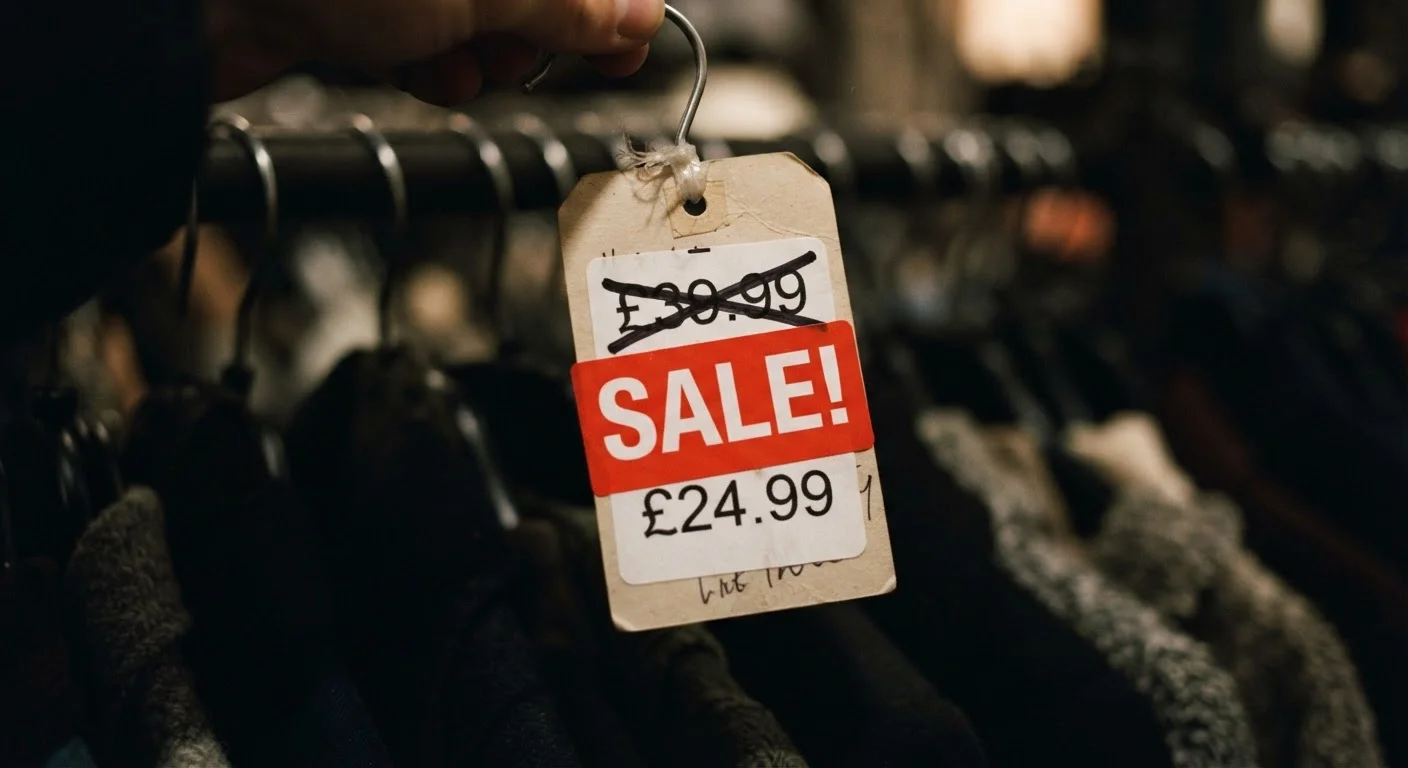
Many retailers set what's known as a reference price - the higher figure shown beside the sale price - at a level that was never meant to be a realistic selling price. The reference price exists primarily to make the discounted price look attractive by comparison. This practice is sometimes called price anchoring: once a high number is planted in your mind, every lower number seems like a bargain relative to it.
The Federal Trade Commission has issued guidance on deceptive pricing, noting that a "former price" used as a reference should reflect a price at which the item was genuinely offered for a reasonable period. But enforcement is inconsistent, and the line between aggressive marketing and genuinely deceptive pricing can be blurry in practice. Understanding how retail pricing psychology works is one of the most useful things a shopper can do.
Myth
If the tag shows a strikethrough price, the discount is real and I'm saving that exact amount.
Fact
Reference prices are often set strategically and may not reflect a price at which the item was meaningfully sold.
Strikethrough or "was" prices create a visual anchor that makes the sale price feel like a win. But regulatory standards around what qualifies as a legitimate former price are not uniformly enforced. In some cases, items are listed at an inflated price for a brief period - or only in limited locations - simply to establish a reference number that makes future discounts look larger.
Myth
A bigger percentage off always means a better deal.
Fact
Percentage discounts are calculated from the reference price, which may itself be inflated - making large percentages misleading.
A 60% discount off a $100 reference price leaves you paying $40. But if the item's normal selling price at other retailers is $38, you're not saving anything - you may even be paying more. The percentage is only meaningful when the starting price is legitimate. Without knowing that baseline, the percentage tells you very little about actual value.
Myth
Sale events like holiday weekends guarantee the lowest prices of the year.
Fact
Major sale events are heavily marketed, but historical price tracking frequently shows the same or lower prices outside those windows.
Promotional shopping events generate significant consumer anticipation, which retailers understand well. Analysis of online pricing data has repeatedly shown that a notable share of items promoted during high-profile sale events are not actually at their lowest recorded price during the event. Some items are discounted genuinely; others are simply promoted with more noise. Price history tools are the most reliable way to tell the difference.
Myth
Buying more units at a sale price always saves money per unit.
Fact
Bulk purchases at sale prices only save money if you use the product before it expires or depreciates - and if the per-unit price is genuinely lower.
Retailers frequently bundle products or offer multi-buy promotions that appear to lower the per-unit cost. But if the bundle includes more than you'll realistically use, or if the per-unit price matches what a competitor charges for a single unit, the perceived savings disappear. Perishable goods, seasonal items, and products with limited shelf life require particular attention here. The unit price label is the most reliable check.
Myth
Limited-time countdown timers mean the deal is genuinely expiring soon.
Fact
Countdown timers are often automated marketing tools that reset or reappear, not accurate indicators of expiring inventory or pricing.
Artificial urgency is one of the most widely documented tactics in online retail. Timers, low-stock alerts, and "selling fast" indicators are frequently generated automatically and do not reflect real-time inventory data. Consumer protection agencies in multiple countries have taken action against retailers for using misleading urgency cues. If a deal feels pressured, that pressure is usually by design - not a reflection of genuine scarcity.
What's Actually Happening Behind the Discount
Beyond inflated reference prices, several other mechanics shape what a "sale" really delivers.
Markup-then-markdown cycles are common in apparel and home goods. A retailer introduces an item at a high price, sells a small volume, then marks it down - and calls the lower price a sale. The item may never have sold meaningfully at the original price.
Dynamic pricing adds another layer of complexity. Retailers increasingly adjust prices in real time based on demand, browsing behavior, and algorithms. A price you see online on Tuesday morning may differ from what a colleague sees that afternoon - and what either of you sees during a promotional event may not actually be lower than the item's everyday price at a competing retailer.
Then there's the issue of what's inside the package. Shrinkflation quietly reduces product quantity without cutting the sticker price - meaning even a genuine percentage discount might not deliver the value you expect if the package has already been reduced.
Urgency Cues Are Designed to Override Deliberation
Countdown timers, low-stock warnings, and "today only" banners are engineered to shorten the time you spend evaluating a purchase. Retailers know that a slower decision is a more skeptical one. Before acting on any urgency signal, take a moment to check whether the price has appeared before - and whether it's lower than what competing sellers are charging right now.
For a more granular check, unit pricing - the cost per ounce, per count, or per unit shown on shelf labels - gives you an apples-to-apples comparison that sale percentages simply don't provide.
Practical Ways to Check Whether a Deal Is Real
Skepticism alone isn't enough. These concrete steps help you verify whether a sale price is genuinely lower than the norm.
- Check price history. Browser extensions and third-party sites track historical prices for many online retailers, letting you see whether the "sale" price is actually the everyday price under a different label.
- Compare across channels. A sale price at one retailer may match or exceed the standard price elsewhere. A quick cross-reference takes less than a minute and can surface meaningful differences.
- Read the unit price. Especially in grocery and household goods, the unit price on the shelf tag is more informative than the promotional headline price. Unit pricing math can shift your decision on nearly every aisle.
- Ignore the timer. Countdown clocks and "only 3 left" warnings are often automated features, not genuine reflections of inventory. If the urgency disappears when you return to the page an hour later, it wasn't real.
- Know the seasonal cycle. Predictable markdown schedules mean that certain categories genuinely get cheaper at specific times of year - understanding that calendar helps you distinguish real clearance from manufactured urgency.
None of this means sales are always illusory. Genuine markdowns happen regularly - especially during inventory clearance - but they exist alongside manufactured ones. The difference is usually visible if you take a moment to check rather than react.
This article is for informational purposes only. Pricing practices vary by retailer, region, and product category. Readers are encouraged to verify prices independently before making purchasing decisions.
The content on this site is provided for informational purposes only and should not be considered a substitute for professional advice. While we strive to provide accurate and up-to-date information, we make no guarantees regarding its completeness or accuracy. Always consult a qualified professional for advice specific to your circumstances before making any decisions.