

What Unit Pricing Actually Tells You
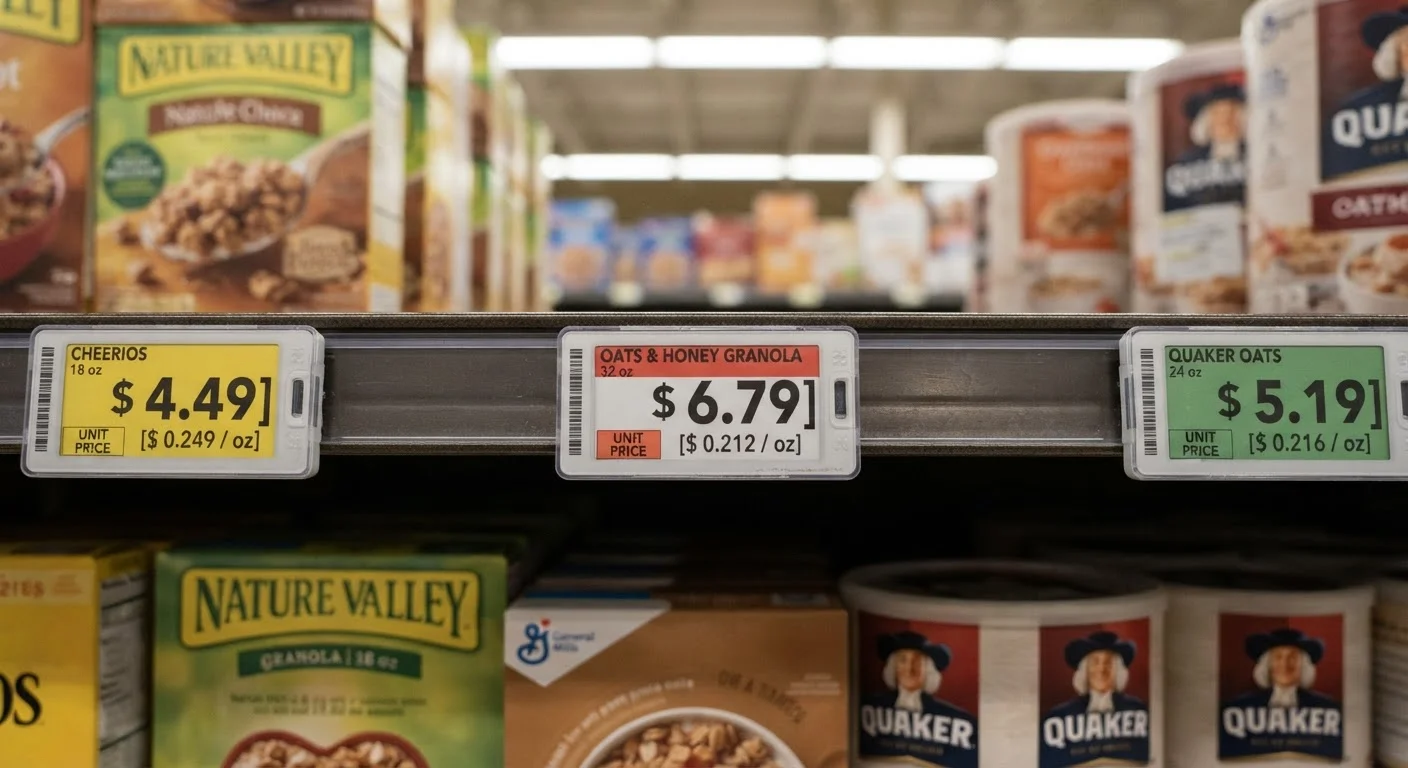
Every shelf tag in most American grocery stores carries two numbers: the total package price and the unit price - the cost per ounce, per 100 grams, per sheet, per fluid ounce, or whatever standardized measure applies to that product. The unit price is almost always printed smaller and lower on the tag, which is exactly why most shoppers skip it.
That small number is doing heavy lifting. It lets you compare a 12-oz box of cereal against an 18-oz box of the same brand, a store brand versus a name brand, or a sale item against its everyday competition - all on equal footing. Without it, you're comparing apples to oranges, or more accurately, $3.49 to $4.19 without knowing which one actually costs more per bite.
Federal regulations don't mandate unit pricing nationally, but many states - including New York, Massachusetts, and Connecticut - require it for most packaged grocery items. Even where it isn't legally required, large chains typically provide it voluntarily. If a tag is missing unit pricing, you can calculate it yourself: divide the total price by the total quantity (in ounces, count, or whatever unit applies).
Unit pricing is also your best defense against shrinkflation, the practice of quietly reducing package size while holding the price steady. When a product shrinks from 16 oz to 14.5 oz, the sticker price may not budge - but the unit price will rise, exposing the real cost increase.
How to Read and Use Unit Price Labels
Locate the unit price on the shelf tag
Look at the lower-left or lower-right corner of the shelf tag beneath the product. The unit price is typically printed in smaller type and labeled with the measure - per oz, per 100 ct, per fl oz, etc. If the tag is missing or unclear, note the total price and package size so you can calculate it yourself.
Confirm the unit of measure is the same across options
Before comparing unit prices side by side, verify that both tags use the same unit. One product might show cost per ounce while a nearby alternative shows cost per pound or per 100 grams. Mismatched units make direct comparison impossible and are a common source of confusion. Convert as needed: there are 16 ounces in a pound and approximately 28.35 grams in an ounce.
Compare unit prices across sizes and brands
With a consistent unit measure confirmed, compare the unit prices directly. The lower unit price is the more economical choice on a cost-per-quantity basis. Check multiple sizes of the same brand, the store brand equivalent, and any items currently on promotion - all three can produce different unit prices.
Factor in practical considerations before deciding
The lowest unit price isn't always the right choice once real-world factors enter the equation. Consider: Will you use all of a larger package before it expires? Do you have storage space? Is the quality comparable between the store brand and name brand for this particular item? A product that goes to waste delivers zero value regardless of its unit price.
Calculate unit price manually when the tag is missing
Divide the total shelf price by the total quantity on the package. For example: a $4.50 jar containing 18 oz works out to $0.25 per oz ($4.50 ÷ 18). A competing $3.80 jar at 14 oz costs $0.27 per oz - making the larger jar the better value per ounce despite costing more in total. Most smartphone calculators handle this in seconds.
Once you've run through the steps above a few times, the habit becomes automatic. It typically adds only seconds to a purchase decision. For a deeper look at why posted discounts can still mislead you, see our article on how sale prices can be misleading.
Unit Pricing Works Online Too
Most major grocery retailer websites and apps display unit pricing in product listings, often more legibly than physical shelf tags. If you plan your shopping list online before visiting the store, use the listed unit prices to pre-select which sizes and brands to look for. This saves decision-making time in the aisle and helps you avoid impulsive size upgrades that don't actually save money.
Common Situations Where Unit Pricing Changes the Decision
Unit pricing shifts real purchase decisions in predictable scenarios worth knowing before you shop.
- Bulk vs. standard size: Warehouse club packages look economical, but the unit price sometimes matches - or even exceeds - a standard supermarket size, especially on items with short shelf lives or frequent reformulations.
- "Family size" vs. two regular packages: Buying two smaller packages occasionally beats the family-size unit price, particularly when one brand is on promotion.
- Store brand vs. name brand: Store brands usually win on unit price, but not always. Some name-brand sizes are temporarily priced lower per unit during promotions.
- Different units of measure: Stores sometimes list comparable products in different units - one yogurt in cost per ounce, another in cost per 100 grams. To compare: multiply the per-gram price by 28.35 to get the per-ounce equivalent, or use your phone's calculator.
Unit pricing also becomes more powerful when you combine it with an understanding of how retailers set and change prices. Pricing isn't static - dynamic pricing in retail means the number you see today may not be the one on the tag next week. Building unit-price awareness into your routine means you're always comparing on real terms, not marketing ones.
For a broader set of strategies that complement this habit, the Consumer Basics hub covers foundational knowledge every shopper benefits from having.
The content on this site is provided for informational purposes only and should not be considered a substitute for professional advice. While we strive to provide accurate and up-to-date information, we make no guarantees regarding its completeness or accuracy. Always consult a qualified professional for advice specific to your circumstances before making any decisions.