

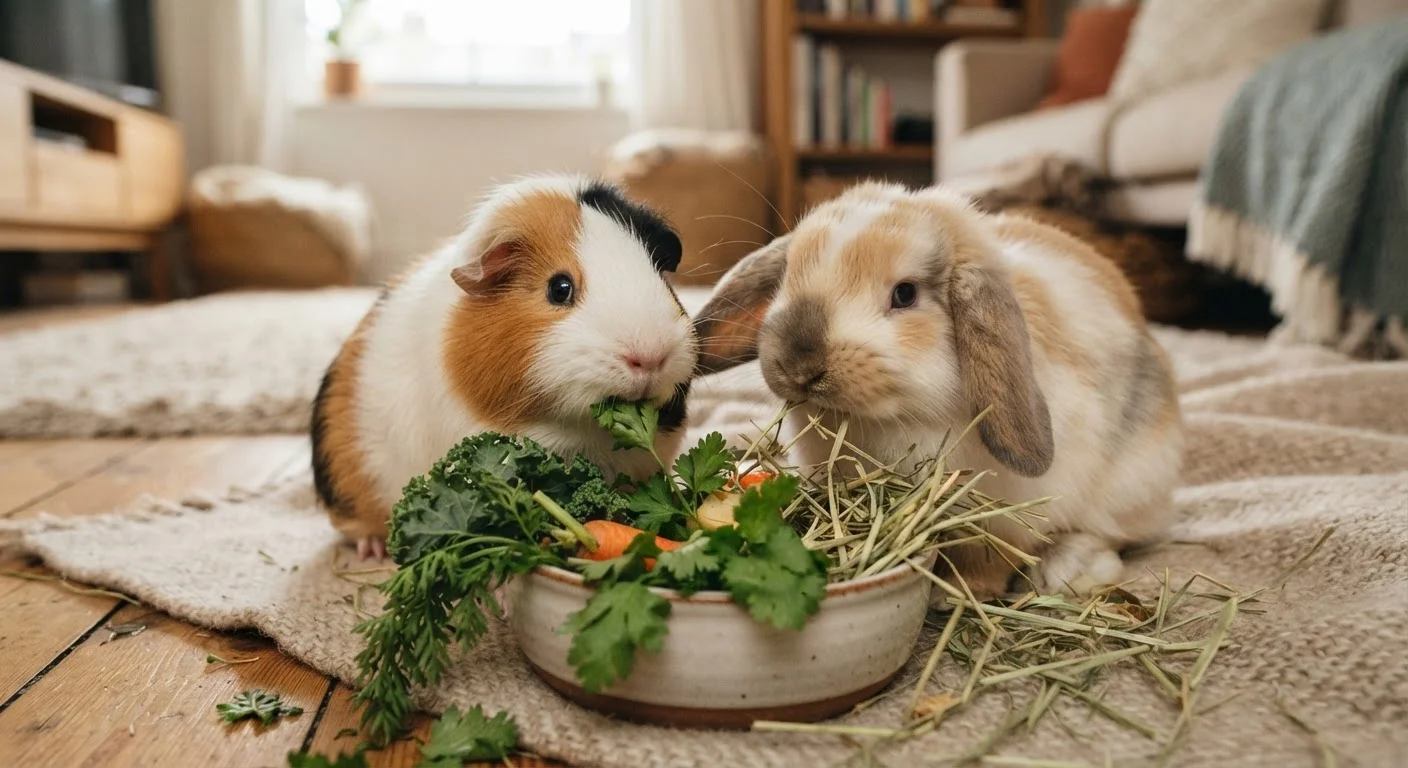
Why Small Pet Nutrition Is So Easy to Get Wrong
Small companion animals - rabbits, guinea pigs, hamsters, gerbils, and chinchillas - are often assumed to be low-maintenance pets with simple diets. In reality, each species has precise nutritional requirements that, when misunderstood, can cause slow, silent health decline. Many feeding mistakes stem from well-meaning owners following outdated pet-store advice, misreading packaging claims, or applying logic from one species to another.
The good news: once you understand where the pitfalls are, they're straightforward to fix. If you're setting up a new habitat, our new small pet owner checklist is a useful starting point before addressing diet. This article focuses on the dietary errors that quietly cause harm over time - and how to correct them.
The Most Common Feeding Mistakes - and How to Avoid Them
The mistakes below span the most frequently kept small companion animals. Some apply broadly; others are species-specific. Either way, recognizing them is the first step toward better care.
Treating a seed mix as a complete diet for rabbits or guinea pigs.
Why it happens: Seed mixes are visually appealing and widely sold as primary foods, so owners assume they're nutritionally complete. In reality, these animals naturally select their preferred seeds and leave behind the less palatable - but more nutritious - components.
Skipping or severely limiting hay for herbivorous small pets.
Why it happens: Owners often treat hay as bedding material or an optional add-on rather than recognizing it as the dietary cornerstone for rabbits, guinea pigs, and chinchillas. Packaging on pellet bags sometimes implies pellets alone are sufficient.
Offering vegetables without checking species-specific safety.
Why it happens: Many owners assume that if a vegetable is healthy for humans or dogs, it's safe for small pets. This logic doesn't hold - onions, garlic, leeks, grapes, and rhubarb are among the foods that are toxic or seriously harmful to various small animals.
Overfeeding treats, including 'natural' fruit-based options.
Why it happens: Natural-sounding treats feel harmless, and small pets often respond enthusiastically to sweet foods, which reinforces repeated offering. Sugar content in fruit, however, can contribute to obesity, dental disease, and gut imbalance.
Relying solely on a water bottle without checking intake.
Why it happens: Water bottles are convenient and hygienic in appearance, so owners often assume the animal is drinking adequately. But some small pets drink more readily from a bowl, and bottles can develop air locks or blockages that go unnoticed.
For species-specific context on guinea pig diet myths, this guide separates common misconceptions from sound care advice. For gerbil-specific feeding guidance, see our complete gerbil care guide.
Building Better Habits Around Small Pet Feeding
Consistent, species-appropriate feeding is one of the most impactful things an owner can do for a small pet's long-term health. A few practical habits make a real difference:
- Audit what's actually in the bowl. If a seed mix is the primary food for a rabbit or guinea pig, it needs replacing with a pellet and hay-based diet.
- Introduce new foods gradually. Abrupt dietary changes can disrupt gut flora and cause digestive upset, particularly in rabbits and guinea pigs.
- Cross-check vegetables before offering them. A quick check with a reputable veterinary source before introducing a new vegetable can prevent accidental toxicity.
- Monitor weight regularly. Small pets can become overweight gradually. Gentle, regular handling - combined with low-stress handling techniques - makes weight checks easier and more reliable.
Diet doesn't exist in isolation, either. Mental stimulation through enrichment activities like foraging puzzles supports healthy eating behavior by encouraging natural food-seeking activity rather than passive consumption.
Guinea Pigs Cannot Synthesize Vitamin C
Unlike most other small mammals, guinea pigs cannot produce their own vitamin C and must obtain it entirely through diet. A deficiency leads to scurvy - a serious and painful condition. Fresh leafy greens like romaine lettuce, bell pepper (especially red), and parsley are reliable dietary sources. Note that vitamin C degrades quickly in water, so supplementing via a water bottle is generally unreliable.
The content on this site is provided for informational purposes only and should not be considered a substitute for professional advice. While we strive to provide accurate and up-to-date information, we make no guarantees regarding its completeness or accuracy. Always consult a qualified professional for advice specific to your circumstances before making any decisions.