

Summary
22 items · 45-90 minutes
Why Preparation Matters More for Small Pets
Small companion animals - guinea pigs, rabbits, hamsters, gerbils, rats, chinchillas, and birds - are often assumed to be low-maintenance starter pets. In reality, they can be more sensitive to environmental stress than cats or dogs, and many first-time owners discover this the hard way in those chaotic first 48 hours.
Unlike puppies or kittens, small pets have limited ways to signal distress. A guinea pig that stops eating on day one, or a hamster that hides and won't come out, may be showing early signs of stress - not personality quirks. That's why getting everything right before they arrive is so important.
This checklist covers the essentials across habitat, diet, enrichment, and veterinary care. For species-specific guidance on gerbils, see our complete gerbil care guide. If you're also considering a feathered companion, our overview of pet bird ownership is a good starting point.
Habitat Setup
Diet and Feeding
Enrichment and Exercise
Veterinary and Health Prep
Home Safety
What to Have Ready: Tools and Supplies
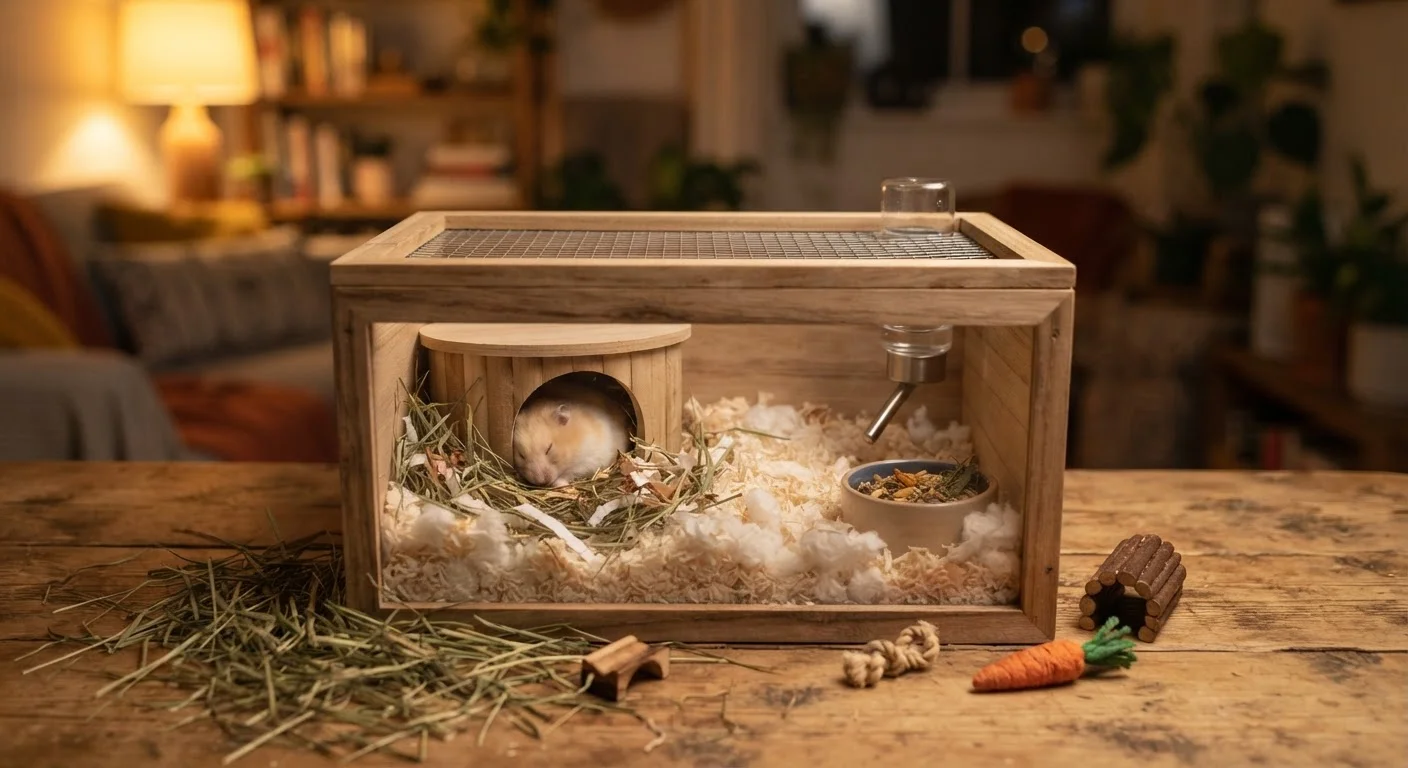
Before you work through the checklist, take stock of your supplies. The list below covers what most small pet owners will need regardless of species - though always cross-reference with care guides specific to your animal.
Species-appropriate enclosure
Provides a safe, correctly sized living space suited to your pet's natural behaviors and movement needs.
Paper-based or species-safe bedding
Cushions the habitat floor, absorbs waste, and supports burrowing or nesting instincts.
Water bottle or dish
Delivers fresh water consistently; bottle type should match your species' drinking habits.
Hide house or shelter
Gives your pet an enclosed retreat to reduce stress and feel secure during the adjustment period.
Staple food (hay, pellets, or species mix)
Forms the nutritional foundation of your pet's daily diet from day one.
Exercise wheel or tunnel (solid surface)
Supports physical activity and mental stimulation for active small mammals.
Chew toys or foraging enrichment
Prevents boredom and supports dental health for species that need to gnaw.
Small-animal safe cleaning solution
Allows safe, non-toxic spot-cleaning of the habitat without harming your pet.
One important note on diet: what you feed your small pet matters enormously, and well-meaning owners often make errors without realizing it. Our article on feeding mistakes that quietly harm small pets outlines the most common pitfalls - including overfeeding seeds and skipping hay - which can shorten a small pet's life.
Find a Small-Animal Vet Before Day One
Not all veterinary practices see rabbits, guinea pigs, hamsters, or birds - these animals are classified as 'exotic' in many clinics. Searching for a vet after your pet is already sick is stressful and can lead to delays in care. Call ahead, confirm the clinic's experience with your species, and have the number saved before you bring your new pet home.
Setting Realistic Expectations for Day One
Even with perfect preparation, most small pets will spend their first day hiding, moving cautiously, or refusing food. This is completely normal. Resist the urge to handle them frequently or invite friends over to see the new arrival right away.
Give your pet 24-48 hours to explore their habitat at their own pace. Keep the room quiet, maintain a consistent temperature (most small mammals do best between 65-75°F), and offer familiar-smelling bedding if the shelter or breeder can provide a small amount.
Avoid Handling Too Much Too Soon
It can be tempting to hold and interact with your new small pet immediately, but frequent handling in the first 48-72 hours can trigger significant stress responses. Allow your pet to eat, drink, and explore their habitat undisturbed before initiating contact. Let the animal approach you on their own terms whenever possible during the first week.
The same principles of calm, gradual introduction apply whether you're welcoming a rabbit or a rat. If you're curious how these preparation steps differ from bringing home a dog, our puppy-proofing guide offers a useful contrast.
This article provides general guidance for small pet owners and is not a substitute for advice from a qualified exotic animal veterinarian. Always consult a vet familiar with your specific species for health and care concerns.
The content on this site is provided for informational purposes only and should not be considered a substitute for professional advice. While we strive to provide accurate and up-to-date information, we make no guarantees regarding its completeness or accuracy. Always consult a qualified professional for advice specific to your circumstances before making any decisions.