

Why Small Pets React the Way They Do
Guinea pigs, hamsters, rabbits, gerbils, and rats are all prey animals. Their survival instincts are wired to treat sudden movements, unfamiliar smells, and being picked up as potential threats. Understanding this biology is the foundation of every good handling practice.
When a small pet freezes, hides, nips, or squeaks during handling, it is communicating genuine fear - not stubbornness. Reacting with more pressure typically accelerates the stress response and erodes whatever trust has been built. The goal is to consistently associate your presence and hands with safety and, when possible, with positive experiences like food treats.
Before you even attempt physical contact with a new animal, give them at least several days to settle into their habitat. Rushing this step is one of the most common early mistakes. See our new small pet owner checklist for what to have in place before handling begins.
Core Handling Practices That Build Trust
The following practices are drawn from animal behavior research and veterinary guidance on low-stress handling for small companion animals. Apply them progressively - each step builds on the last.
Introduce your scent before attempting to pick up the animal
Prey animals rely heavily on smell to evaluate safety. Letting an animal sniff your hand at their own pace - without reaching toward them - establishes you as non-threatening before any physical contact occurs. Skipping this step often causes the animal to associate hands exclusively with being grabbed.
Keep initial handling sessions short - two to three minutes maximum
Small animals fatigue and stress quickly. Brief, positive sessions allow the animal's nervous system to recover and associate handling with a manageable experience. Longer sessions, especially early on, can overwhelm and sensitize rather than habituate.
Always support the animal's full body and hindquarters when lifting
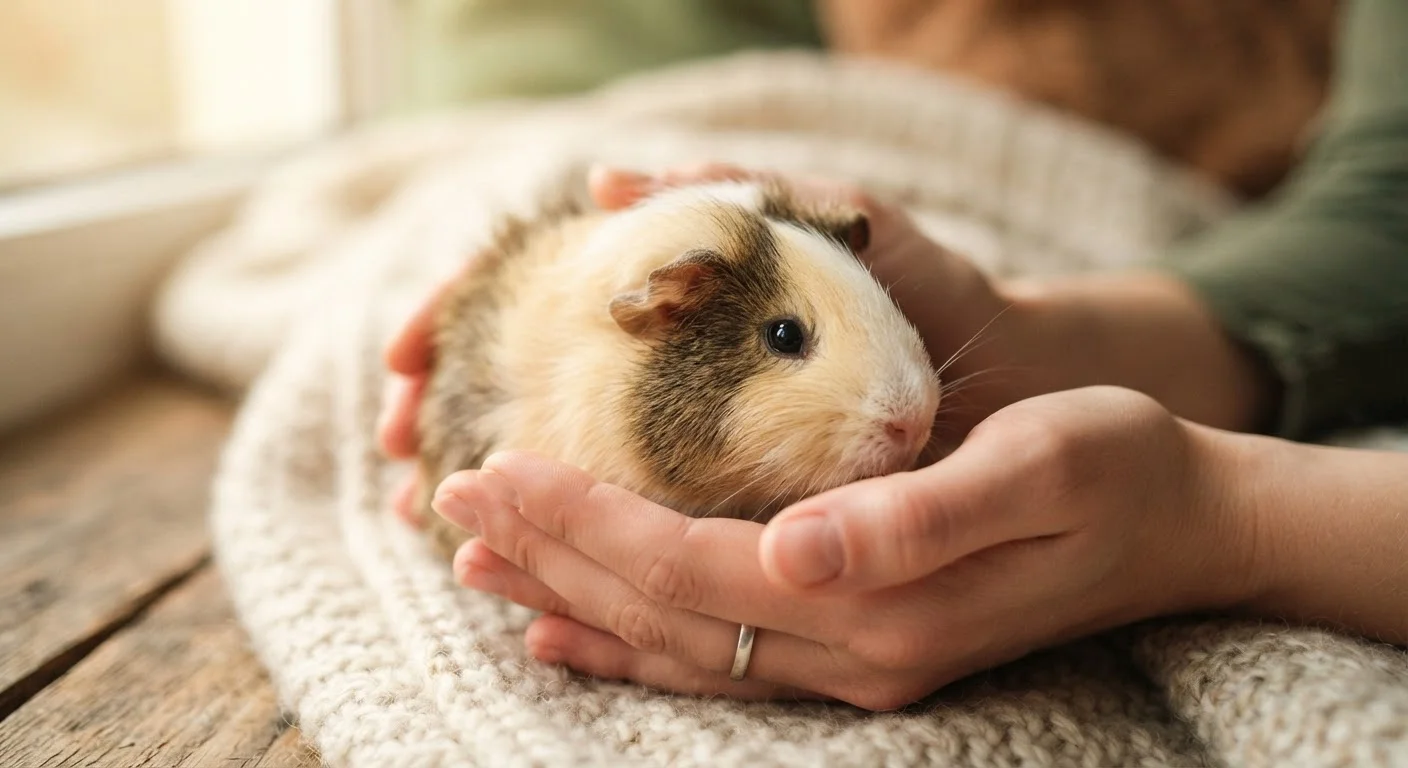
A dangling or unsupported body triggers the sensation of falling - one of the most instinctively alarming experiences for a small prey animal. Full-body support signals containment rather than danger, and also reduces the risk of injury if the animal squirms.
Use food treats strategically to create positive associations
Offering a small, species-appropriate treat during or immediately after handling provides a concrete positive marker. Over time, your approach becomes a predictor of something good rather than something threatening. This works with most small mammals and some birds.
Handle during the animal's naturally active periods
Waking a sleeping animal - particularly crepuscular or nocturnal species like hamsters - creates immediate stress and can provoke defensive biting. Timing interactions to the animal's active window means you're working with their biology rather than against it.
Reading Stress Signals and Adjusting
No handling session should push an animal to its limit. Learning to read early stress signals - before they escalate to biting or fleeing - keeps sessions productive and prevents setbacks.
Diet and environment interact closely with temperament and stress tolerance. If your pet seems unusually reactive, it may be worth reviewing their daily routine. Common oversights are covered in our piece on feeding mistakes that quietly harm small pets. Similarly, a well-designed habitat directly reduces background anxiety; our guide on setting up a hamster habitat covers enrichment factors that support calmer behavior overall.
Patience with small pets mirrors the slow, trust-first approach used in dog training contexts - the principle that positive associations outperform pressure applies across species. If you're curious how that philosophy translates to canine handling, our article on why punishment-based training often backfires explains the underlying behavioral science.
This article provides general educational guidance and is not a substitute for advice from a qualified veterinarian or certified animal behaviorist familiar with your specific pet.
The content on this site is provided for informational purposes only and should not be considered a substitute for professional advice. While we strive to provide accurate and up-to-date information, we make no guarantees regarding its completeness or accuracy. Always consult a qualified professional for advice specific to your circumstances before making any decisions.