

Why Guinea Pig Myths Are So Persistent
Guinea pigs have been popular companion animals in North American households for decades, yet widespread misconceptions about their care continue to circulate - on packaging, in pet store advice, and across social media. Many of these myths took root because guinea pigs were long considered throwaway starter pets rather than animals with genuine and specific welfare needs.
The reality is more nuanced and more rewarding. When their needs are properly understood and met, guinea pigs are vocal, expressive, and genuinely engaging companions. Correcting these common myths isn't just about accuracy - it directly affects how long and how well these animals live. Much like the misconceptions explored in our article on cat behavior myths, the gap between what people assume and what animals actually need can have real consequences.
Myth
Guinea pigs are low-maintenance starter pets that are easy for young children to care for independently.
Fact
Guinea pigs have complex dietary, social, and environmental needs that require consistent adult involvement.
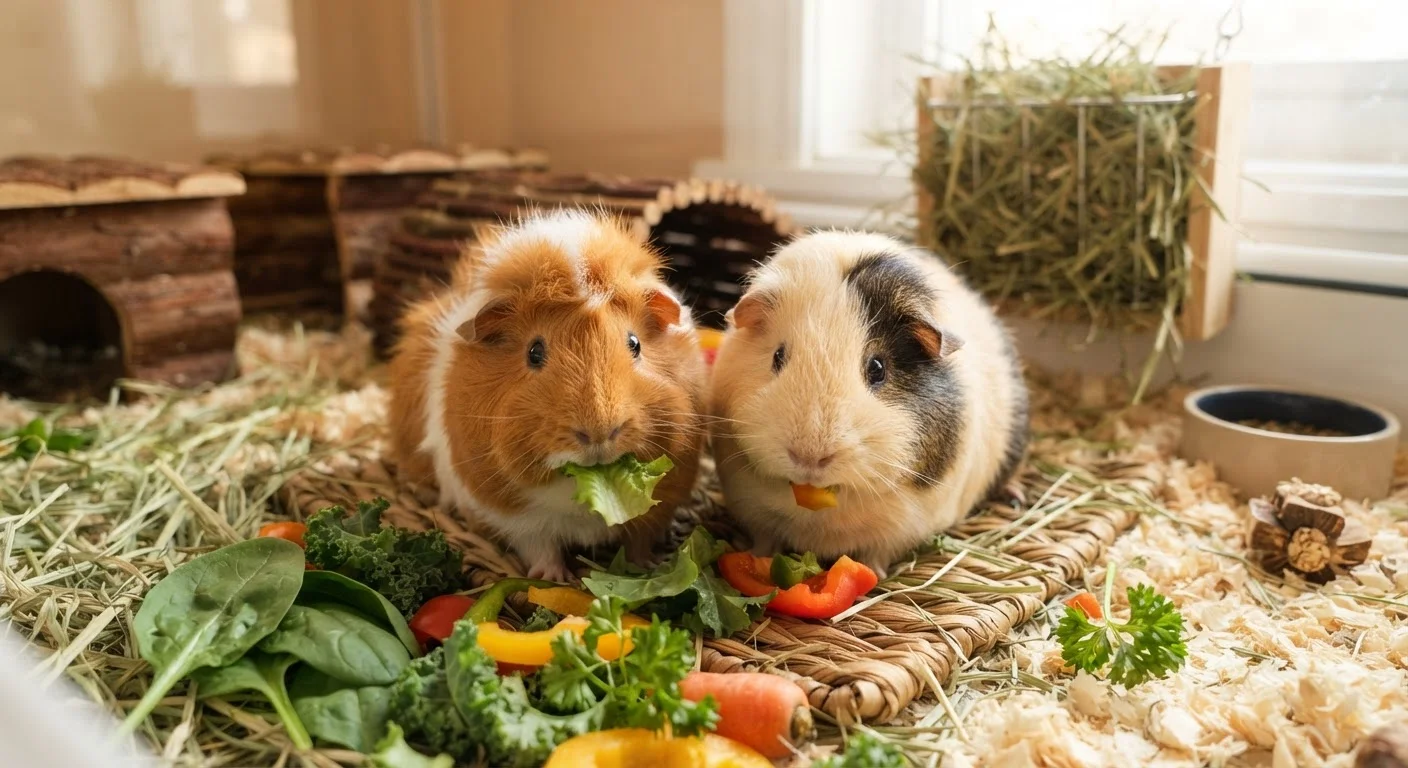
Guinea pigs are often marketed as beginner pets, but their care requirements are more demanding than many families expect. They need daily fresh vegetables rich in vitamin C, unlimited timothy hay, clean water, and a spacious enclosure cleaned several times per week. Children can certainly participate in their care, but adult supervision and responsibility are essential for the animal's health and welfare.
Myth
Guinea pigs are happy living alone as long as they get attention from their human family.
Fact
Guinea pigs are highly social animals that generally do better with at least one same-species companion.
In the wild, guinea pigs live in social groups and communicate constantly through vocalizations, grooming, and physical contact. A single guinea pig may show signs of loneliness and stress even with attentive human interaction, because humans simply cannot replicate guinea pig social behavior. Many animal welfare organizations recommend housing guinea pigs in same-sex pairs or small groups. Proper introductions are important - pairing two boars (males) or two sows (females) who have been introduced carefully tends to work well.
Myth
A small commercial cage sold at a pet store is a perfectly adequate home for a guinea pig.
Fact
Most commercially sold cages are far too small; guinea pigs need significantly more floor space to stay healthy.
Many cages marketed for guinea pigs fall well short of what animal welfare groups recommend. For a pair of guinea pigs, many exotic animal veterinarians and welfare organizations suggest at minimum 7.5 to 10 square feet of usable floor space - and more is always better. Cramped quarters contribute to boredom, muscle weakness from inactivity, and increased stress. Large DIY enclosures or purpose-built C&C (coroplast and wire cube) cages are popular options that provide adequate room. For more ideas on keeping small pets engaged in their environment, see our small pet enrichment guide.
Myth
Pellets and seed mixes can serve as a guinea pig's primary food source.
Fact
Timothy hay should form the bulk of a guinea pig's diet; pellets are a supplement, not the foundation.
Unlimited timothy hay is essential for guinea pig digestive health and dental wear - their teeth grow continuously throughout their lives and require the abrasive action of hay to stay properly worn down. High-quality plain pellets (without seeds, dried fruit, or colorful add-ins) serve as a modest supplement, providing nutrients not fully available from hay alone. Seed mixes are high in fat and low in the fiber guinea pigs need, and regular overconsumption can contribute to obesity and nutritional imbalance. Our article on feeding mistakes that harm small pets explores these dietary pitfalls in greater detail.
Myth
Guinea pigs get all the vitamin C they need from their regular food and don't need any special supplementation.
Fact
Unlike many animals, guinea pigs cannot synthesize their own vitamin C and must get it daily from fresh food sources.
Guinea pigs share with humans the metabolic limitation of being unable to produce vitamin C internally. A deficiency leads to scurvy - a serious condition causing joint pain, rough coat, lethargy, and in severe cases, death. Fresh leafy greens like romaine lettuce, green bell pepper, and parsley are reliable dietary sources. Water-soluble vitamin C drops added to a water bottle are often not recommended by veterinarians because vitamin C degrades quickly in water and light. Fresh food sources are generally more dependable.
Myth
Guinea pigs rarely need veterinary care because they are hardy animals that don't get sick easily.
Fact
Guinea pigs are prey animals that hide illness and benefit from routine exotic-vet check-ups.
As prey species, guinea pigs instinctively mask signs of illness or pain - by the time obvious symptoms appear, a health problem may already be advanced. Conditions like respiratory infections, urinary stones, dental malocclusion, and ovarian cysts are relatively common and require professional veterinary diagnosis and treatment. Finding a veterinarian experienced with exotic small mammals before an emergency arises is strongly advised. Annual wellness exams give vets a baseline and can catch developing issues early. If you're also caring for other small pets, the guide to keeping pet gerbils highlights similar considerations for prey-species health monitoring.
Putting Better Care Into Practice
Understanding what guinea pigs actually need is the first step - the second is making practical changes to how you set up their environment and daily routine. Start with space: if your current enclosure is smaller than recommended, consider upgrading or building out a larger DIY habitat. Then audit your pig's diet, ensuring hay is always available and that daily greens provide reliable vitamin C.
Social needs deserve attention too. If your guinea pig is currently living alone, consult an exotic vet or experienced rescue organization about proper introduction techniques before adding a companion. Rushing introductions can cause injury, but a well-managed pairing usually benefits both animals significantly. Guinea pigs share some of these social dynamics with rabbits - if you're comparing small companion animals, our piece on life with a pet rabbit offers a useful contrast.
Finally, establish a relationship with a veterinarian experienced in exotic small animals before you face an emergency. Proactive care - not just reactive treatment - is the standard these animals deserve.
The content on this site is provided for informational purposes only and should not be considered a substitute for professional advice. While we strive to provide accurate and up-to-date information, we make no guarantees regarding its completeness or accuracy. Always consult a qualified professional for advice specific to your circumstances before making any decisions.