

Why Enrichment Matters More Than Most Owners Realize
A spinning wheel and a wooden chew block are a start - but for rabbits, hamsters, guinea pigs, and gerbils, they rarely come close to meeting the full scope of mental and physical needs these animals have. In the wild, small prey animals spend most of their waking hours foraging, tunneling, problem-solving, and navigating complex environments. A bare cage, however clean and comfortable, can leave a sharp little brain with nothing meaningful to do.
Chronic boredom in small pets often goes unrecognized. It can show up as repetitive behaviors (bar-chewing, circling), lethargy, overgrooming, or even aggression. Enrichment - activities and objects that give animals agency, novelty, and sensory engagement - addresses these needs directly. It doesn't have to be expensive or time-consuming, but it does need to be intentional.
The ideas below work across common small companion animals, with notes on species relevance where it matters. For context on species-specific habitat needs, see our hamster habitat guide and complete gerbil care overview.
Build a Foraging Station
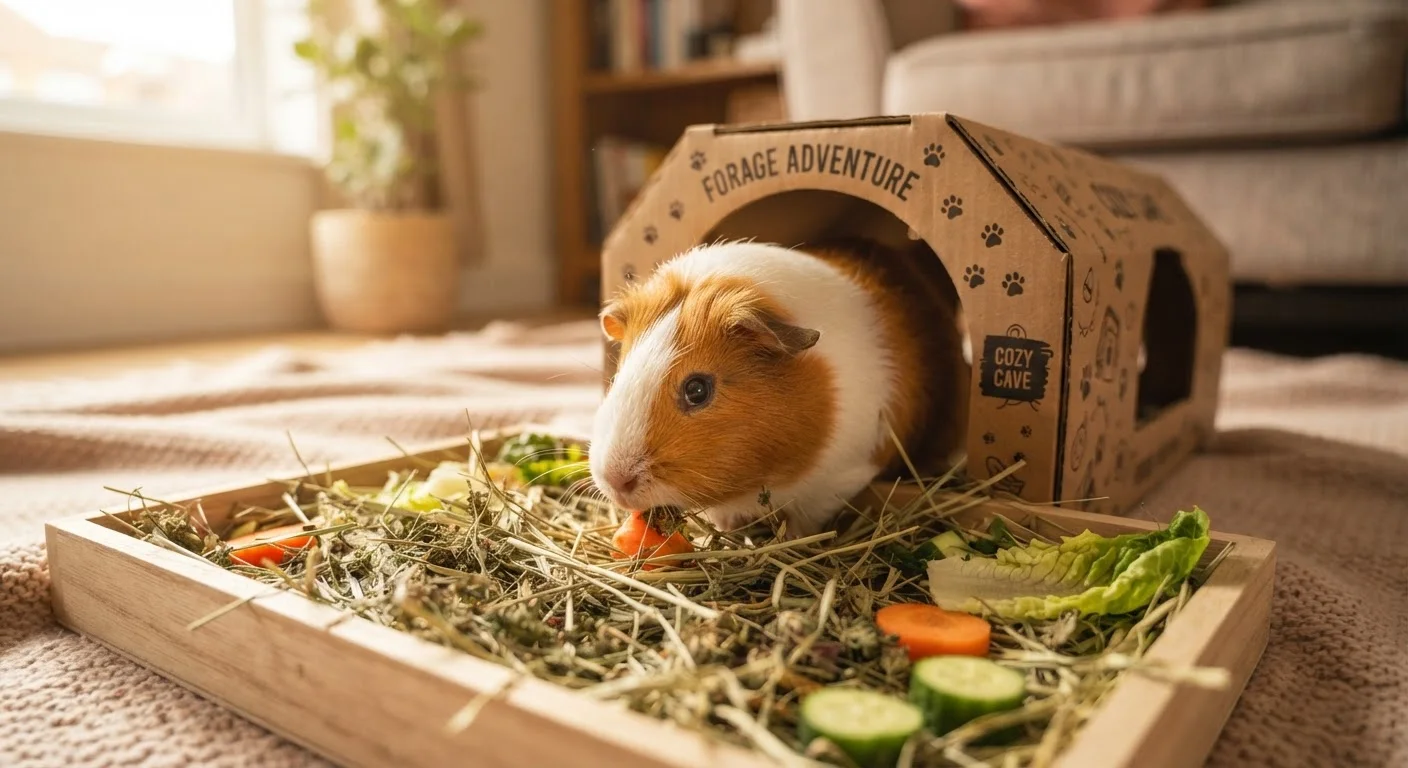
Rather than placing food directly in a bowl, scatter it. Hide pellets in hay, tuck small pieces of leafy greens inside cardboard tubes, or press food into a muffin tin covered with crumpled paper balls. This mimics the natural search-and-find pattern that small prey animals are wired for.
Foraging is especially beneficial for guinea pigs and rabbits, who naturally graze for extended periods. Even 10-15 minutes spent hunting for scattered hay-based treats can replace what would otherwise be idle time. Adjust portion sizes to avoid overfeeding - foraging supplements meals, it doesn't replace portion control.
Scattering food turns mealtime into a mental workout small animals are wired to enjoy.
Introduce a Digging Box
Hamsters and gerbils are natural burrowers. A deep container filled with a safe substrate - organic topsoil without additives, chemical-free coconut coir, or plain paper-based bedding - gives them an outlet for this hardwired drive. For hamsters, the container should ideally allow at least 6-8 inches of depth for meaningful burrowing.
Rabbits also benefit from digging boxes filled with compressed hay or shredded paper. It satisfies their instinct to dig without destroying carpet or furniture. A simple cardboard box with entry holes cut in the sides works well as a starter setup.
A deep digging box is one of the most species-appropriate enrichment items you can offer.
Create a Tunnel Network
Tunnels replicate the underground runs that many small mammals use for safety and exploration in the wild. Cardboard tubes (plain, unprinted), untreated wooden tunnels, and flexible fabric tunnels all work well. For guinea pigs and rabbits, arrange multiple tunnels so the animal can choose a route - adding a sense of territory and navigation.
Cardboard versions are especially practical because they're inexpensive and double as safe chew material. Replace them when they become soiled or structurally unsound. For ideas on how tunnels fit into a broader habitat setup for guinea pig housing, our care deep-dive covers what space requirements actually look like.
Tunnel networks give small pets a sense of territory and safe passage that supports their prey-animal psychology.
Offer Varied, Species-Safe Chew Objects
Chewing is not just a dental necessity - it's also a stress-reducing, exploratory behavior. Go beyond a single wooden block by rotating a range of textures and materials: untreated willow branches, apple wood sticks (from pesticide-free trees), dried pine cones, hemp rope (for rabbits), and compressed hay cubes.
Different species have different chewing intensities and preferences. Rabbits and guinea pigs tend to gnaw more deliberately on fibrous material, while hamsters and gerbils may shred aggressively. Avoid anything painted, varnished, chemically treated, or made from cedar or pine shavings, which can be irritating to small animals' respiratory tracts.
Rotating chew materials by texture keeps gnawing sessions engaging rather than routine.
Try Puzzle Feeders and DIY Problem-Solving Toys
Puzzle feeders designed for small animals - or simple DIY versions made from egg cartons, toilet paper rolls folded at the ends, or stacked cardboard boxes with openings - challenge pets to manipulate objects to reach food. Start simple and increase complexity gradually as your pet figures out each level.
This type of cognitive enrichment is particularly valuable for solitary species like hamsters and Syrian-breed animals, who don't have a companion to interact with. Even a few minutes of puzzle engagement each day can noticeably shift energy and reduce restless behavior.
Puzzle feeders deliver cognitive engagement that simple toys cannot replicate.
Schedule Supervised Free-Roam Time
For rabbits especially, time outside the enclosure in a fully pet-proofed space is not optional enrichment - it's a core welfare need. Life with a house rabbit involves planning for several hours of free movement daily. During roam time, scatter novel objects - a paper bag, a cardboard box, a new arrangement of tunnels - to transform the space into an exploration zone.
For guinea pigs and gerbils, a supervised playpen setup on a flat surface works well. Always check for hazards: loose wires, gaps behind furniture, and toxic houseplants should be removed or blocked before free-roam sessions begin.
Supervised free-roam time is irreplaceable - no in-cage setup fully compensates for open-space exploration.
Putting It All Together
The most effective enrichment plans layer different types of stimulation - physical activity, problem-solving, sensory exploration, and social interaction - rather than relying on one approach. Rotate items every few days to maintain novelty; small animals often disengage from the same object once it stops feeling new.
Rotate Enrichment Every Few Days
Small animals habituate quickly to familiar objects, meaning the same tunnel or puzzle loses its novelty within days. Keep a small rotation of three to five items and swap them out regularly to sustain curiosity and engagement. Even rearranging the same objects in a new configuration can reset interest levels.
Watch your pet's behavior as your guide. A rabbit that binkies (joyful leaping) when a new tunnel appears is telling you something important about what works. For more on reading those cues, our rabbit body language guide can help you decode exactly what your pet's reactions mean. And remember that enrichment works best alongside a sound diet - check out our guide to common feeding mistakes to make sure the basics are covered too.
This article is for general informational purposes only. Always consult a veterinarian familiar with exotic or small animal species before making significant changes to your pet's environment or diet.
The content on this site is provided for informational purposes only and should not be considered a substitute for professional advice. While we strive to provide accurate and up-to-date information, we make no guarantees regarding its completeness or accuracy. Always consult a qualified professional for advice specific to your circumstances before making any decisions.