

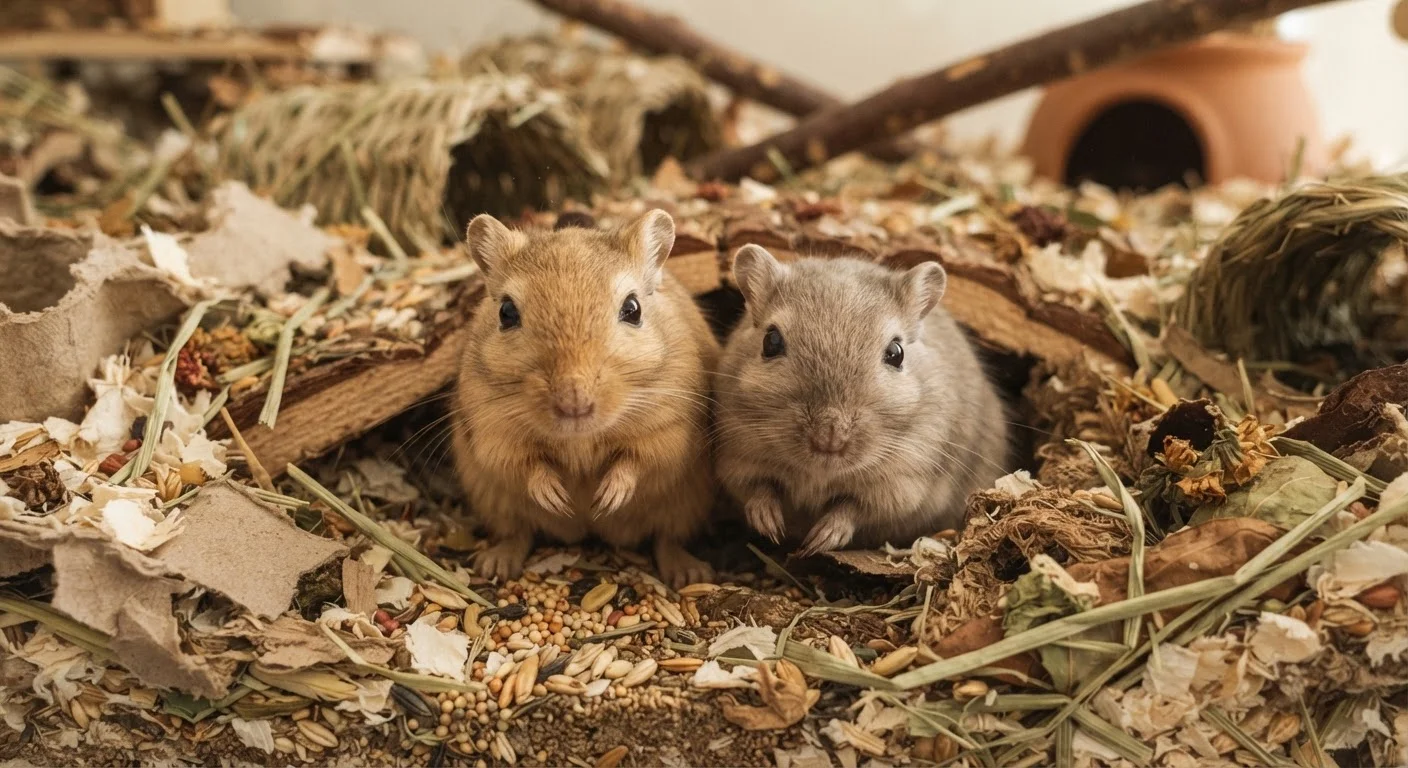
Why Gerbils Make Great Pets
Mongolian gerbils (Meriones unguiculatus) have been popular companion animals in the United States since the 1960s, and for good reason. They are curious, relatively easy to care for, and active during daylight hours - meaning you're more likely to see them in action than you would a nocturnal hamster. Unlike some small pets, gerbils rarely bite when socialized from a young age, making them a reasonable choice for older children and adults alike.
They're also naturally tidy. Gerbils produce very little urine compared to mice or rats, which keeps cage odor manageable. If you're weighing gerbils against other small companions, it helps to understand how their needs differ - check out our look at life with a rabbit or hamster habitat requirements for useful comparisons.
Setting Up the Right Habitat
The enclosure is the foundation of good gerbil care. A 10-gallon glass tank is often cited as a minimum for a pair, but a 20-gallon or larger tank meaningfully improves quality of life. Wire-topped tanks work well because they allow ventilation while preventing escapes - gerbils are agile and determined explorers.
Bedding depth matters enormously. In the wild, gerbils are burrowers. Filling the lower half of the tank with at least 6 inches of paper-based or aspen wood bedding (avoid cedar and pine, which contain aromatic compounds that can irritate the respiratory tract) allows them to dig tunnels, a core natural behavior. Add a dust-free hay layer on top for nesting material.
Furnish the enclosure with a solid-surface exercise wheel (mesh wheels can catch small limbs), a wooden hide or nest box, and safe chew items such as untreated wood blocks or cardboard tubes. Gerbils' teeth grow continuously, so chewing is a biological need, not just entertainment. For creative enrichment ideas that go well beyond the basics, see our guide on small pet enrichment.
When introducing two adult gerbils who don't know each other, use the split-cage method: divide the tank with mesh for one to two weeks so they can smell and see each other without contact, then gradually allow supervised interaction.
Gerbils introduced too quickly often fight, and injuries can be severe. The split-cage approach reduces territorial aggression and significantly improves the odds of a successful bond.
Provide a small ceramic dish filled with chinchilla dust a few times per week - gerbils will roll in it enthusiastically and it helps keep their coat clean and oil-free.
Gerbils are native to arid environments and, like chinchillas, benefit from dust bathing as a natural grooming behavior. It also serves as easy, cost-effective enrichment.
Spot-clean soiled bedding every two to three days and perform a full enclosure refresh every three to four weeks, replacing all bedding and wiping down surfaces with a pet-safe cleaner.
What to Feed Your Gerbils
A balanced gerbil diet centers on a commercial seed-and-pellet mix formulated specifically for gerbils. These blends provide a broad nutritional profile that plain sunflower seeds alone cannot. Sunflower seeds and other fatty seeds should be present in the mix but not dominate it - overconsumption contributes to obesity and nutritional imbalance.
Supplement the base mix with small portions of fresh vegetables a few times per week: leafy greens like romaine lettuce, small pieces of carrot, and cucumber are generally well-tolerated. Avoid citrus fruits, onions, and grapes. Fresh water should be available at all times, ideally via a sipper bottle to keep it clean. Treats - including fruit - should be occasional and small, as gerbils are prone to storing and selectively eating their favorites, which can skew their nutrition over time. Our piece on common small pet feeding mistakes covers pitfalls that are easy to overlook.
Social Needs and Handling
Gerbils are highly social animals and keeping a single gerbil is widely considered a welfare concern by small animal veterinarians and animal behaviorists. Same-sex pairs or small groups - ideally introduced as littermates - are the standard recommendation. Introducing adult gerbils who are strangers can be done, but it requires a careful split-cage introduction method and patience, as gerbils can be territorial with unfamiliar animals.
When it comes to handling, start slowly. Allow new gerbils several days to acclimate to their enclosure before attempting to pick them up. Begin by placing your hand in the tank and letting them approach on their own terms. With consistent, gentle handling, most gerbils become comfortable being held within a few weeks. Always scoop from below rather than grabbing from above, which mimics a predator strike and triggers a flight response.
Before you bring gerbils home, make sure you have everything in place. Our new small pet owner checklist walks through what to have ready on day one.
Monitoring Health and Spotting Problems Early
Gerbils are prey animals that instinctively mask signs of illness, so daily observation is essential. Key things to watch for include changes in activity level, appetite, or water intake; wet fur around the nose or tail (which can indicate respiratory infection or diarrhea); overgrown or misaligned teeth (malocclusion); and hair loss or skin irritation. Weight loss is often the earliest concrete sign that something is wrong - a small postal scale used weekly helps you catch gradual changes before they become critical.
One condition specific to gerbils is epileptiform seizures, which occur in a portion of the population and are usually triggered by stress or sudden environmental changes. Mild seizures - brief shaking followed by a quick return to normal - are generally not considered life-threatening but should still be discussed with a veterinarian familiar with exotic small animals.
Find a veterinarian experienced with small exotic mammals before you need one urgently. Not all general practice vets see gerbils, so locating an appropriate provider in advance is a practical step every owner should take.
This article is for general informational purposes only and is not a substitute for professional veterinary advice. Always consult a qualified veterinarian for concerns about your pet's health.
The content on this site is provided for informational purposes only and should not be considered a substitute for professional advice. While we strive to provide accurate and up-to-date information, we make no guarantees regarding its completeness or accuracy. Always consult a qualified professional for advice specific to your circumstances before making any decisions.