

Why Habitat Design Matters More Than You Think
Hamsters are often sold as low-maintenance starter pets, but that reputation undersells what they genuinely need to thrive. In the wild, a Syrian hamster may travel several miles each night foraging for food and maintaining elaborate burrow systems. Dwarf species share similar instincts. When a captive habitat fails to accommodate these behaviors, hamsters frequently develop stress-related problems - repetitive bar chewing, excessive self-grooming, or lethargy - that owners sometimes mistake for a calm temperament.
The good news is that meeting a hamster's behavioral needs is straightforward once you understand the principles. If you're still deciding which species to bring home, our guide to Syrian vs. dwarf hamsters covers how their space and enrichment needs differ. This article walks you through building a habitat that works from day one.
What you will need
Step-by-Step: Building a Behavior-Supporting Enclosure
Follow these steps in order. The first few choices - enclosure size and substrate - set the foundation everything else depends on.
Choose an Adequately Sized Enclosure
Select an enclosure with at least 450 square inches of unobstructed floor space - the equivalent of a standard 40-gallon breeder tank. Many cages marketed for hamsters fall well short of this. Bin cages (large plastic storage containers with ventilated lids) are a popular and cost-effective alternative that offers generous space.
Taller enclosures also allow deeper substrate, which matters enormously for burrowing. Avoid wire-bottomed cages entirely - they can injure feet and make deep bedding impossible to maintain.
Fill the Enclosure with Deep Substrate
Add a minimum of 6 inches of bedding, and aim for 10 inches if your enclosure depth allows it. Paper-based substrates (such as shredded paper pulp) and kiln-dried aspen shavings are widely regarded as safe choices. Avoid scented bedding products and cedar or pine shavings, which contain aromatic oils that can irritate a hamster's respiratory tract.
Pack a section of the bedding firmly against one corner or wall - hamsters prefer to burrow into compacted substrate that holds its tunnel shape rather than loose fill that collapses.
Install an Appropriately Sized Solid-Surface Wheel
The wheel is non-negotiable. Choose a solid running surface - never mesh or barred - to prevent foot and leg injuries. Syrian hamsters require a wheel of at least 10-12 inches in diameter so their spine remains straight while running. Dwarf hamsters do well with an 8-inch wheel.
Position the wheel so it does not touch enclosure walls during rotation, and check that the axle is quiet - persistent noise from a squeaky wheel during nighttime hours can create disturbance for both the hamster and household members.
Add a Hideout and Nesting Material
Hamsters are prey animals that feel secure only when they have a sheltered sleeping space. Provide at least one wooden or ceramic hideout large enough for your hamster to turn around inside comfortably. Avoid plastic hideouts with poorly ventilated chambers, which can trap humidity.
Place a generous handful of unscented tissue paper or plain paper strips inside and nearby - hamsters will shred and arrange nesting material themselves, which is an important outlet for natural behavior.
Set Up Foraging-Based Feeding Stations
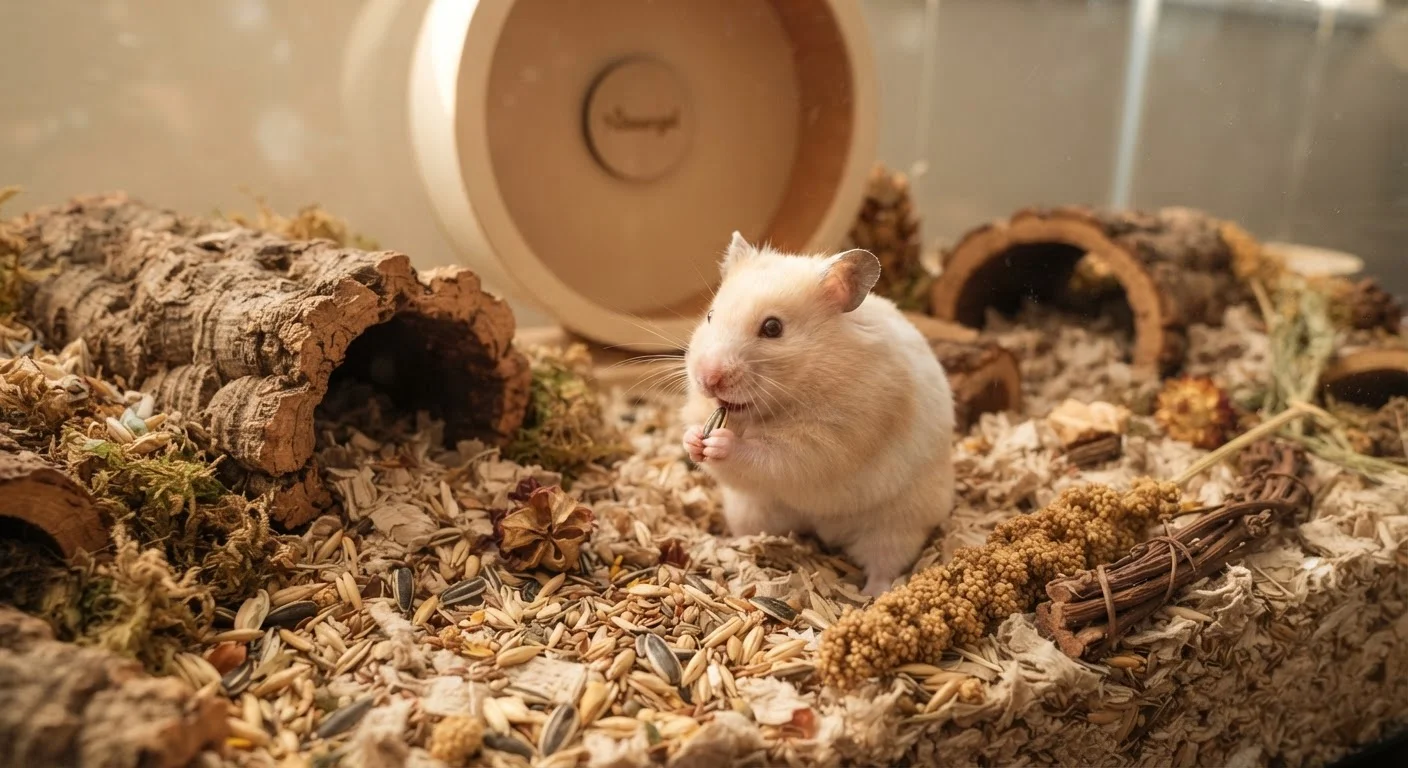
Rather than placing all food in a single bowl, scatter a portion of your hamster's daily food ration throughout the bedding. This simple change activates foraging instincts that would otherwise go unfulfilled. Use a heavy ceramic dish or water bottle for water to prevent tipping and contamination.
Supplement the staple seed or pellet mix with small amounts of fresh vegetables a few times per week - leafy greens, cucumber, or small pieces of carrot are generally well tolerated. Remove uneaten fresh food within 24 hours to prevent spoilage.
Place the Enclosure in the Right Location
Set the habitat in a quiet room away from direct sunlight, drafts, and heating or cooling vents. Hamsters are sensitive to temperature extremes; the target range is generally 65-75°F (18-24°C). Temperatures consistently above 80°F can trigger torpor - a dangerous state sometimes mistaken for hibernation - even in domesticated hamsters.
Because hamsters are crepuscular (most active at dusk and dawn) and nocturnal, placing the enclosure in a bedroom works for many owners, provided the wheel runs quietly. Avoid areas near televisions, speakers, or loud appliance cycles, as vibration and noise cause stress.
Enrichment and Daily Maintenance
A well-built enclosure still needs ongoing engagement to stay stimulating. Hamsters habituate quickly to static environments, so rotating enrichment objects every one to two weeks maintains novelty. Cork logs, wooden chew bridges, and paper-based tunnels are safe materials that also satisfy the natural urge to chew and gnaw.
Scatter feeding - hiding portions of food throughout the bedding rather than placing everything in one bowl - is one of the highest-impact enrichment changes you can make. It activates the foraging instinct that occupies wild hamsters for hours each night. For additional ideas that go beyond basic cage toys, see our small pet enrichment guide.
Spot-clean soiled areas every two to three days and perform a full substrate change every three to four weeks. Avoid cleaning the entire enclosure at once with strong disinfectants - removing all scent markings in a single session can be highly stressful for hamsters, who rely on familiar smells for security.
Rotate Enrichment to Prevent Habituation
Hamsters quickly become indifferent to objects that never change. Swap out one or two items each week - a different tunnel shape, a new foraging puzzle, or a rearranged layout - to keep the environment mentally stimulating. This mirrors the unpredictability hamsters encounter naturally and is one of the most effective welfare improvements you can make at low cost.
Building trust through gentle, consistent handling complements a great habitat. Confident, calm hamsters explore their environment more actively and benefit more from enrichment. Our guide to handling small pets safely walks through low-stress taming techniques.
The content on this site is provided for informational purposes only and should not be considered a substitute for professional advice. While we strive to provide accurate and up-to-date information, we make no guarantees regarding its completeness or accuracy. Always consult a qualified professional for advice specific to your circumstances before making any decisions.