

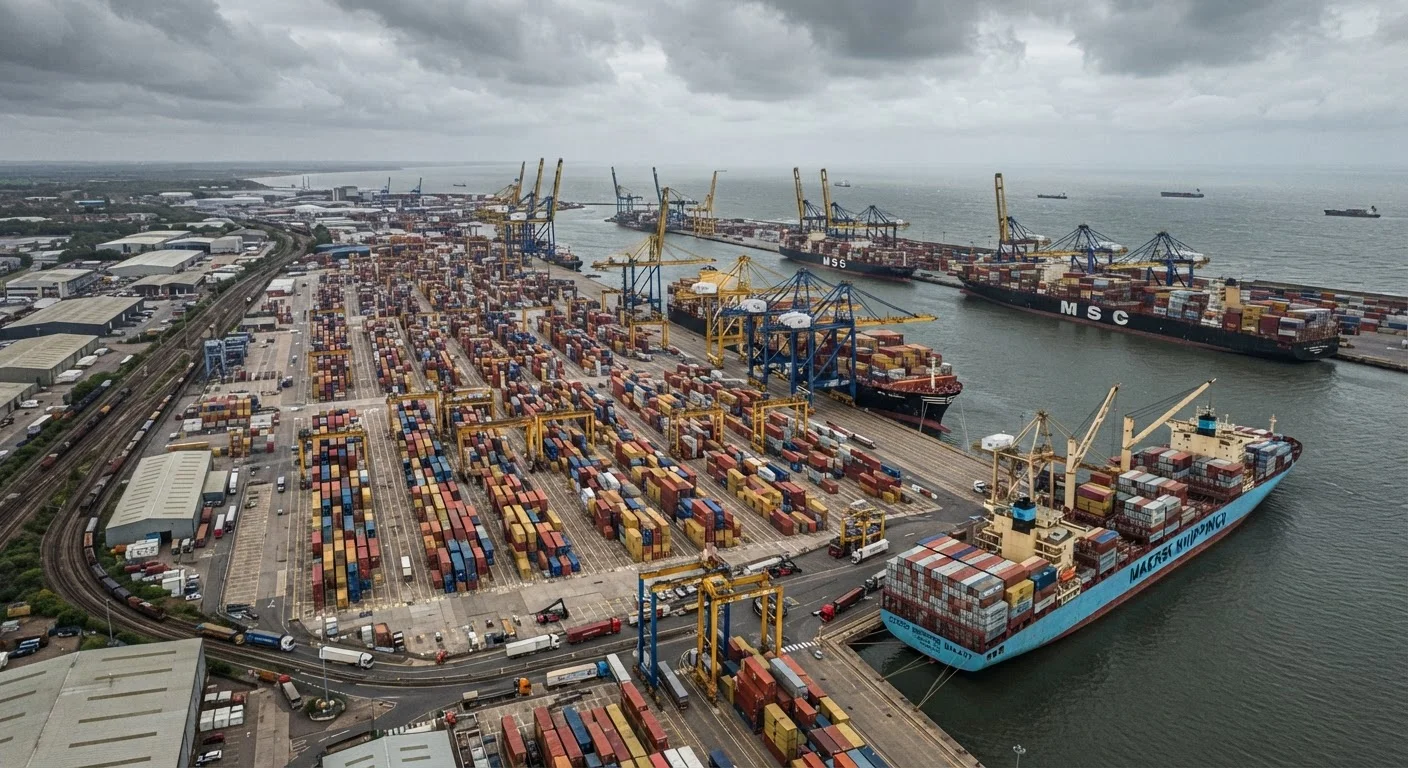
How a Disruption Travels From the Source to Your Shopping Cart
Every product on a store shelf passed through dozens of hands, facilities, and transport legs before you picked it up. When any single link in that chain fails, costs accumulate - and those costs rarely disappear quietly.
Consider a straightforward example: a factory in Southeast Asia reduces output due to a raw material shortage. The manufacturer pays more per unit to source materials from a secondary supplier. Shipping costs rise because fewer finished goods are moving, reducing economies of scale on freight. The importer absorbs some of that increase but adjusts the wholesale price upward to protect margins. The retailer, facing a higher cost of goods, raises the shelf price - sometimes immediately, sometimes weeks later when inventory bought at the old price runs out.
This sequence explains why disruptions that make headlines in one part of the world translate into price changes at your local store, often with a delay that makes the connection easy to miss. As the layers of logistics and energy costs compound, the final number on the price tag can bear little resemblance to the original production cost.
~80%
Share of global trade carried by sea freight
The United Nations Conference on Trade and Development (UNCTAD) estimates that maritime shipping handles approximately 80% of world trade by volume, making port disruptions a critical vulnerability.
12-18 months
Typical lag before supply disruptions fully clear
Industry analysts and logistics researchers have generally observed that major supply shocks take a year or more to work fully through distribution networks and pricing structures.
3-5x
Peak ocean freight rate surge during recent disruptions
Shipping industry data showed that spot rates on key transpacific and transatlantic routes multiplied several times over during peak pandemic-era port congestion periods.
The Key Pressure Points That Amplify Costs
Not all parts of the supply chain are equally fragile. Several nodes are known to amplify disruptions significantly:
- Port congestion: When ships queue outside major ports, demurrage fees (charges for delayed container returns) stack up quickly. Those fees are eventually priced into goods.
- Just-in-time inventory models: Many manufacturers operate with minimal stockpiles to reduce warehousing costs. When inbound shipments stall, production lines halt faster than they would with buffer inventory.
- Single-source components: Some industries - particularly semiconductors and specialty chemicals - depend on a narrow range of global suppliers. A disruption at one facility can ripple across entire product categories.
- Energy price spikes: Manufacturing, refrigeration, and freight all run on energy. When fuel costs surge, so does the cost of producing and moving almost everything. The ripple effect of gas prices illustrates how broadly this feeds into consumer budgets.
Labor shortages add another dimension. Staffing gaps at warehouses, ports, and trucking companies slow throughput even when physical goods are available. The structural staffing shifts seen across hospitality reflect a broader pattern that affected goods distribution as well.
Why Price Effects Outlast the Disruption Itself
One of the most frustrating realities for consumers is that prices frequently remain elevated long after the original bottleneck is resolved. Several mechanisms explain this:
Contract pricing: Major shippers and manufacturers lock in supply agreements months in advance. Even when spot prices for freight or raw materials fall, companies bound by earlier contracts continue paying - and pricing - at the older, higher rates.
Margin recovery: Businesses that absorbed costs during peak disruption phases use the post-disruption period to rebuild profit margins. They have little competitive incentive to lower prices while consumers have already adjusted expectations.
Inventory repricing: Retailers typically sell through old inventory before restocking at new prices. The transition period can run weeks or months, blurring the before-and-after price picture for shoppers.
This dynamic connects to the broader shift toward algorithmic and dynamic pricing practices. Retailers increasingly use demand signals to set prices in real time, which can prevent prices from falling even when supply pressure eases. The rise of dynamic pricing in retail has added another layer of complexity to how consumers experience price changes.
“Supply chains are not broken - they are being exposed. What we built for efficiency was never designed for resilience, and now we are learning the difference between those two things.”
— Willy Shih, Professor at Harvard Business School, research focus on manufacturing and global supply chains
What This Means for Everyday Consumer Budgets
Understanding the mechanics of supply chain pricing helps set realistic expectations. When news reports describe a bottleneck clearing, that does not mean shelf prices will follow immediately. Consumers who track prices on recurring purchases - groceries, household staples, or auto parts - may notice that relief arrives slowly and unevenly across categories.
Food prices are particularly layered in this regard. Upstream disruptions involving packaging materials, diesel for refrigerated trucks, or agricultural inputs can all feed into what appears on a grocery receipt, independently of what happens at the farm level. The forces that drive food prices beyond the farm illustrate just how many variables shape a single grocery bill.
Retail itself is also changing in ways that affect how disruptions translate to prices. The ongoing shift toward omnichannel retail means that the same product may be priced differently online versus in-store, depending on localized demand and inventory signals - adding yet another variable for budget-conscious shoppers to navigate.
Awareness of these patterns does not eliminate cost pressures, but it does help consumers distinguish between temporary spikes and structural price shifts - a meaningful distinction when planning household spending.
Frequently Asked Questions
Businesses that absorbed extra costs during a disruption often keep prices elevated to recover losses and rebuild profit margins. Additionally, some upstream cost increases - like higher shipping contract rates - are locked in for months after spot prices fall. This lag effect means consumers frequently pay more well after the underlying bottleneck clears.
Electronics, automobiles, and appliances are especially vulnerable because they rely on complex, globally dispersed component networks. Groceries and household goods are also affected when energy, packaging, or freight costs spike. Items with long manufacturing lead times or single-source components tend to see the sharpest and longest-lasting price effects.
Freight costs are a direct input into the final price of imported goods. When ocean shipping rates surge - as they did dramatically during the pandemic era - importers pass those costs along through the supply chain. By the time a product reaches a retailer, elevated freight costs may be baked into the wholesale price, which is then reflected in what shoppers see on the shelf. See how <a href="/news-trends/market-price-news/gas-prices-and-the-ripple-effect-across-your-monthly-budget">fuel costs ripple through your monthly budget</a> for a related breakdown.
In theory, yes - once supply is restored and inventory builds back up, competitive pressure can bring prices down. In practice, price decreases are often slower and smaller than the original increases because businesses are reluctant to cut prices that customers have already accepted.
No. Lower-income households tend to feel the impact more sharply because a higher proportion of their budget goes toward necessities like food, fuel, and household goods - all of which are commonly affected by supply disruptions. Wealthier consumers may be better positioned to delay discretionary purchases or source alternatives.
Transparency varies widely. Some retailers communicate cost pressures clearly, while others adjust prices without explanation. Algorithmic pricing tools can also cause real-time fluctuations that have little to do with supply chain conditions. The article <a href="/news-trends/consumer-trends/why-price-tags-have-gotten-harder-to-trust">Why Price Tags Have Gotten Harder to Trust</a> explores this dynamic further.
The content on this site is provided for informational purposes only and should not be considered a substitute for professional advice. While we strive to provide accurate and up-to-date information, we make no guarantees regarding its completeness or accuracy. Always consult a qualified professional for advice specific to your circumstances before making any decisions.