

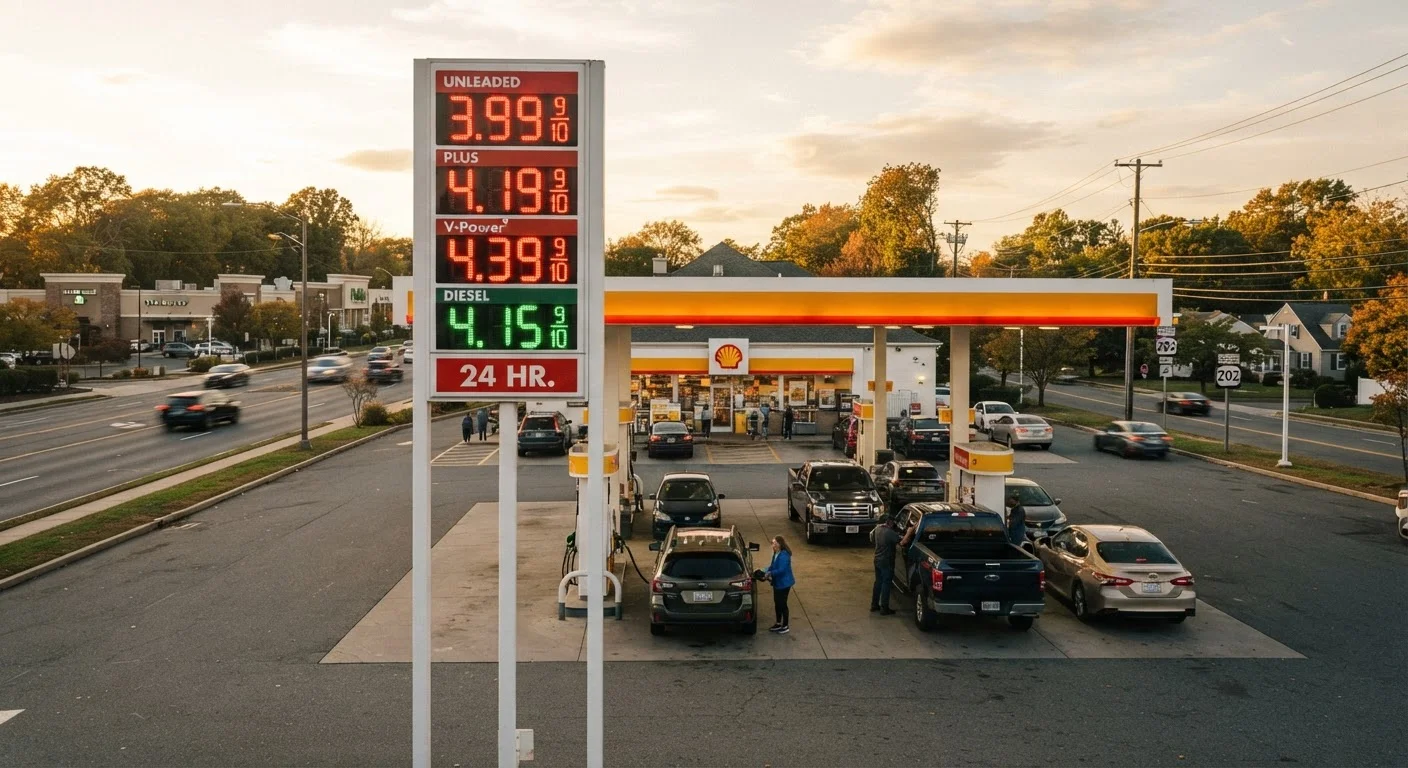
Why Fuel Costs Are Woven Into Almost Everything
Gasoline and diesel are not just transportation fuels - they are foundational inputs to the broader economy. Every physical product consumers purchase has, at some point in its journey, been moved by a vehicle burning fuel. Raw materials travel from extraction sites to factories. Finished goods travel from factories to warehouses. Pallets move from warehouses to retail stores, and last-mile delivery vehicles bring packages to doorsteps.
Each of those legs carries a fuel cost. When pump prices climb, those costs accumulate across the supply chain and compress the margins of businesses at every stage. Many businesses - especially smaller ones with less pricing power - respond by raising what they charge consumers. The result is that a price shock at the refinery eventually appears on your receipt at the checkout counter, even if you haven't filled your own tank recently.
This mechanism is why economists and policymakers watch fuel prices closely as a leading indicator of broader inflationary pressure. For a deeper look at how supply disruptions compound this effect, see how supply chain disruptions ripple into store prices.
Groceries and Food: The Most Visible Transmission Channel
Few household budget lines are as visibly connected to fuel prices as the grocery bill. Food is among the most transportation-intensive categories in the economy. A single item on a supermarket shelf may have crossed state lines multiple times - harvested in one region, processed in another, and distributed through a national network of refrigerated trucks and fulfillment centers.
Diesel, which powers the freight trucks that carry the majority of U.S. food shipments, is the key variable. When diesel prices spike, carriers raise freight rates, and those rates are baked into what manufacturers charge distributors, and ultimately what stores charge shoppers. Fresh produce, meat, and dairy - which require continuous refrigeration during transit - tend to be especially sensitive because refrigerated trucking is more fuel-intensive than standard dry freight.
~10¢
Per-gallon diesel change that shifts freight rates
Industry analyses have estimated that each 10-cent change in diesel prices moves national trucking costs by hundreds of millions of dollars annually, according to the American Transportation Research Institute.
~7%
Share of food retail price tied to transportation
U.S. Department of Agriculture research has indicated that transportation and logistics account for a meaningful share of the retail food price spread between farm and store.
70%+
U.S. freight moved by truck
According to the American Trucking Associations, trucks carry more than 70% of all freight tonnage in the United States, making diesel prices a central factor in consumer goods pricing.
Restaurant meals carry a similar dynamic. In addition to ingredient transportation costs, restaurants absorb higher fuel costs through delivery services, linen and supply pickups, and in some regions, propane or heating oil used in cooking. Those costs typically appear as menu price increases or reduced portion sizes rather than as an explicit surcharge. To understand the full range of factors shaping food prices, see the market forces driving food prices beyond the farm.
Shipping, Services, and the Bills You Might Not Expect
Beyond the grocery aisle, fuel price swings affect a wide range of services and goods that consumers may not immediately associate with energy costs. Parcel delivery carriers apply fuel surcharges that fluctuate with diesel prices - meaning that the cost of shipping an online order can quietly rise without the retailer changing their listed product price. Airlines adjust ticket prices and fees in response to jet fuel costs, which move in tandem with crude oil prices.
Home services are another area where fuel exposure is direct and often underappreciated. Landscapers, plumbers, HVAC technicians, and pest control companies all drive service vehicles and may charge more per visit when fuel costs are elevated. For small operators running a single truck, fuel can represent a meaningful share of monthly operating costs.
Utilities are not immune either. Natural gas and heating oil prices correlate with broader energy market conditions, so an oil price surge can translate to higher winter heating bills even for households that never drive. Housing costs and general inflation often diverge, but energy costs connect them more closely during commodity price spikes.
Making Sense of Price Signals Without Overreacting
Understanding the ripple effect is useful not because it gives consumers a way to predict exact price changes, but because it provides a framework for interpreting them. When food prices rise sharply after a period of elevated fuel costs, that pattern is expected and typically temporary - prices tend to moderate as energy markets stabilize, though the pace of relief is slower than the pace of increase.
Consumers who understand this mechanism are less likely to make abrupt financial decisions based on short-term price spikes. The right response to a fuel-driven price surge is usually to adjust spending expectations modestly rather than to overhaul a budget entirely. For a practical framework on evaluating price news before reacting, see questions to ask yourself before reacting to a price spike.
For vehicle owners, fuel costs are also a significant component of total ownership cost - one worth tracking alongside insurance, maintenance, and depreciation. See everything that goes into the total cost of owning a car for a full picture. For broader industry updates across sectors affected by energy price shifts, including autos, food, and retail, ongoing coverage can help you stay ahead of emerging trends.
Frequently Asked Questions
Food travels through multiple legs of transportation - from farm to processing facility to distribution center to store - and each leg burns fuel. Higher fuel costs increase the operating expenses of trucks, refrigerated warehouses, and delivery fleets, which suppliers and retailers typically pass along in product prices.
Not always, and not immediately. Prices often rise faster than they fall due to business pricing inertia and the time it takes for supply contracts to reset. Some cost relief does filter through over weeks or months, but the effect is typically smaller and slower than the original price increase.
In terms of broad economic impact, yes. Most commercial freight in the U.S. moves by diesel-powered trucks. When diesel prices rise, the cost of moving virtually every physical good goes up, making diesel fluctuations a more direct driver of consumer prices than retail gasoline.
Groceries, household goods, and restaurant meals rank among the most sensitive categories because they all require physical transportation. Services that require in-person delivery or travel - such as home repair, landscaping, and healthcare transport - also absorb fuel cost changes directly.
There is generally a lag of several weeks to a few months before fuel cost increases fully appear in retail food prices, depending on how long supplier contracts last and how much inventory is in the pipeline. The relationship is real but not instant.
Yes. Airlines use fuel surcharges that adjust with jet fuel costs, and shipping carriers like parcel services apply fuel surcharges to delivery fees. These charges are often itemized separately, making the connection between fuel prices and service costs more visible to consumers.
The content on this site is provided for informational purposes only and should not be considered a substitute for professional advice. While we strive to provide accurate and up-to-date information, we make no guarantees regarding its completeness or accuracy. Always consult a qualified professional for advice specific to your circumstances before making any decisions.