

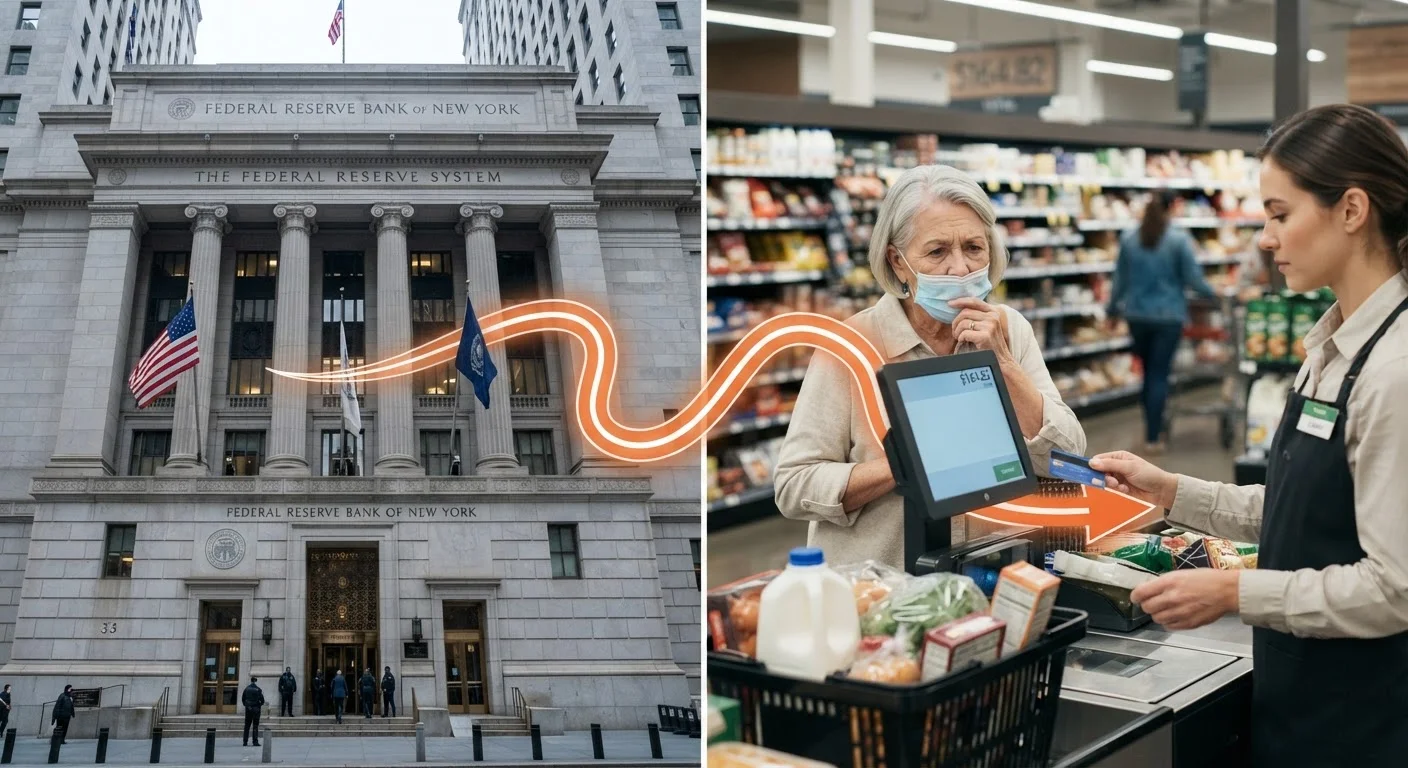
The Basic Logic - and Where It Gets Complicated
The Federal Reserve doesn't set the price of milk or gasoline directly. What it controls is the cost of borrowing money. When the Fed raises its benchmark interest rate, the cost of a mortgage, a car loan, or a business line of credit goes up. The reasoning is straightforward: make credit more expensive, and consumers and companies borrow and spend less. Reduced demand across the economy is supposed to ease pressure on prices.
But here's where most people misread the relationship: the path from a Fed rate decision to your monthly grocery bill is long, indirect, and full of friction. Markets may react within days; everyday consumer prices often take a year or more to reflect the change. And some prices - particularly in services like healthcare, rent, and dining - may barely respond at all in the short run.
Understanding this delay is essential. Many consumers expect prices to fall quickly after a rate hike and feel misled when that doesn't happen. The economic mechanism is real, but it's slow and uneven by design.
The Fed Doesn't Target Specific Prices
The Federal Reserve's mandate covers overall price stability and maximum employment - not the cost of any particular good or service. That means rate decisions are calibrated to broad economic conditions, not to whether eggs or gasoline feel affordable at any given moment. Consumers often expect more precision than monetary policy can deliver.
Which Prices Respond Fastest - and Which Resist
Not all consumer prices are equally sensitive to interest rate changes. Categories that rely heavily on financing tend to move first. When mortgage rates jump, housing demand typically cools - and home price growth often slows or stalls. Similarly, when auto loan rates rise significantly, car purchases can slow, putting some brake on vehicle prices. These are sectors where the link between borrowing cost and buying behavior is direct and visible.
Everyday goods - especially food - respond through a slower, more complicated chain. Higher rates can reduce business investment and slow wage growth over time, which eventually affects how much companies charge. But grocery prices are also influenced by fuel costs, agricultural conditions, global supply chains, and supplier contracts that are set months in advance. Why grocery prices don't drop even when inflation slows is a dynamic that many shoppers find frustrating - and it's directly tied to how slowly these transmission channels work.
Services are an even harder case. Prices for things like haircuts, restaurant meals, or childcare depend heavily on labor costs. Those tend to be sticky - meaning they don't fall easily once they've risen, even as broader monetary conditions tighten.
12-18 months
Typical lag before rate hikes affect core consumer prices
Economists and central banks broadly cite a one-to-two-year transmission lag for monetary policy to work through the economy and show up in price data.
~60%
Share of U.S. consumer spending in services
Because services make up a large portion of household budgets and respond slowly to rate changes, overall consumer price relief from rate hikes tends to be gradual and uneven.
2%
Federal Reserve's long-run inflation target
The Fed targets a 2% annual inflation rate as measured by the Personal Consumption Expenditures (PCE) price index - not a return to pre-inflation price levels.
The Difference Between Slower Inflation and Falling Prices
One of the most common misconceptions is that if the Fed successfully fights inflation, prices will return to where they were. In practice, that rarely happens. Disinflation - a slowdown in the rate of price increases - is the realistic goal of rate hikes, not deflation (an outright drop in prices).
When headlines say inflation is falling, they mean the pace of price increases has slowed, not that your grocery cart costs less than it did last year. To understand how economists measure this, it helps to know how price indexes work. CPI vs. PPI: two price indexes and what each one tells you explains the difference between consumer-facing and producer-facing measures - and why both matter for understanding where prices may head next.
For consumers, the practical implication is this: even after a successful rate-hike cycle, the price level is usually permanently higher than before inflation began. The central bank's job, as it defines it, is to stop prices from rising faster - not to undo increases that have already occurred.
What This Means for Everyday Financial Decisions
Consumers who understand this relationship can make more realistic financial plans. Expecting prices to snap back to 2020 levels because the Fed raised rates is likely to lead to frustration. A more useful frame is to watch whether price growth is stabilizing, which signals that the purchasing power of your dollar is eroding more slowly - even if it isn't recovering.
At the same time, higher interest rates have direct costs for household budgets. Credit card rates, adjustable-rate mortgage payments, and new auto loan terms can all rise quickly. Housing costs and general inflation often move differently - and for renters or prospective buyers, rate changes can affect affordability in ways that cut against the inflation-fighting goal.
For those trying to read the economic signals more clearly, reading an inflation report without an economics degree is a practical starting point for translating monthly data releases into something actionable for your own budget.
Track Rate Changes Alongside Your Own Budget
Rather than waiting for prices to fall, consider tracking which categories in your own spending are most affected by rate changes - particularly anything financed, like a car or home. This can help you time large purchases more strategically and avoid being surprised by borrowing costs that move faster than store prices do.
Frequently Asked Questions
Higher rates make borrowing more expensive, which tends to reduce spending by consumers and businesses. With less money chasing goods and services, upward pressure on prices eases over time. It's an indirect mechanism that works through the broader economy rather than targeting any specific price.
Economists generally estimate that monetary policy changes take six months to two years to work through the economy. Some sectors, like auto financing, respond faster; others, like rent, can take much longer to reflect rate changes.
Not necessarily. Rate hikes aim to slow the rate at which prices rise, not reverse price increases already in place. In most cases, consumers see prices level off or rise more slowly rather than drop back to previous levels.
No. Interest-rate-sensitive categories like housing, cars, and big-ticket appliances tend to react more quickly because purchases in those areas often depend on financing. Everyday grocery and service prices respond more slowly and through different channels.
If the central bank raises rates too fast or too far, it can slow economic growth enough to trigger a recession - meaning job losses and reduced income for households. This is why the Fed tries to calibrate rate decisions carefully, though the right level is always subject to debate.
The content on this site is provided for informational purposes only and should not be considered a substitute for professional advice. While we strive to provide accurate and up-to-date information, we make no guarantees regarding its completeness or accuracy. Always consult a qualified professional for advice specific to your circumstances before making any decisions.