

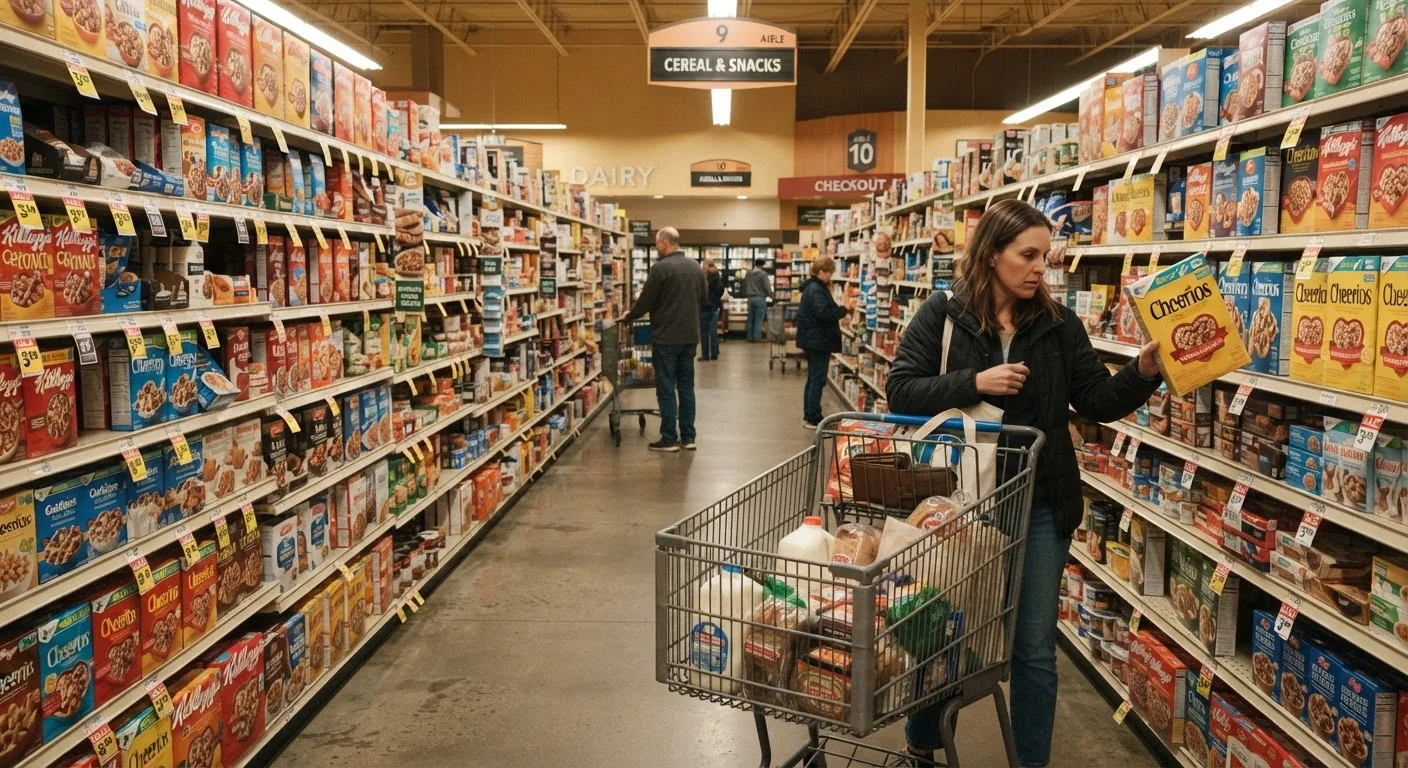
The Gap Between Headlines and Reality
Economic reporters announce that inflation has fallen to a two-year low. Meanwhile, shoppers reach the checkout line and feel no relief. That disconnect is not an illusion - it reflects a fundamental misunderstanding of what "inflation slowing" actually means.
When economists say inflation has declined, they mean the rate of price increases has slowed down. Prices are still going up - just not as fast as before. For prices to actually return to where they were in, say, 2020, the economy would need to experience sustained deflation, meaning prices would have to fall. That almost never happens across an entire grocery category in a healthy economy.
This distinction matters enormously for household budgets. A family spending $250 a week on groceries during a high-inflation period doesn't get that money back when inflation moderates. They simply stop losing as much ground each month.
Why Prices Are 'Sticky' in One Direction
Economists use the phrase downward price stickiness to describe the well-documented tendency of prices to resist falling even when the original pressures that raised them have eased. Several forces drive this behavior in the grocery sector.
Disinflation Is Not the Same as a Price Cut
When the Federal Reserve reports that inflation has cooled, it is measuring the pace of price changes - not the prices themselves. A drop from 8% annual inflation to 3% means prices are still rising, just more slowly. To see actual grocery prices fall, the inflation rate would need to go negative, which is defined as deflation. Historically, broad deflation in consumer food prices has been uncommon and is sometimes associated with economic contraction rather than prosperity.
Labor costs don't reverse. When food manufacturers and retailers raise wages to attract workers - as many did during the labor shortages of the early 2020s - those higher wages become a permanent part of their cost structure. Cutting wages is legally restricted in some cases and practically damaging to worker retention in most others.
Supply chain costs get embedded. Higher transportation, packaging, and energy expenses incurred during supply disruptions are passed on to consumers. Even after those disruptions ease, companies don't automatically lower prices because they're protecting margins built around the new cost baseline. For more on the layers behind food costs, see how market forces shape food prices beyond the farm.
Competitive pricing doesn't always push prices down. If all major grocery retailers are operating at similar elevated cost structures, none has a strong incentive to cut prices dramatically - that would simply reduce their own margins without capturing meaningful market share.
The Role of Consumer Expectations
Consumer behavior also plays a subtle but real role in keeping prices elevated. Once shoppers adjust to paying $6 for a loaf of artisan bread or $5 for a dozen eggs, those price points become the new psychological baseline. Retailers know this, and pricing strategies often reflect it.
This is related to why businesses sometimes turn to shrinkflation - reducing package sizes rather than cutting prices when they need to offer perceived value. A slightly smaller box at the same price is less psychologically jarring for shoppers than a price increase, but it effectively raises the cost per unit without reducing the sticker price.
“Inflation expectations are themselves a driver of inflation. When consumers expect prices to stay high, their behavior - and the behavior of businesses setting prices - tends to confirm that expectation.”
— Federal Reserve Bank of St. Louis, U.S. central bank research division
Understanding how shoppers perceive price changes - rather than just measuring those changes - is essential context for why grocery bills feel stubbornly high even as broader economic data improves.
What Slower Inflation Actually Means for Your Budget
Despite the frustration, moderating inflation does have real, if indirect, benefits for household budgets. When wages grow faster than prices - even elevated prices - purchasing power gradually improves. Over time, that gap can restore some of what was lost during high-inflation periods, even without a single price on the shelf dropping.
~20%
Cumulative U.S. grocery price rise, 2020-2024
USDA Economic Research Service data shows aggregate food-at-home prices rose substantially over this period, with no broad reversal even as annual inflation rates moderated.
3%
Approximate annual food inflation rate as of late 2024
Down significantly from the 11%+ peak seen in 2022, according to U.S. Bureau of Labor Statistics Consumer Price Index data - but prices themselves remained well above pre-surge levels.
Rare
Frequency of broad consumer price deflation in modern U.S. economy
Sustained deflation across consumer goods categories has occurred only during severe contractions; modest disinflation is the far more common outcome when inflation eases.
The path back to affordability for most households, when it happens, typically runs through wage growth and income gains rather than grocery price reductions. That's a slower and less visible process than watching a price tag change, which is part of why it doesn't feel like relief even when it is happening.
It also helps to separate grocery prices from other categories. Housing costs and general inflation often move differently, and the same logic applies within consumer goods - some food items fluctuate more than others based on harvest cycles, energy prices, and import costs.
For a broader look at misconceptions around price movements, common myths about rising prices that mislead everyday shoppers is a useful companion to understanding what the data can and can't tell us.
Frequently Asked Questions
When inflation slows, it means prices are rising at a slower rate, not that they are dropping. Businesses rarely reduce prices voluntarily once costs have risen, partly because their own expenses - labor, energy, and transportation - remain elevated even as headline inflation moderates.
Disinflation is when the rate of price increases slows down - for example, prices rising 3% instead of 8%. Deflation is when prices actually fall below a previous level. Disinflation is common; sustained deflation across consumer goods is rare in modern economies.
Historical evidence suggests that broad, sustained declines in grocery prices are uncommon once prices have risen substantially. Some individual items may fluctuate, but aggregate food prices generally hold at new levels rather than reverting to older ones.
Several factors keep prices elevated: businesses protect profit margins, wage costs don't fall once workers are paid more, and long-term supplier contracts lock in elevated input costs. Consumer psychology also plays a role - shoppers often adjust to new price levels over time.
Yes - slower inflation means your grocery bill grows less quickly than before, which eases the pressure on household budgets over time. Combined with wage growth, slower inflation can gradually improve purchasing power even without outright price cuts.
The content on this site is provided for informational purposes only and should not be considered a substitute for professional advice. While we strive to provide accurate and up-to-date information, we make no guarantees regarding its completeness or accuracy. Always consult a qualified professional for advice specific to your circumstances before making any decisions.