

Our Verdict
Buy Now, Pay Later can be a practical short-term tool when the terms are clear, payments are automatic, and the purchase fits comfortably within an existing budget. However, for consumers already managing tight finances or multiple payment obligations, BNPL's fragmented billing and variable fee structures can quietly add real costs. The convenience is real, but so is the risk of accumulating obligations that outpace income.
Best suited to disciplined budgeters making a planned, one-time purchase they can fully repay within the promotional window.
How Buy Now, Pay Later Actually Works
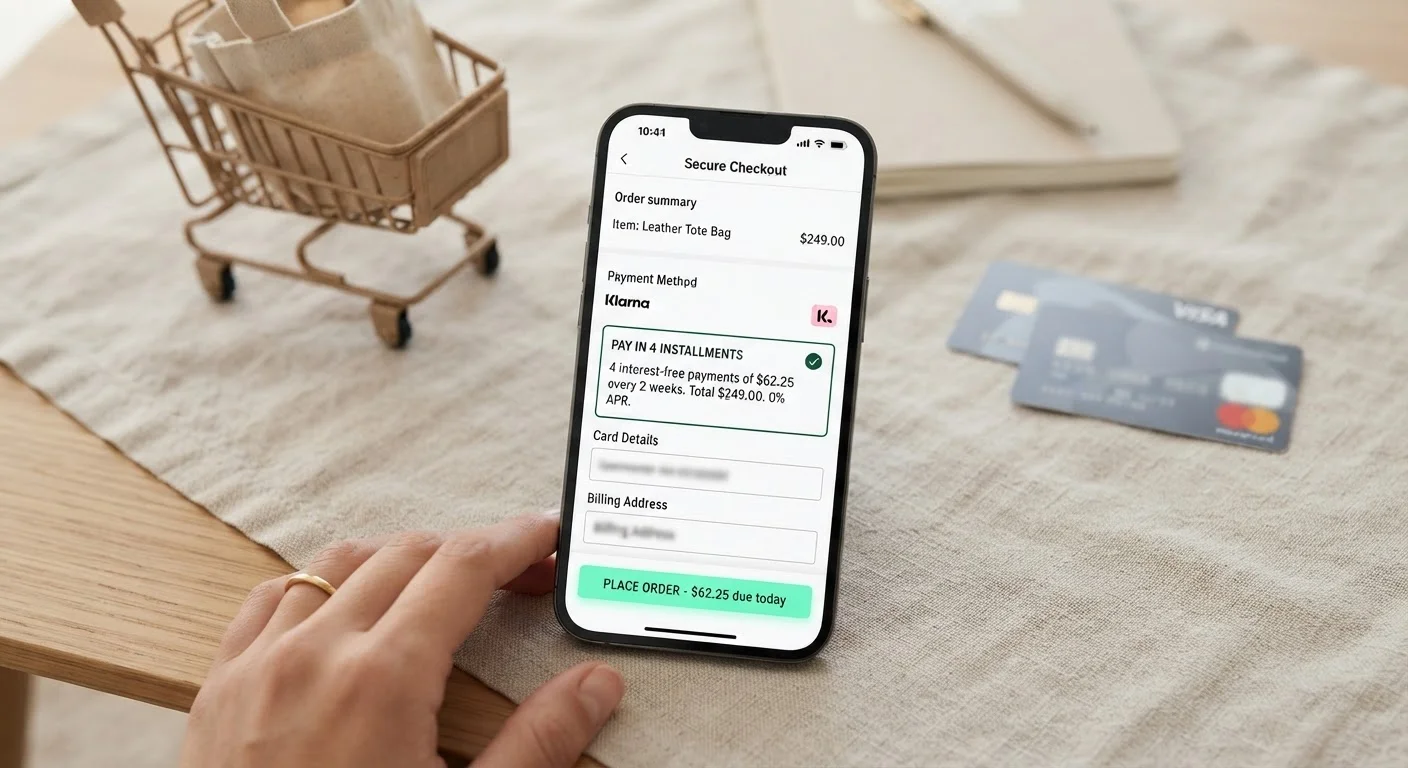
Buy Now, Pay Later - commonly abbreviated as BNPL - is a short-term financing arrangement that splits a purchase into a series of fixed installments, typically four payments spread over six weeks. The most common structure, often called "pay-in-4," charges no interest if payments are made on schedule. Other plans extend over several months and may carry annual percentage rates (APRs) that rival or exceed traditional credit cards.
BNPL providers typically conduct a soft credit check at sign-up - one that does not affect your credit score - though some longer-term plans use a hard inquiry. Approval is often near-instant, which is part of the appeal. Retailers integrate these options directly at checkout, making it easy to defer payment without leaving the purchase flow.
What varies significantly between providers is what happens when things go wrong: late fees, deferred interest clauses, and how missed payments are reported to credit bureaus differ from one service to the next. Understanding those details before agreeing to a plan is essential. For a closer look at how these costs stack up in practice, see how BNPL costs American shoppers.
The Real Advantages of Deferred Payment Plans
When used within a clear budget, BNPL offers tangible benefits that traditional credit doesn't always match.
No interest on short-term pay-in-4 plans
The most common BNPL structure charges zero interest if all four payments are made on schedule, making it genuinely cost-free for disciplined users.
Accessible without strong credit history
Many BNPL providers use soft checks or proprietary approval models, making them available to consumers who may not qualify for traditional credit cards.
Predictable, fixed payment amounts
Unlike revolving credit, BNPL installments are fixed at the time of purchase, making it easier to forecast exactly what is owed each pay period.
Useful for managing large one-time expenses
For necessary but significant purchases - such as a home appliance or car repair - spreading cost over weeks can prevent dipping into emergency savings.
For consumers without access to low-interest credit cards, BNPL's interest-free window on short-term plans represents a genuine alternative. It also avoids the revolving balance trap that credit cards can create. Used intentionally, it resembles an informal layaway plan - except you receive the item immediately.
Where BNPL Can Cost You More Than Expected
The risks of BNPL are real and often underappreciated at the point of purchase.
Late fees can accumulate quickly
Many BNPL providers charge a flat late fee per missed payment. Across multiple plans, these fees can add up to amounts that dwarf any savings from using BNPL in the first place.
Encourages purchases beyond current budget
Research from consumer advocacy groups has consistently found that BNPL users often spend more per transaction than they would with upfront payment, driven by the reduced perceived cost at checkout.
Longer plans may carry high APRs
Extended BNPL financing - plans stretching three to 24 months - can carry APRs ranging from around 10% to 36%, comparable to or exceeding many credit cards.
No credit-building benefit in most short-term plans
On-time BNPL payments often go unreported to credit bureaus, so responsible use builds no positive credit history, while missed payments on some plans can still cause harm.
Multiple plans are difficult to track
Consumers using several BNPL services simultaneously may find it hard to monitor total outstanding obligations, increasing the risk of an unexpected cash shortfall.
One of the least-discussed risks is what researchers sometimes call "payment fragmentation" - when a consumer manages multiple simultaneous BNPL plans and loses track of total obligations. Unlike a single credit card statement, BNPL plans don't consolidate, making it harder to see overall debt at a glance. This is a dynamic that connects to broader retail trends: as dynamic pricing in retail continues to evolve, consumers face increasingly complex decision environments at checkout.
BNPL and Your Credit Score: What to Know
The relationship between BNPL and credit reporting is still evolving. Historically, most short-term BNPL plans did not report on-time payments to major credit bureaus - meaning responsible use offered no credit-building benefit. However, missed or late payments on some plans are reported, creating a one-sided risk: no upside reward, but a potential downside penalty.
BNPL Is Not Uniformly Regulated
Unlike credit cards, BNPL products are not subject to a single federal regulatory framework in the United States, meaning terms, disclosures, and consumer protections vary by provider. The Consumer Financial Protection Bureau (CFPB) has issued guidance on BNPL but comprehensive federal rules are still developing. Consumers should treat each provider's terms as a separate contract and not assume protections equivalent to those that apply to credit cards.
Longer installment plans (typically those running six months or more with interest) are more likely to involve hard credit inquiries and formal reporting, functioning more like personal loans. Consumers considering these products should treat them accordingly and review their full credit profile before applying.
For those weighing payment method choices broadly, comparing cash versus credit card use may clarify which approach best fits individual financial habits.
Making an Informed Decision at Checkout
The ubiquity of BNPL at checkout has normalized deferred payment in a way that can blur the line between a convenience tool and a debt product. Consumers who benefit most from BNPL tend to share a few habits: they use it for planned purchases rather than impulse buys, they set payment reminders or enroll in autopay, and they avoid running more than one BNPL plan simultaneously.
Before selecting a BNPL option, it is worth asking: Would I buy this if I had to pay today? If the answer is no, the installment plan may be enabling a purchase that doesn't fit the current budget - a trade-off worth understanding before accepting. The convenience-versus-savings trade-off plays out in real terms with every deferred payment decision.
This article is for general informational purposes only and does not constitute financial advice. Consumers should review the full terms and conditions of any BNPL product and consult a qualified financial professional for guidance specific to their situation.
The content on this site is provided for informational purposes only and should not be considered a substitute for professional advice. While we strive to provide accurate and up-to-date information, we make no guarantees regarding its completeness or accuracy. Always consult a qualified professional for advice specific to your circumstances before making any decisions.