

Our Verdict
BNPL can be a genuinely useful tool when used for planned purchases within a clear budget - particularly when the plan carries no interest and payments are manageable. However, the same features that make it frictionless also make it easy to accumulate overlapping obligations that strain monthly cash flow. The absence of uniform consumer protections across providers adds meaningful risk.
Shoppers who have a stable income, a clear repayment plan, and are using BNPL to manage cash flow on a single necessary purchase rather than to stretch their budget beyond its limits.
How BNPL Actually Works
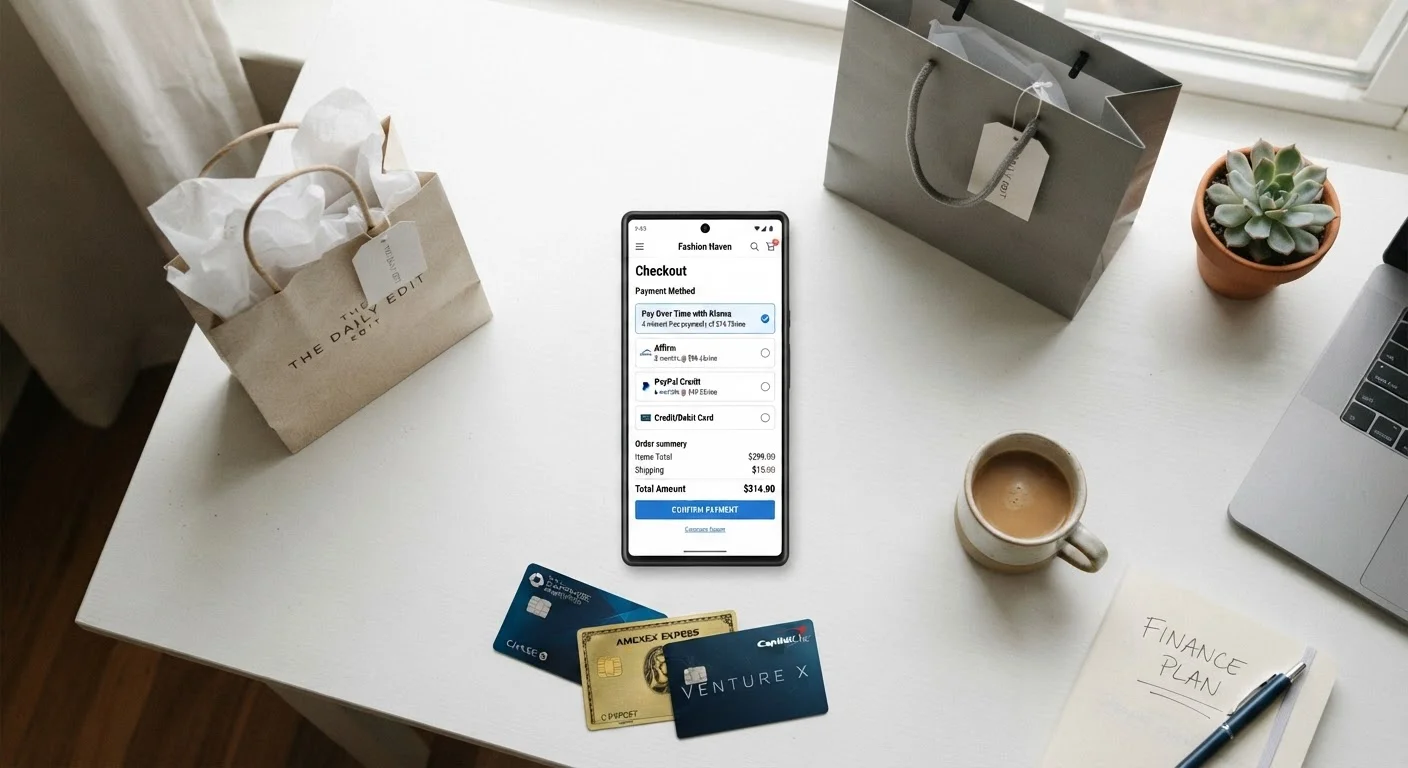
Buy Now, Pay Later - commonly called BNPL - is a short-term financing arrangement offered at checkout, both online and in physical stores. Instead of paying the full purchase price upfront, shoppers split it into a set number of installments, typically four equal payments made every two weeks. The most widely used structure charges no interest if all payments are made on schedule.
Providers earn revenue primarily from merchants, who pay a fee in exchange for higher conversion rates and larger average order sizes. Some providers also collect late fees from consumers, and certain longer-term BNPL products do carry explicit interest rates that can be significant. This dual revenue model is a key reason the industry has grown rapidly - it serves retailer interests as much as consumer ones.
For a fuller picture of how deferred payment structures work and what fee arrangements look like across the market, see what BNPL actually costs consumers.
The Real Advantages
Zero interest if payments are made on time
Most standard BNPL plans carry no interest charge when all installments are paid by their due dates, making them cheaper than revolving credit card debt for the same purchase.
Accessible without a hard credit inquiry
The majority of BNPL providers use a soft credit check at the point of sale, which does not affect a consumer's credit score in the way a traditional loan application does.
Predictable, fixed payment schedule
Unlike a credit card minimum payment that fluctuates with the balance, BNPL installments are fixed amounts on set dates, which makes budgeting more straightforward.
Spreads cost of necessary expenses without debt spiral
For one-time essential purchases, a short-term installment plan can bridge a cash flow gap without locking a consumer into long-term revolving debt.
The core appeal of BNPL is genuine. For consumers managing irregular income or facing a necessary expense - a car repair, a medical copay, a back-to-school purchase - spreading payments without interest can be a practical tool. The soft credit check used by most providers at the point of purchase is less invasive than a traditional loan application and does not affect a credit score the way a hard inquiry does.
Compared with carrying a balance on a high-interest credit card, a properly structured BNPL plan can cost less overall. That comparison matters: according to Federal Reserve data, average credit card interest rates have climbed steeply in recent years, making zero-interest installment plans attractive by contrast. The caveat is that the zero-interest benefit disappears the moment a payment is missed.
Where It Can Go Wrong
Late fees erode the zero-interest advantage
A single missed payment can trigger a late fee that eliminates the cost benefit of the plan and, in some products, converts the balance to an interest-bearing arrangement.
Payment stacking strains monthly cash flow
Holding multiple concurrent BNPL plans can create a cluster of due dates that strains a budget in ways that were not obvious at the time of each individual purchase.
Inconsistent credit reporting creates asymmetric risk
Many providers report delinquencies but not on-time payments, meaning consumers bear the credit downside without receiving the upside of a positive payment history.
Consumer protections are not yet standardized
Regulatory frameworks for BNPL are still evolving, meaning dispute resolution, refund rights, and disclosure requirements vary significantly across providers.
Encourages spending beyond immediate means
Research from the CFPB and academic consumer finance studies suggests that installment framing at checkout increases the likelihood of purchasing items a shopper would otherwise forgo.
The frictionless nature of BNPL - a single tap at checkout - is precisely what makes it risky for some shoppers. Because each individual installment appears small, consumers can simultaneously hold several active BNPL plans without a clear sense of their total outstanding obligations. This "payment stacking" is a documented pattern that consumer finance researchers and the Consumer Financial Protection Bureau (CFPB) have flagged as a concern.
The CFPB issued interpretive guidance in 2024 clarifying that many BNPL products should be treated as credit cards under the Truth in Lending Act - a move intended to extend dispute rights and refund protections to consumers. However, enforcement and compliance timelines are evolving, so protections are not yet uniform across all providers. Readers should verify current rules with official CFPB resources before assuming any specific protection applies.
Regulatory Status Is Still Developing
The CFPB's 2024 interpretive guidance on BNPL aimed to extend credit card-style protections to consumers, including dispute rights and billing error resolution. However, legal challenges and compliance timelines mean actual protections in practice may differ by provider and product type. Consumers should review a provider's terms directly and check current CFPB guidance at consumerfinance.gov before assuming specific protections apply to their plan.
The convenience trade-off embedded in BNPL mirrors a broader pattern in modern retail. Understanding the convenience vs. savings trade-off can help contextualize why these products feel so appealing at checkout - and where that appeal carries a cost.
Credit Impact and What Lenders See
One area of genuine confusion for consumers is how BNPL affects credit. Reporting practices vary considerably by provider and by product type. Some plans report on-time payments to credit bureaus, which can help build a credit history. Others report only delinquencies, meaning you absorb the downside risk without the upside benefit. A minority of providers report nothing at all.
67%
U.S. adults who have used BNPL at least once
According to a 2023 survey by the Consumer Financial Protection Bureau, more than two-thirds of U.S. adults reported having used a buy now, pay later service.
1 in 5
BNPL users who reported missing a payment
The CFPB's 2023 BNPL report found that approximately one in five users had missed at least one installment payment in the prior year.
~30%
Share of BNPL users carrying multiple active plans simultaneously
The same CFPB report noted that a substantial share of BNPL borrowers held more than one active plan at the same time, increasing exposure to payment stacking.
This inconsistency matters when you apply for a mortgage, auto loan, or other credit product. A lender reviewing your file may not see your BNPL payment history even if it has been exemplary - but a collections entry from a missed BNPL payment can appear and cause real damage. Before opening a BNPL plan, it is worth checking the provider's specific credit reporting policy, which should be disclosed in their terms.
For context on how different payment methods interact with credit and spending behavior, paying cash vs. using a credit card offers a useful comparison of the underlying trade-offs.
Using BNPL Without Getting Burned
Consumer finance educators generally suggest treating BNPL the same way you would any other credit obligation - by accounting for it explicitly in your monthly budget before committing. Tracking all active installment plans in one place, rather than relying on in-app notifications alone, reduces the risk of a missed payment. Setting up automatic payments where offered can help, though this requires maintaining sufficient account funds on each due date.
BNPL is also worth evaluating in the context of other recurring financial obligations. Small, automatic charges have a way of accumulating unnoticed - a dynamic covered in depth in how subscription creep quietly drains budgets. The same discipline that helps you audit subscriptions applies directly to managing installment plans.
For foundational guidance on smart purchasing decisions, consumer basics every shopper should know is a useful reference before making any significant financial commitment at checkout.
The content on this site is provided for informational purposes only and should not be considered a substitute for professional advice. While we strive to provide accurate and up-to-date information, we make no guarantees regarding its completeness or accuracy. Always consult a qualified professional for advice specific to your circumstances before making any decisions.