

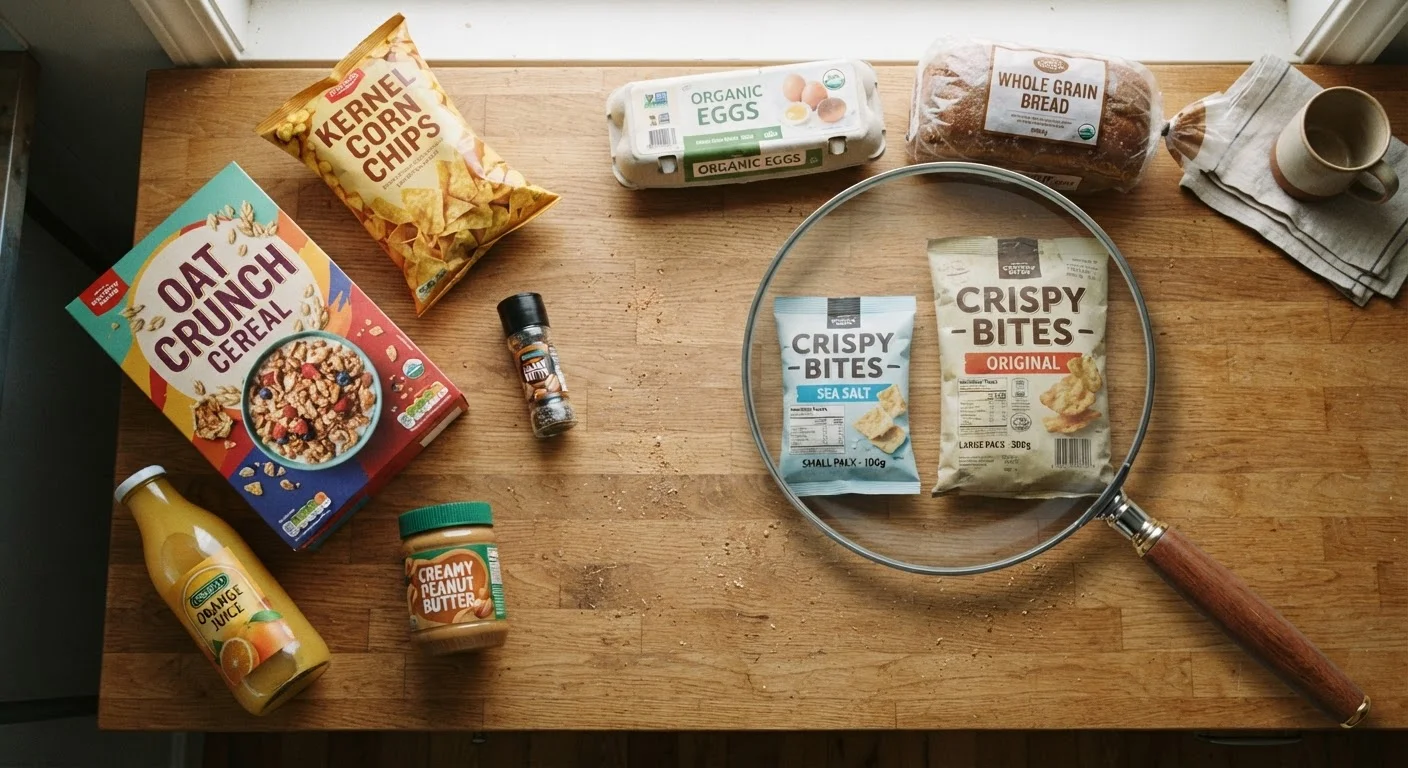
A Quiet Kind of Price Increase
When prices rise at the register, shoppers notice. But manufacturers and retailers have developed subtler methods to protect their margins without triggering sticker shock. These strategies - shrinkflation, skimpflation, and a handful of related tactics - shift the cost burden onto consumers in ways that are easy to miss during a routine shopping trip.
Understanding these terms gives shoppers a clearer picture of what is actually happening to their purchasing power. As grocery prices remain elevated even as headline inflation cools, these hidden adjustments have become an increasingly common tool across consumer goods categories.
Shrinkflation
A form of hidden price increase in which a product's quantity or size is reduced while the retail price remains the same or increases. The consumer pays the same or more for less product.
Skimpflation
A reduction in product quality - through ingredient substitution, lower concentrations, or cheaper materials - without a corresponding drop in price. The quantity may remain unchanged, but the value delivered decreases.
Unit Price
The cost of a product expressed per standard unit of measurement, such as per ounce, per liter, or per sheet. Unit pricing allows direct comparisons across package sizes and brands.
Slack-fill
Empty space inside product packaging that is not functionally necessary. While some slack-fill is legally permissible (e.g., for product settling), excessive slack-fill can obscure the true quantity of contents.
Reformulation
The process of changing a product's ingredients, composition, or manufacturing process. Reformulation can improve a product, but it is also used to reduce costs in ways that may not be disclosed to consumers.
The Core Terms Defined
Economists and consumer researchers use specific vocabulary to describe each form of hidden cost transfer. Here is how each one works in practice:
- Shrinkflation: The package or portion size decreases while the price stays the same or rises slightly. A bag of chips that contained 14 oz. now holds 12.5 oz. at the same shelf price. The unit price - cost per ounce - has effectively increased without the sticker reflecting it.
- Skimpflation: The quantity stays the same, but the quality declines. A manufacturer may swap a premium ingredient for a cheaper substitute, reduce the concentration of an active ingredient in a cleaning product, or use thinner materials in packaging. The product looks identical but delivers less value.
- Weightflation: Similar to shrinkflation but specifically refers to products sold by weight. Net weight printed on labels is legally required to be accurate, but a reduction in that number is easy for shoppers to overlook between purchase cycles.
- Slack-fill: Packaging is kept the same physical size while the contents are reduced, creating more empty space inside the package. Regulatory guidelines in the U.S. distinguish between functional slack-fill (needed for product protection or settling) and deceptive slack-fill, though enforcement is limited.
These practices are not new, but their frequency tends to rise during periods of elevated input costs - raw materials, labor, and energy - when manufacturers face pressure to protect profit margins without losing price-sensitive customers.
Why Companies Choose This Path
Raising a price outright is a transparent signal consumers immediately register and can react to by switching brands or buying less. Reducing a package by a few grams or quietly reformulating a recipe is far less visible, especially when products are purchased on habit. Behavioral economics research consistently shows that consumers are more sensitive to price changes than to quantity or quality changes for the same product.
Supply chain disruptions, commodity price spikes, and wage pressures can all squeeze a manufacturer's cost structure simultaneously. When these pressures arrive faster than companies can absorb them, reformulation or resizing becomes a faster, lower-friction option than a price adjustment. Consumer spending patterns have already shifted, and companies are calibrating their strategies accordingly.
It is also worth noting that not all price-related changes are driven by corporate greed, as many involve genuinely complex cost dynamics throughout the supply chain.
| Category most affected | Packaged food and household goods (U.S. Bureau of Labor Statistics consumer price data) |
| Consumer awareness | Majority of shoppers report noticing smaller packages (Consumer Reports survey, 2023) |
| U.S. labeling requirement | Net weight must be accurately disclosed on all regulated consumer products (Fair Packaging and Labeling Act) |
| Ingredient list order | Listed by weight, highest to lowest (FDA food labeling regulations) |
| Unit pricing availability | Required in many U.S. states; displayed on shelf tags in most major grocery chains (National Conference of State Legislatures) |
How to Spot These Changes as a Shopper
Awareness is the first line of defense. A few practical habits can help consumers identify when a product has been quietly adjusted:
- Check the net weight or volume, not just the package size. This number appears on every regulated consumer product in the U.S. and is the most reliable indicator of quantity changes over time.
- Calculate the unit price. Most U.S. grocery stores are required to display unit pricing on shelf tags. Comparing cost per ounce, per sheet, or per serving across time and across competing products reveals true value more clearly than package price alone.
- Read ingredient lists periodically. A reformulated product may list cheaper ingredients higher in the order (ingredients are listed by weight, descending) or may add filler components like water, starch, or sugar to maintain volume.
- Note serving size changes. On nutrition labels, a manufacturer can make a product appear to contain the same number of servings even as total contents shrink - by redefining what counts as a single serving.
For a deeper look at how this plays out in specific grocery categories, see the grocery store math behind shrinkflation and how restaurant menus are also quietly contracting. More savvy saving strategies can also help stretch a household budget even when product value is quietly shrinking.
The content on this site is provided for informational purposes only and should not be considered a substitute for professional advice. While we strive to provide accurate and up-to-date information, we make no guarantees regarding its completeness or accuracy. Always consult a qualified professional for advice specific to your circumstances before making any decisions.