

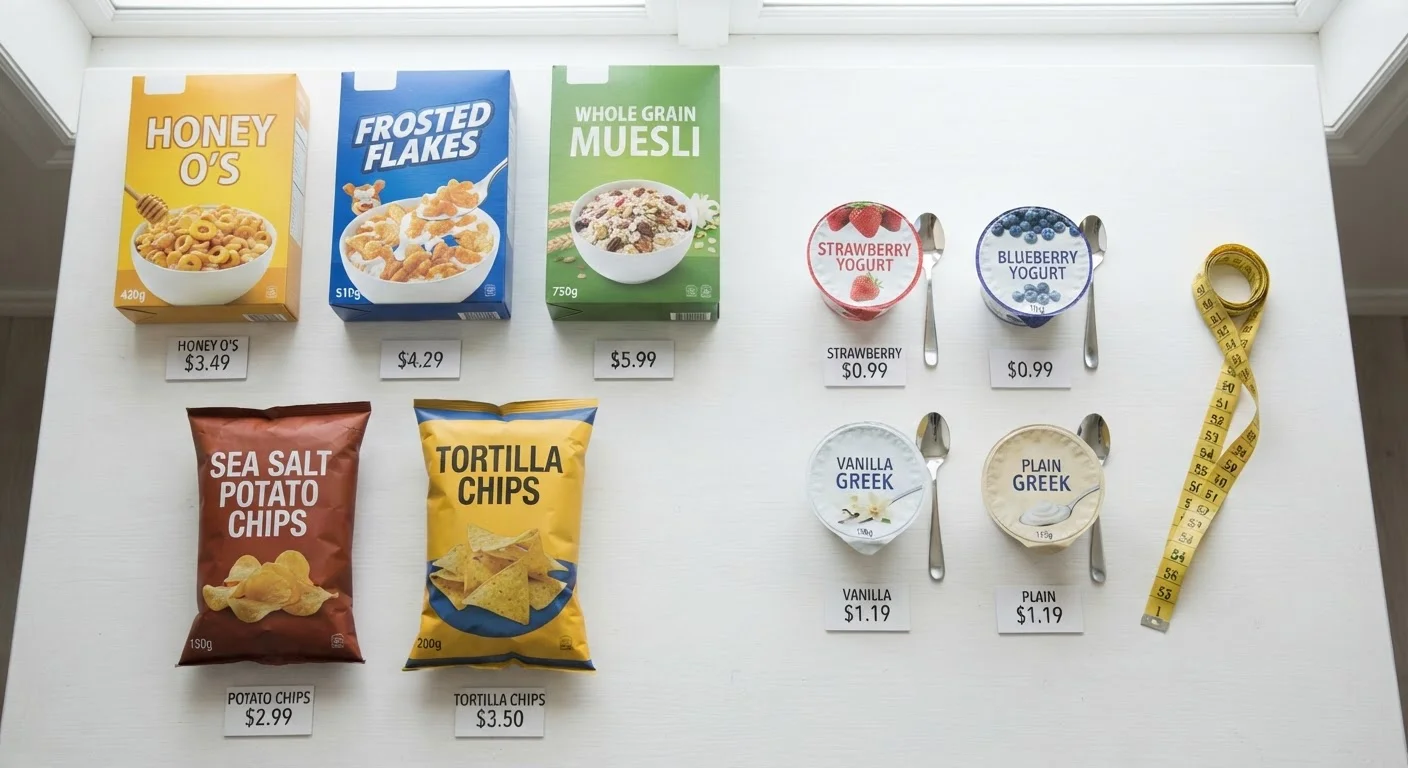
What Shrinkflation Actually Means
Imagine buying your usual bag of potato chips, paying the same $4.49 you always have, and then noticing - possibly weeks later - that the bag now holds 12.5 ounces instead of 14. The price didn't move. Your receipt looks normal. But you received less product for the same money.
That's shrinkflation: a quiet transfer of value from shopper to manufacturer, executed through packaging rather than price. The term blends "shrink" and "inflation" and has gained mainstream attention as consumers have grown more aware of it during periods of elevated input costs.
It's worth distinguishing shrinkflation from ordinary price increases. A price hike is visible at the shelf. Shrinkflation is designed to be less visible - package shapes can be redesigned to look similar in size even as volume drops, and most shoppers don't memorize net weights. For a broader look at related consumer pricing tactics, see shrinkflation, skimpflation, and other ways products are getting smaller.
Why Manufacturers Reduce Package Sizes
Shrinkflation doesn't happen arbitrarily. It typically surfaces when manufacturers face sustained cost pressure - rising commodity prices, higher transportation and labor costs, or supply disruptions - and need to protect profit margins without triggering the sticker shock of a visible price hike.
Consumer psychology is part of the calculation. Research in behavioral economics consistently shows that shoppers are more sensitive to price changes than to quantity changes. A cereal box that jumps from $4.99 to $5.49 registers as a loss. The same box quietly dropping from 19.3 oz to 17.1 oz at $4.99 is far less likely to trigger the same reaction.
Retailers also exert pressure. Manufacturers competing for shelf space often face implicit or explicit caps on price increases, making package reduction an alternative lever. And once a reduction is made, reversing it - increasing package size without raising price - is unusual, meaning shrinkflation tends to be sticky.
~3,800
U.S. products tracked for size reductions
Consumer price research organizations have tracked thousands of packaged goods experiencing size reductions in recent years, with snacks and household staples most represented.
9%
Average unit-price increase via shrinkflation
An analysis by the Bureau of Labor Statistics found that when package sizes fall, the effective unit-price increase for consumers averages in the high single digits, comparable to a direct price hike.
~70%
Shoppers unaware of recent size changes
Consumer survey data has suggested that a large majority of shoppers do not notice package size reductions at the time of purchase, illustrating the effectiveness of the tactic.
This dynamic is part of why grocery costs remain elevated for households even as headline inflation moderates. Why grocery prices don't drop even when inflation slows explores the broader structural forces at work.
How to Spot It on Your Next Shopping Trip
The single most effective tool shoppers have is the unit price label - typically displayed on the shelf tag below a product, showing cost per ounce, per count, or per fluid ounce. Unit pricing cuts through packaging and lets you compare products on an apples-to-apples basis regardless of container size.
If a brand's unit price has risen since your last purchase but the sticker price hasn't changed, a package reduction almost certainly happened in between. Unit pricing is grocery math most shoppers skip, but it's one of the most reliable defenses against shrinkflation.
- Read net weight or count labels on the package itself, not just the front design.
- Compare across sizes within the same brand - larger packages aren't always a better deal after shrinkflation adjustments.
- Photograph packaging periodically if you want a reliable personal record of size changes.
- Check store-brand equivalents, which sometimes maintain sizes longer as a competitive differentiator.
For households looking to stretch their grocery budget further, practical ways households trim grocery costs without sacrificing nutrition covers additional strategies grounded in real shopping behavior.
Use Unit Price Labels Every Time
Most grocery stores are required by state law to display unit prices on shelf tags. Look for the cost per ounce, per count, or per fluid ounce - not the total price. Comparing unit prices across brands and package sizes is the most reliable way to catch shrinkflation and make genuinely equivalent comparisons.
The Broader Context: Regulation and Transparency
Shrinkflation has attracted growing attention from policymakers. France introduced mandatory labeling requirements in 2024 requiring retailers to notify shoppers when a product's size has been reduced. In the United States, legislative proposals have emerged in Congress calling for similar disclosure standards, though as of this writing no federal law mandates shrinkflation-specific labeling.
Consumer advocacy groups argue that existing net-weight labeling laws, while technically accurate, don't do enough to flag change over time. A package labeled "now 10% more free" is immediately conspicuous - but a package that quietly drops 10% in size carries no equivalent marker.
A popular brand of orange juice reduces its carton from 59 fl oz to 52 fl oz while the shelf price remains $3.99.
A bag of coffee drops from 12 oz to 10.5 oz with a redesigned bag that appears similarly sized on the shelf.
A box of tissues goes from 200 sheets to 180 sheets with no change in the retail price or box exterior dimensions.
A snack cracker package is reformatted from 16 oz to 13.8 oz but retains the same 'Family Size' designation on the front panel.
The Market & Price News hub tracks ongoing developments in consumer pricing, including regulatory changes as they emerge. Staying informed about these shifts is one of the more practical ways shoppers can keep their real purchasing power in perspective.
Frequently Asked Questions
Yes, shrinkflation is legal as long as the new package weight or count is accurately labeled. Federal law requires net weight disclosures on most packaged goods. The practice is considered legal but is increasingly drawing scrutiny from consumer advocates and legislators.
Snack foods, cereals, beverages, paper products, and personal care items are among the most frequently affected categories. These tend to be high-volume, brand-loyal segments where manufacturers have more pricing leverage and packaging flexibility.
Check the net weight or count on the package label and compare it to your memory or older packages. More reliably, use the unit price label on the store shelf - cost per ounce or count - to compare products objectively over time.
Not always directly. The Consumer Price Index tracks prices, but package size reductions can slip through if the price itself hasn't changed. This means inflation can be functionally higher than headline numbers suggest for everyday shoppers.
Shrinkflation reduces the quantity of product in a package. Skimpflation reduces ingredient quality or service levels while keeping quantity and price the same. Both erode consumer value but in different ways.
The content on this site is provided for informational purposes only and should not be considered a substitute for professional advice. While we strive to provide accurate and up-to-date information, we make no guarantees regarding its completeness or accuracy. Always consult a qualified professional for advice specific to your circumstances before making any decisions.