

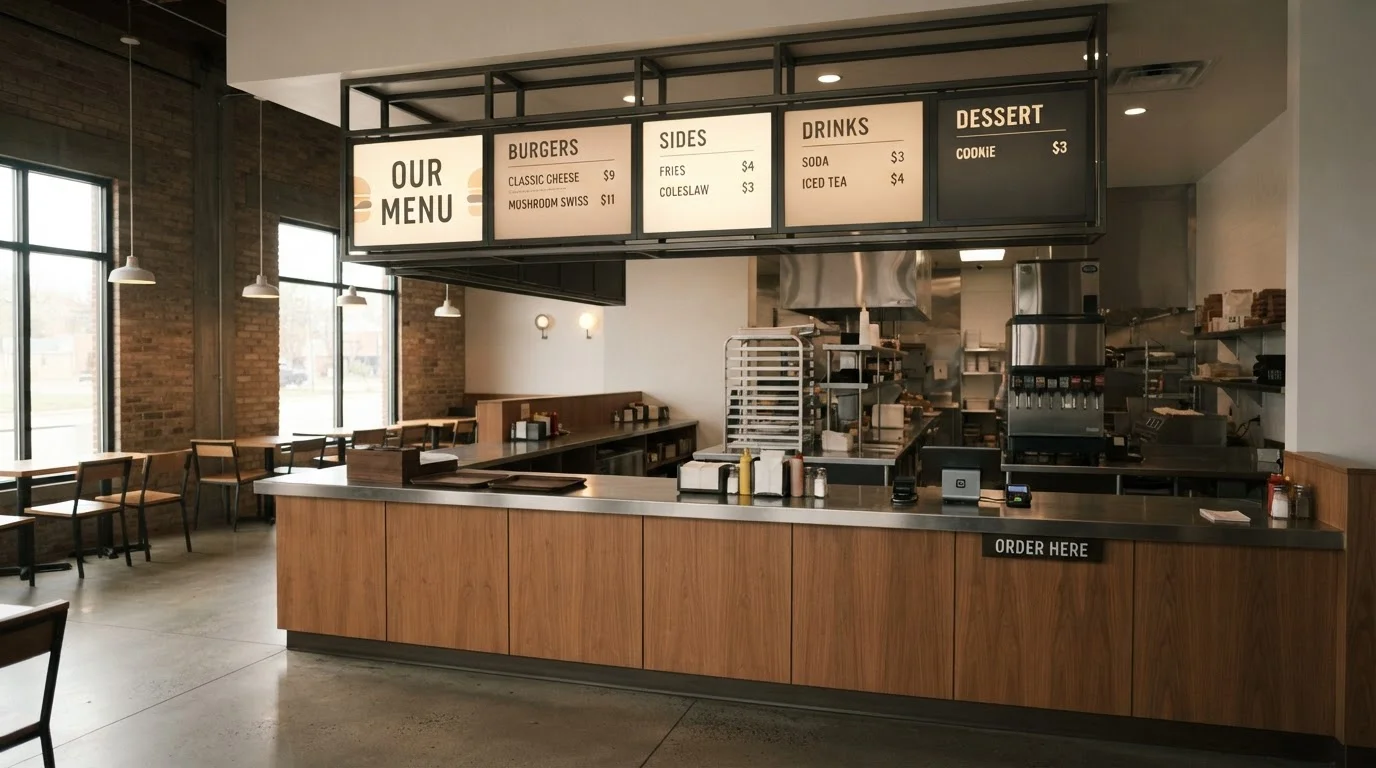
The Quiet Pruning That Reshaped Fast Food
If your usual order disappeared from a fast food menu over the past few years, you were not imagining things. Starting around 2020, chains across the industry made sweeping cuts to their offerings-and most have not looked back. McDonald's, Burger King, Dunkin', and others trimmed anywhere from 20% to 30% of their menus during the pandemic period, according to widely reported industry analysis at the time.
What began as an emergency response to supply chain chaos and reduced foot traffic has evolved into a broader strategic philosophy. The logic, as chains explain it, is straightforward: a leaner menu is a faster, cheaper, and more consistent one. Understanding why requires looking at how fast food kitchens actually work-and where the hidden costs of variety accumulate.
The Operational Case for Fewer Choices
Every item on a fast food menu represents a chain of decisions: ingredients to source, storage space to allocate, staff techniques to train, and prep steps to coordinate during a lunch rush. When a kitchen carries 80 items instead of 50, the complexity compounds across all of those dimensions simultaneously.
Speed is the core product in fast food. Customers expect orders in minutes, and chains measure performance in seconds at the drive-through. A menu with fewer items means kitchen staff spend less time switching between different preparation workflows, ingredients are used more efficiently, and the probability of errors drops. This is sometimes called throughput optimization-getting more orders out the window without proportionally increasing labor costs.
Check Menus Before You Visit
If you have a long-standing favorite item at a fast food chain, it is worth checking the current online menu before making a trip. Many chains update digital menus faster than in-store signage. Some removed items do return as limited-time offers, so following a chain's app or newsletter can provide early notice.
There is also a waste dimension. Items that sell infrequently require ingredients to be stocked anyway, and those ingredients spoil. Cutting low-volume items can meaningfully reduce food waste costs, which have risen alongside broader food inflation. See how delivery platforms reshaped restaurant economics for further context on how operational pressures have multiplied for the industry.
Supply Chains and Labor: The Accelerants
Menu rationalization was already a topic in industry circles before 2020. The pandemic simply removed the hesitation. When ingredient availability became unpredictable and kitchen staffing fell to skeleton crews, running a complex menu became operationally untenable. Chains that had been debating cuts for years made them in months.
Labor is a particularly significant factor. Training a new employee to prepare a 50-item menu takes longer and costs more than training them on 35 items. In an industry with historically high turnover rates, every hour of training time has a direct dollar cost. Fewer menu items means faster onboarding and more consistent execution from staff who are still learning the job.
~28%
Average menu size reduction at major U.S. fast food chains
Industry analysts estimated that several large chains cut roughly a quarter to a third of their menu items between 2020 and 2022, with many retaining the leaner format afterward.
30-40%
Reduction in kitchen training time with simplified menus
Operators in food service have reported that streamlined menus can significantly reduce new hire training time, a meaningful savings in an industry with high employee turnover.
Top 3
Items account for the majority of most chains' sales volume
Food service research consistently finds that a small number of core menu items drive the bulk of revenue, reinforcing the industry rationale for cutting lower-performing offerings.
This is meaningfully different from shrinkflation, where product quantity quietly shrinks while the price holds steady. Menu cuts are visible-customers notice when an item is gone-but the underlying pressure is similar: companies managing rising input costs by changing what they offer rather than simply raising prices.
What This Means for Consumers
For most customers, a smaller menu is a mixed experience. Fewer choices can mean faster service and more consistent food quality-two things that survey data has consistently shown matter to fast food customers. But the loss of variety is real, and certain regional or niche items that served specific tastes rarely return once cut.
The trend also intersects with how people manage food budgets more broadly. As skimpflation and related trends reshape what consumers get for their money across categories, understanding the industry logic behind changes like menu shrinkage helps people make more informed choices. Those looking to stretch food dollars further may find it useful to explore household grocery cost strategies as a complement to eating out less frequently.
A major burger chain eliminates several sandwich variants that share nearly identical ingredients with its core items, retaining only the two or three top sellers in each category.
A coffee and breakfast chain cuts its lunch menu entirely at most locations, focusing exclusively on morning and midday beverage and pastry orders.
A pizza chain reduces its topping combinations from over 30 customizable options to a curated set of 12 signature builds.
A regional fast food brand discontinues a seasonal item that required a specialized sauce produced by a single supplier, after supply disruptions made consistent availability unreliable.
Menu rationalization is unlikely to reverse course dramatically. The efficiency gains chains have documented are now embedded in how they design kitchens, schedule staff, and negotiate ingredient contracts. The trimmed menu, it turns out, was not a temporary crisis response-it was an industry recalibration that the crisis simply accelerated.
Frequently Asked Questions
Chains reduce menus to speed up service, simplify kitchen operations, and cut costs tied to ingredient sourcing and staff training. The trend accelerated during pandemic-era supply chain disruptions and has largely persisted because many chains found operational benefits in leaner offerings.
The pandemic was a major catalyst, but the groundwork was already being laid before 2020. Labor shortages, supply chain instability, and reduced customer traffic during lockdowns gave chains the opening to trim menus faster than they otherwise would have.
Not necessarily. Some chains report that focusing on fewer items allows kitchen staff to prepare them more consistently. Reduced complexity can mean fresher ingredients and less time spent on items that rarely sell.
Some chains periodically reintroduce discontinued items as limited-time offers to generate buzz. However, full menu restoration is uncommon-most chains treat past cuts as permanent and use nostalgia-driven returns selectively as a marketing tool.
They are related but distinct. Shrinkflation refers to reducing product size or quantity while keeping the price the same. Menu shrinkage means fewer options are available at all. Both reflect cost pressures on the food industry, but they affect consumers differently.
Smaller menus can simplify training and reduce the number of techniques workers need to master, which may lower onboarding time. However, staffing decisions are driven by many factors beyond menu size, including location and corporate policy.
The content on this site is provided for informational purposes only and should not be considered a substitute for professional advice. While we strive to provide accurate and up-to-date information, we make no guarantees regarding its completeness or accuracy. Always consult a qualified professional for advice specific to your circumstances before making any decisions.