

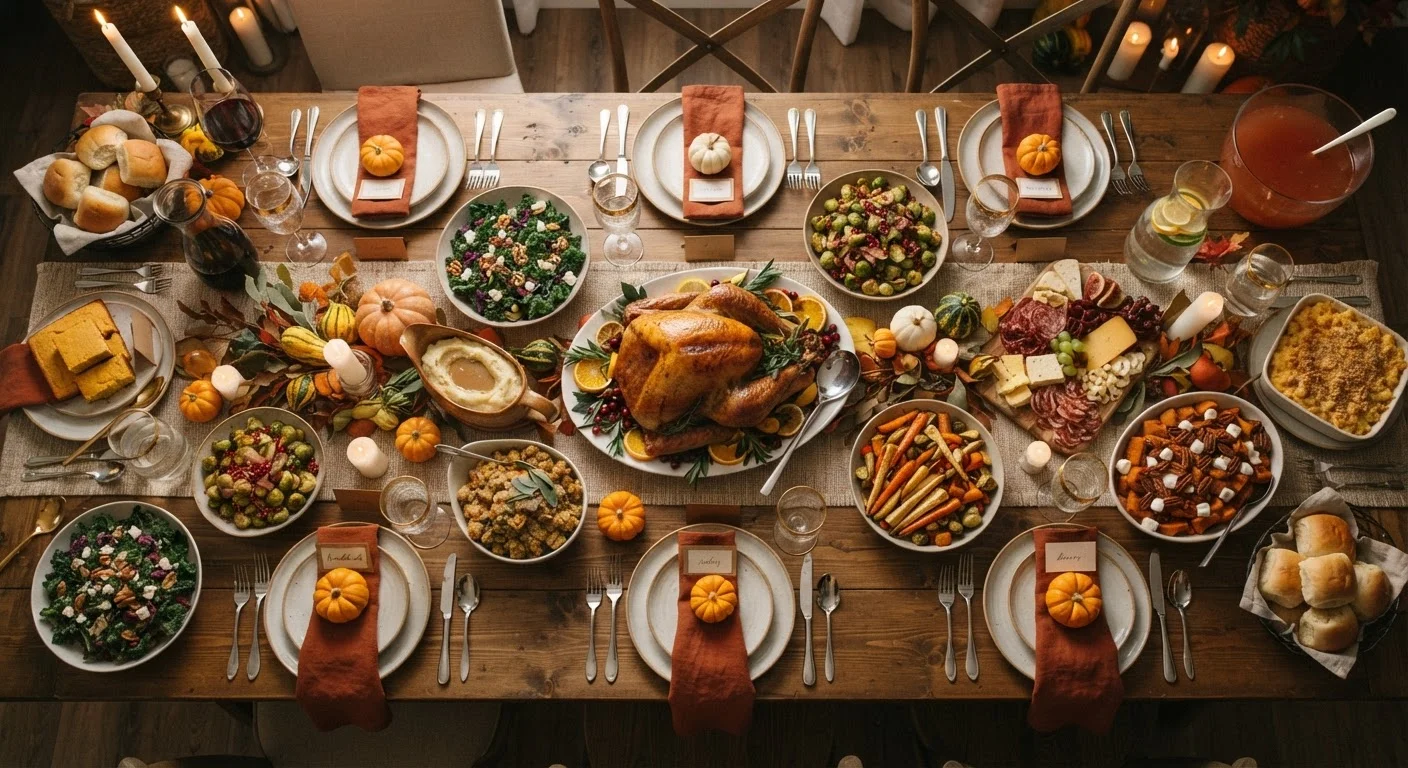
A Menu Built Over Centuries, Not One Day
Most Americans picture a fixed Thanksgiving table: roast turkey, stuffing, mashed potatoes, cranberry sauce, pumpkin pie. But that image is younger than it feels. The holiday itself wasn't established as a national observance until 1863, and the standardized menu came even later, shaped more by food manufacturers, women's magazines, and wartime rationing than by any single culinary tradition.
The 17th-century harvest celebrations between English settlers and the Wampanoag people - often cited as the holiday's origin - bore little resemblance to today's feast. Corn preparations, shellfish, and game dominated those early gatherings. Turkey became the symbolic centerpiece gradually, boosted by 19th-century writers like Sarah Josepha Hale, whose decades of advocacy helped cement both the holiday and the bird in American imagination.
Understanding this history reframes the menu: it isn't a fixed inheritance. It's a living document, always being rewritten.
How the Mid-20th Century Standardized the Table
The post-World War II era had perhaps the single biggest influence on what Americans now consider "classic" Thanksgiving food. Convenience products surged in popularity as food companies competed fiercely for a place on the holiday table. Canned cranberry sauce, condensed cream-of-mushroom soup, and frozen pie shells made elaborate meals accessible to more families - and tied the holiday to specific branded products in ways that proved remarkably durable.
The now-ubiquitous green bean casserole, introduced in 1955 by a Campbell Soup home economist, exemplifies this era perfectly. Within years of its debut, it appeared in cookbooks, newspaper food sections, and eventually on countless tables, transforming a marketing creation into what millions now call tradition.
1955
Year green bean casserole was invented
Created by a Campbell Soup Company home economist, it became one of the most replicated Thanksgiving dishes in American history within two decades.
46 million
Turkeys consumed on Thanksgiving annually
According to the National Turkey Federation, roughly 46 million turkeys are eaten each Thanksgiving in the United States.
~1863
Year Thanksgiving became a national holiday
President Abraham Lincoln proclaimed Thanksgiving a national holiday during the Civil War; the menu as most Americans know it developed well after that.
Television cooking programs and women's magazines like Better Homes and Gardens further homogenized the menu by promoting a standardized "ideal" feast. Families across very different regions and backgrounds began cooking toward the same template - even as their day-to-day eating remained distinct.
To understand how food ideas like these travel so efficiently across the country, see our look at how American dining trends actually spread.
Immigration, Identity, and the Side Dish Revolution
One of the most meaningful ways the Thanksgiving table has shifted is through the dishes immigrant and minority communities have brought alongside - or in place of - the Anglo-American standard. Macaroni and cheese has been central to Black American Thanksgiving meals for generations, rooted in traditions that predate the convenience-food era by a century. Puerto Rican families might serve pernil alongside turkey. Vietnamese American households sometimes offer phở as a first course. West African-influenced jollof rice appears at many Nigerian American tables.
These additions aren't departures from Thanksgiving - they are Thanksgiving, expressing the holiday's actual function: gathering people around food that carries meaning. As immigrant communities have long reshaped American staples, Thanksgiving menus have absorbed those influences organically, one household at a time.
This patchwork quality is what makes the meal a genuine cultural mirror. No two tables are identical, yet nearly everyone recognizes the holiday by a handful of shared anchors.
Dietary Shifts and the Modern Table
Growing awareness of food allergies, rising rates of vegetarianism and veganism, and increased attention to nutrition have visibly changed what many American families serve. Gluten-free stuffing, dairy-free mashed potatoes, and plant-based turkey roasts are no longer novelties at grocery stores or on tables. The change reflects both personal health choices and a broader cultural shift toward more inclusive hosting - where guests with dietary restrictions aren't left eating just a side salad.
Social media has accelerated this transformation dramatically. A single viral recipe - miso-glazed sweet potatoes, smoked turkey breast, or a cranberry-jalapeño dip - can reach millions of home cooks before November even arrives. Food trends and who sets them explores how this acceleration works across American food culture more broadly.
What emerges is a holiday meal increasingly shaped by individual households rather than a single national template - closer, perhaps, to the democratic spirit of a potluck than to a standardized feast. The table keeps shifting, and that, more than any specific dish, may be its most enduring tradition.
Frequently Asked Questions
Historical accounts from 1621 mention wildfowl at the Plymouth harvest celebration, but it's unclear whether that included turkey specifically. Venison, shellfish, and corn were more reliably documented. The turkey's central role in modern Thanksgiving developed gradually through the 19th and 20th centuries.
Green bean casserole was created in 1955 by a home economist at Campbell Soup Company. It spread quickly through food marketing and appeared on millions of tables within a generation, making it a mid-century addition to what many consider the "classic" menu.
Many families incorporate dishes from their cultural heritage alongside traditional American items - tamales, jollof rice, macaroni and cheese with Caribbean spicing, or Korean-style glazed vegetables. These additions reflect how immigration continuously reshapes American food culture.
Vegetarian Thanksgiving meals have existed for decades, especially among communities with religious or ethical dietary practices. However, the availability of commercial plant-based turkey alternatives and wider mainstream interest in plant-forward eating has grown considerably since the 2010s.
Food served repeatedly in family gatherings becomes tied to memory and identity. Research in food anthropology suggests that shared ritual meals reinforce group belonging, which is why changing even one dish can feel surprisingly fraught for some families.
Platforms like TikTok and Instagram expose home cooks to new techniques and dishes quickly, compressing the time it takes for a food idea to spread. A viral smoked turkey or a visually striking cranberry tart can inspire millions of cooks before a single holiday season ends.
The content on this site is provided for informational purposes only and should not be considered a substitute for professional advice. While we strive to provide accurate and up-to-date information, we make no guarantees regarding its completeness or accuracy. Always consult a qualified professional for advice specific to your circumstances before making any decisions.