

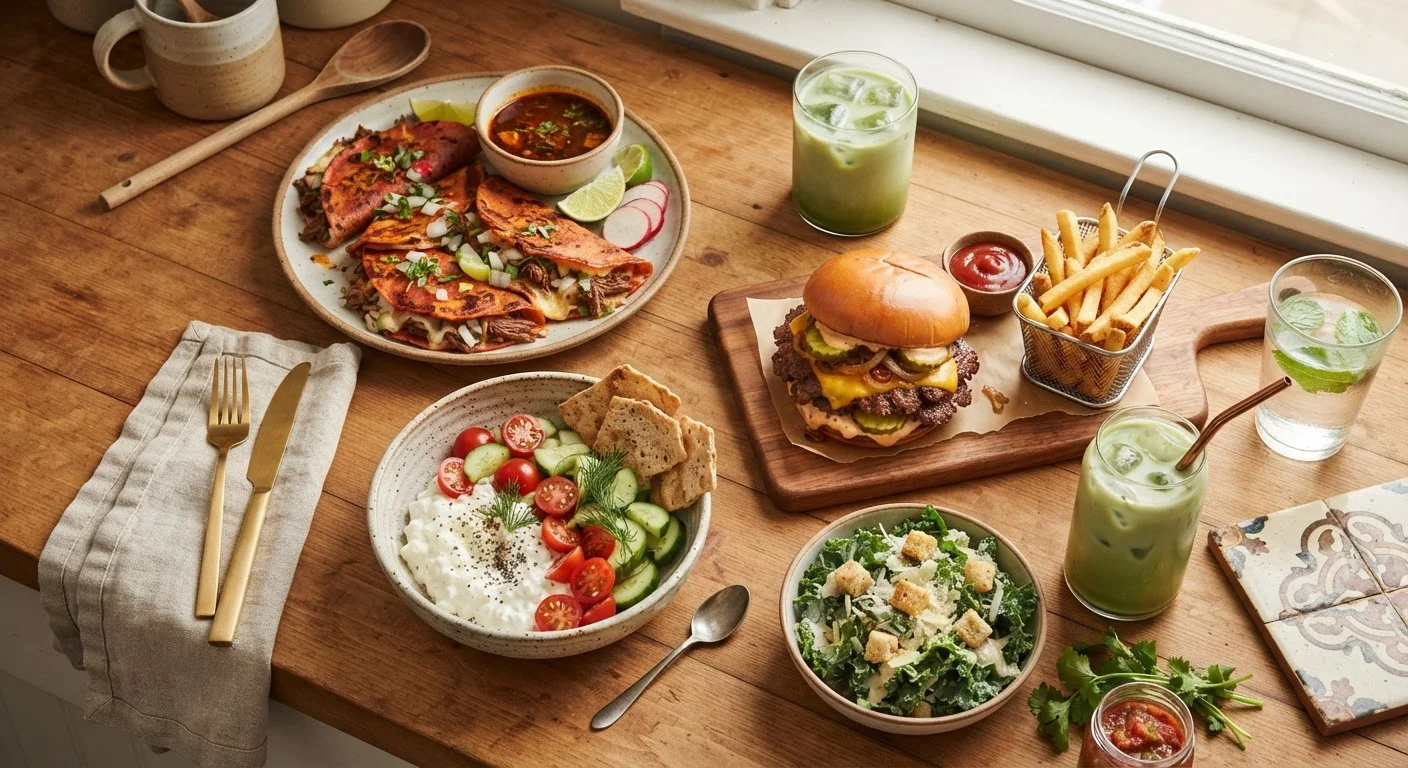
Where Food Trends Actually Begin
The story of a food trend rarely starts where most people think it does. Birria tacos, for example, are a traditional dish from Jalisco, Mexico, with roots going back generations. They existed in Mexican-American communities in cities like Los Angeles long before they became a social media phenomenon. What changed wasn't the food - it was the audience.
This pattern repeats constantly. A dish thrives within a specific cultural community, gets noticed by a wider circle, and eventually lands on a chain restaurant menu in Ohio. Understanding this path matters because it connects American food culture to the immigrant communities that shaped what Americans eat today.
Trends also emerge from fine dining kitchens. When professional chefs experiment with fermentation, unusual cuts of meat, or regional grain varieties, those ideas gradually trickle outward through food media and culinary schools. But the direction of influence now runs in multiple directions at once - a home cook in Kansas City can spark a trend just as easily as a chef in Manhattan.
72%
Americans who try new foods after seeing them online
According to a survey by the International Food Information Council, a large majority of American adults report that social media influences what foods they try.
3-5 years
Typical cycle from niche dish to mainstream menu item
Food industry analysts generally observe that a dish moves from cultural community staple to chain restaurant menu over a multi-year arc, with social media compressing that timeline in some cases.
$1.8T
U.S. food and beverage retail market size
The scale of American grocery retail means that even a small shift in consumer preferences can translate into significant product category growth, accelerating manufacturer investment in trending ingredients.
Social Media's Role: Amplifier, Not Inventor
Social media accelerates trends but rarely creates them from scratch. When a cottage cheese bowl or smash burger gains traction online, it's typically because the food already had an audience primed to respond - people who were already interested in high-protein eating, or nostalgic for diner food. The platform provides reach; the underlying appetite was already there.
Platforms that prioritize video content have proven especially powerful for food trends because cooking is inherently visual. A 30-second clip showing a satisfying cheese pull or a crispy sear can generate millions of views, translating directly into ingredient searches and restaurant reservations. Food industry professionals now track these signals closely as early indicators of what consumers will want next.
That said, not every viral food moment becomes a real trend. Distinguishing genuine behavior change from a short media cycle requires looking past view counts to see whether people are actually buying ingredients, visiting restaurants, or changing their eating habits.
How the Grocery Aisle Makes a Trend Stick
A food trend becomes truly mainstream when it lands on a grocery store shelf. That moment - when a specialty ingredient moves from a farmers market or ethnic grocery to a national chain - signals that a trend has crossed from niche to normalized. Grocery buyers and category managers play an underappreciated role in this process. They decide which products to stock, how much shelf space to allocate, and at what price point to position them.
Chili crisp is a useful example. The condiment had loyal followers in Chinese-American households and specialty food stores for years before major grocery chains began stocking multiple brands in the condiment aisle. That retail expansion didn't create demand - it responded to it while simultaneously introducing the product to millions of new shoppers.
Shop Smarter Around Food Trends
When a trending ingredient hits mainstream grocery stores, prices often spike temporarily before stabilizing as supply catches up. If you're curious about a trend, consider sourcing the key ingredient from specialty or ethnic grocery stores, where it may already be available at a lower price - and often with greater variety. This is also a good way to connect with the cultural origin of the dish.
Food manufacturers watch trend cycles closely and move quickly to introduce products that align with rising consumer interest. This is why, when a nutrient or ingredient gains cultural momentum, new packaged goods featuring it tend to appear within one to two years. Understanding how food trends spread helps consumers see the forces shaping American dining culture more clearly.
The Cultural Dimension Trends Can Obscure
One complexity worth naming: food trends can flatten the cultural stories behind the dishes they popularize. When a regional or ethnic food gets adopted broadly, the communities that originated it don't always benefit proportionally - in terms of economic opportunity, recognition, or credit. This doesn't mean trend adoption is inherently harmful, but it's worth keeping in context.
The question of what makes food "authentic" intersects directly with how trends spread. As the debate over authentic food shows, popularity can reshape a dish significantly as it travels across communities and contexts.
For everyday consumers, staying curious about a dish's origins - where it came from, what community it belongs to, and how it evolved - adds depth to the eating experience. It also reflects well on the broader goal of engaging with food culture thoughtfully rather than treating trends as a checklist of novelty.
Frequently Asked Questions
No single group controls food trends. Chefs, social media creators, food journalists, grocery buyers, and cultural communities all contribute. The most durable trends tend to emerge when multiple forces align - a dish gains visibility online, chefs adapt it, and grocery stores stock the key ingredients.
When a dish generates widespread attention online, restaurant operators take note because consumer demand signals a real business opportunity. Chefs may adapt the dish to fit their concept, and franchise chains sometimes introduce limited-time versions to test appetite before committing to the menu long-term.
Not entirely. While food brands do invest in promoting trends that serve their products, many trends originate organically from communities, home cooks, or restaurants. Marketing can amplify a trend, but it rarely invents one from scratch - sustained consumer interest has to be there.
Trends with staying power typically fulfill a real need - they taste good, fit into everyday cooking, and are reasonably affordable. Trends that rely purely on novelty or spectacle tend to fade once the curiosity wears off. See <a href="/news-trends/consumer-trends/signals-that-a-consumer-trend-is-real-vs-just-media-noise">how to tell a real trend from media noise</a> for a closer look.
Yes, in meaningful ways. Trends often mirror broader cultural shifts - interest in global cuisines reflects demographic change, while the rise of high-protein foods reflects evolving attitudes toward nutrition. Food trends are cultural data, not just culinary novelty.
There is no fixed timeline. Some trends - like avocado toast - sustain for a decade or more by becoming everyday staples. Others peak quickly and disappear within a season. Industry analysts generally wait to see if a trend survives two to three years before classifying it as a durable shift.
The content on this site is provided for informational purposes only and should not be considered a substitute for professional advice. While we strive to provide accurate and up-to-date information, we make no guarantees regarding its completeness or accuracy. Always consult a qualified professional for advice specific to your circumstances before making any decisions.