

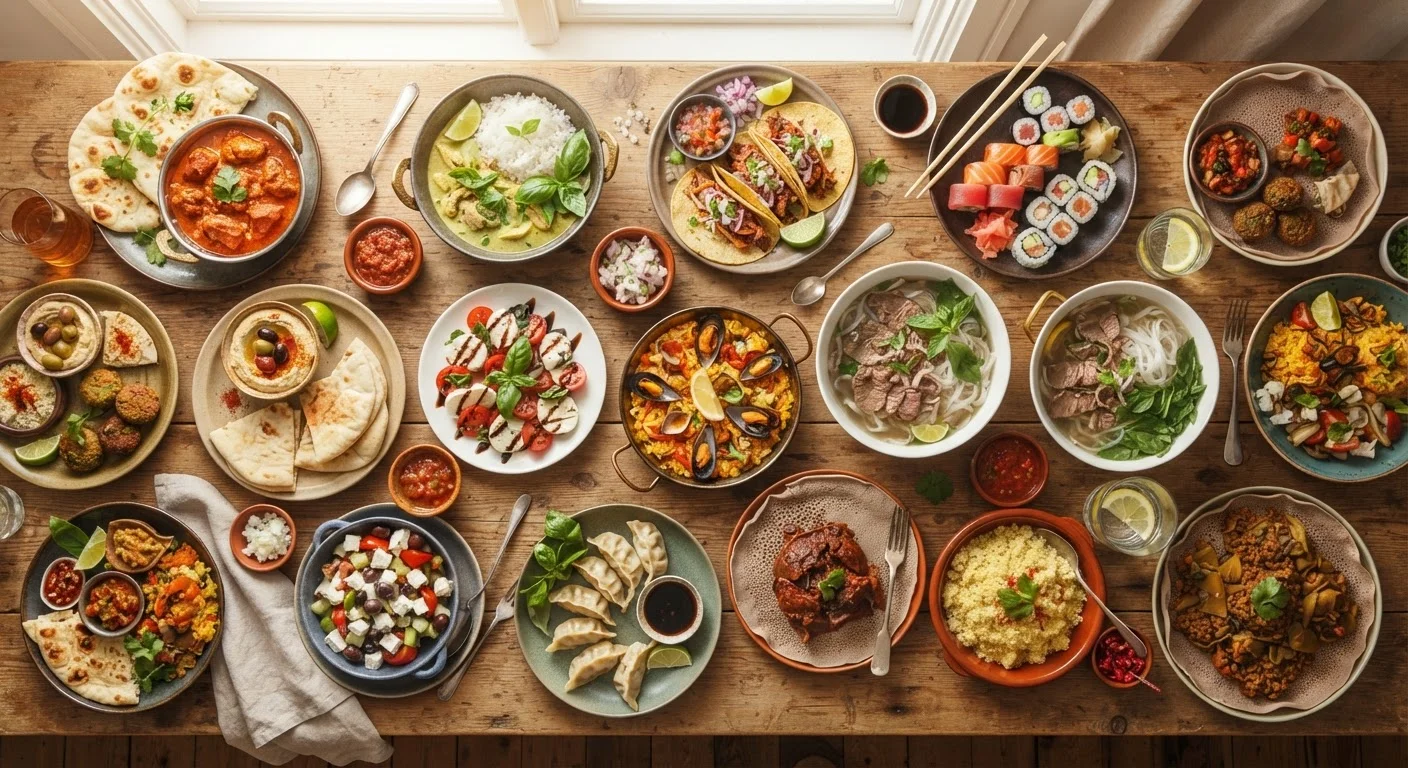
Why 'Authentic' Has Become a Loaded Word
Walk through any American city and you'll see it plastered on restaurant windows, splashed across menus, and featured in food reviews: authentic. The word promises a direct line to another culture's culinary heritage - an experience somehow untouched by outside influence. But food historians, chefs, and anthropologists have long challenged the premise that any cuisine exists in a sealed, unchanging state.
The appeal is understandable. Diners want to feel that a dish carries real cultural meaning, not just a theme. But that desire, however genuine, can push restaurants toward performing a static version of a culture rather than reflecting how that culture's food actually lives and changes. As explored in our closer look at what 'authentic' signals on menus, the word often obscures as much as it reveals.
Understanding this tension doesn't mean giving up on cultural connection through food - it means pursuing a richer, more honest version of it.
Myth
Authentic food means the dish has never changed from its original form.
Fact
Every cuisine evolves constantly through trade, migration, and cultural contact - there is no single frozen 'original' form.
The idea of an unchanging culinary original is a romantic projection, not a historical reality. Ingredients travel across continents, techniques get borrowed and modified, and communities adapt recipes to local conditions and available resources. Italian pasta absorbed influences from Arab traders. Japanese ramen incorporated Chinese noodle traditions and later adapted to local tastes over decades. Food anthropologists widely agree that culinary change is a sign of cultural vitality, not contamination.
Myth
Only someone from that culture can cook authentic food.
Fact
Cultural origin can inform perspective and technique, but skill, training, and respect for tradition matter across all backgrounds.
This claim sounds like cultural respect but can tip into essentialism - the idea that identity alone determines culinary legitimacy. In reality, many celebrated practitioners of a cuisine learn it across cultural lines through apprenticeship, study, and immersion. Conversely, being born into a culture doesn't guarantee deep culinary knowledge. What matters most is whether a cook understands the dish's context, ingredients, and technique - and whether they represent it honestly.
Myth
If a dish uses locally sourced substitutions, it's no longer authentic.
Fact
Ingredient substitution due to geography or availability has always been part of how cuisines spread and survive.
A Thai restaurant in Minnesota cannot always source the exact regional varieties of galangal or kaffir lime leaves used in Bangkok. Using available local substitutes is a practical necessity - and it mirrors exactly what immigrants and traveling cooks have always done. The idea that a single missing ingredient disqualifies a dish ignores how cuisine actually functions outside its region of origin. Technique, proportion, and culinary intent carry significant weight alongside ingredient sourcing.
Myth
Fusion cuisine is inherently less authentic than traditional cooking.
Fact
Fusion is simply a visible, labeled form of the cultural blending that underlies all culinary traditions.
'Fusion' is sometimes used dismissively, as though combining culinary traditions produces something lesser. But consider that most beloved 'traditional' dishes are themselves products of earlier fusions: Peruvian ceviche reflects Incan, Spanish, and Japanese influences. Louisiana Creole cooking blends French, African, Caribbean, and Native American traditions. Labeling some combinations 'fusion' while treating others as 'authentic' often has more to do with timing and cultural familiarity than culinary integrity.
Myth
A restaurant run by someone from that country automatically serves authentic food.
Fact
National origin is one factor among many; regional variation, diaspora adaptation, and commercial pressures all shape what's served.
A restaurant owner from China runs a business in a country as large and culinarily diverse as Western Europe - the food of Sichuan, Cantonese, and Shanghainese kitchens differ dramatically. A cook from one region may not have deep knowledge of another. Additionally, diaspora communities often develop their own culinary adaptations that diverge meaningfully from cuisine in the home country - adaptations that are genuine cultural expressions in their own right, not lesser copies.
The Cultural and Commercial Forces Behind the Label
When a restaurant stamps 'authentic' on its branding, it's often making a market claim as much as a culinary one. Research in food studies has consistently found that the word signals trustworthiness and exoticism simultaneously - a combination that can drive consumer choice. But who earns the authority to make that claim is rarely straightforward.
In practice, authenticity judgments often fall along lines of ethnicity, geography, and class. A dish prepared by a first-generation immigrant chef may get labeled 'authentic,' while the same recipe prepared by someone of a different background gets called 'fusion' - even if both versions are technically identical. This inconsistency reveals that 'authentic' is frequently a social label applied from the outside, not an objective culinary standard.
16th century
When tomatoes entered European cooking
Tomatoes arrived in Europe from the Americas after Spanish colonization, transforming cuisines now considered quintessentially 'Italian' or 'Spanish.'
3 in 4
Americans who say they eat global cuisines regularly
According to the National Restaurant Association's research, a large majority of American diners seek out international food experiences, driving demand for cuisine labeling.
Cuisine also travels. Tomatoes, now central to Italian cooking, arrived from the Americas in the 16th century. Chili peppers transformed Southeast Asian and South Asian food long after those culinary traditions were already centuries old. For a detailed look at how one cuisine navigates these blurry boundaries, see our piece on Tex-Mex versus interior Mexican cuisine. The line between 'authentic' and 'adapted' has always moved - and that movement is a feature of living culture, not a flaw.
Savvy diners can sidestep the authenticity trap by asking different questions: Where does the chef come from? What's the story behind this dish? How does this food fit into the broader culture it represents? Those questions lead to richer dining experiences than any menu label can promise. For more on how food ideas spread and shift in America, our piece on who actually sets food trends adds useful context.
The content on this site is provided for informational purposes only and should not be considered a substitute for professional advice. While we strive to provide accurate and up-to-date information, we make no guarantees regarding its completeness or accuracy. Always consult a qualified professional for advice specific to your circumstances before making any decisions.