

Mapping the Problem: Where Food Deserts Exist
Food deserts are not evenly distributed across the American map. They cluster in two very different settings: low-income urban neighborhoods - often in inner cities - and sparsely populated rural counties where the nearest supermarket can be a county away. According to USDA data, approximately 19 million Americans live in low-income, low-access food areas.
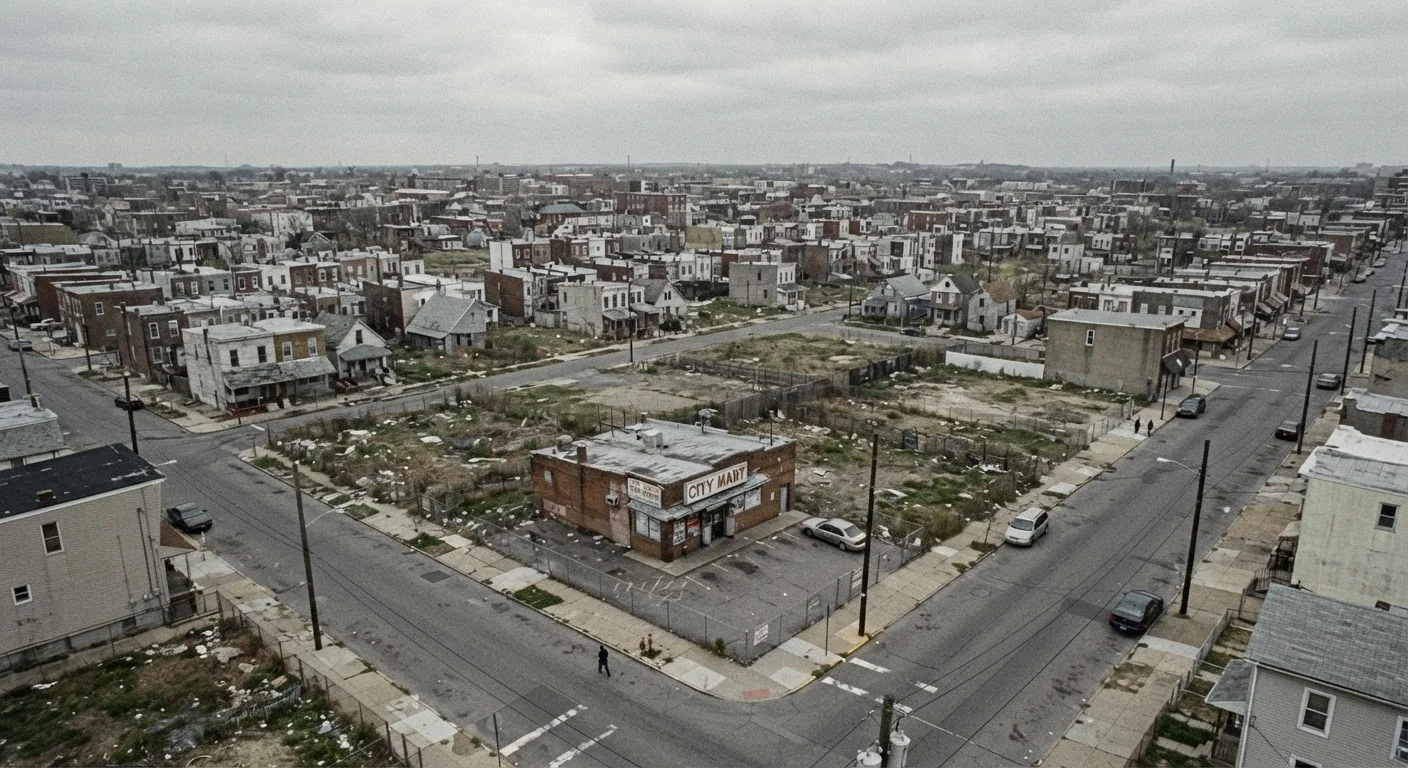
In cities, food deserts often follow the contours of historical neighborhood disinvestment. Neighborhoods that experienced redlining, white flight, and factory closures in the mid-20th century frequently lost their supermarkets as the tax base shrank. What remained were liquor stores, corner bodegas, and fast food outlets - which is part of why drive-throughs became so embedded in certain communities.
Rural food deserts present their own challenges. A family in a small Mississippi Delta town or a remote Appalachian county may have no local grocery store at all. Without a car - or with only one shared between multiple households - a grocery run becomes a half-day event, if it happens at all.
19M
Americans living in food deserts
USDA estimates place approximately 19 million people in low-income, low-access food areas across the country.
10+ miles
Distance to nearest store in rural deserts
The USDA defines rural food deserts as areas where residents live more than 10 miles from the nearest supermarket.
23.5M
People lacking vehicle access near a store
Research published by the USDA found tens of millions of Americans live more than a mile from a supermarket without a car.
Why Food Deserts Form and Persist
Food deserts don't appear randomly. They are the result of overlapping economic, historical, and structural forces that reinforce each other over time.
Retail economics play a central role. Full-service grocery stores require a certain population density and average household income to remain profitable. When those thresholds aren't met - or when retailers perceive a neighborhood as too risky - they don't open, or they close. This calculation has historically disadvantaged communities of color and low-income communities, a dynamic that researchers increasingly describe not as neglect but as deliberate exclusion.
Transportation barriers compound the issue. Even when a grocery store exists nearby, lack of access to a car or unreliable public transit can make it effectively unreachable. Carrying heavy bags of groceries on a bus, or walking miles in summer heat, is a real obstacle - not a lifestyle choice.
Historical policy decisions matter too. Mid-20th century federal housing policy, urban renewal projects, and highway construction often physically divided low-income neighborhoods from commercial corridors. The downstream effects of those decisions are still visible in the food retail landscape today. This is quite different from how dining trends spread through wealthier communities, where access and disposable income accelerate change.
Who Is Most Affected
The populations most likely to live in food deserts are low-income households, Black and Latino communities, Indigenous communities - especially on reservations - and residents of rural counties with declining populations. These overlaps are not coincidental; they reflect generations of unequal investment in infrastructure and public services.
Within food deserts, residents typically face a paradox: the food that is available - packaged snacks, sugary beverages, processed items at dollar stores - often costs more per nutritional value than fresh produce would at a proper supermarket. This means food desert residents frequently pay a poverty premium: spending more to eat worse.
It's worth noting that food access exists on a spectrum. A neighborhood with a grocery store technically doesn't qualify as a food desert, but if that store is poorly stocked, prices are inflated, or produce quality is consistently poor, residents face similar constraints. Some researchers call these areas food swamps - places saturated with low-nutrition options even when some formal retail exists. This contrasts sharply with the vibrant food ecosystems visible in urban street food scenes, which often flourish in denser, higher-income areas.
Responses and Their Limits
Communities, nonprofits, and governments have developed a range of responses to food deserts, each with genuine benefits and real limitations.
Urban farms and community gardens have taken root in vacant lots across cities like Detroit, Philadelphia, and Baltimore. They build community connection and provide fresh produce, but they rarely scale enough to replace a full grocery store's supply.
Mobile markets and food trucks carrying fresh produce have expanded in some cities, often subsidized by local health departments or nonprofits. They work well for reaching specific blocks on specific days but can't replicate consistent grocery access.
SNAP benefits (Supplemental Nutrition Assistance Program) help low-income households afford food, but SNAP can only be spent where food retailers accept it - which requires those retailers to exist in the first place. Expanded SNAP acceptance at farmers markets has helped in some regions.
Policy incentives aimed at attracting grocery retailers to underserved areas have shown mixed results. Some retailers enter, serve the community well, and stay. Others find the economics unsustainable and close within a few years, leaving residents worse off than before.
Understanding food deserts also means recognizing how food culture and access intersect. The foods people want to buy - shaped by heritage, habit, and family tradition - aren't always what a new corporate grocery chain stocks. That mismatch is explored further in conversations about why Americans avoid certain foods others consider normal.
Progress on food deserts ultimately requires sustained investment in the communities that created them - not just retail solutions, but transportation, wages, and housing stability.
Frequently Asked Questions
The USDA uses income and distance thresholds to classify food deserts, formally calling them low-income, low-access areas. In cities, residents must live more than one mile from a supermarket; in rural areas, the threshold rises to ten miles. Income levels of the surrounding community are also factored in.
No - food deserts are common in rural America too. In fact, rural food deserts can be especially severe because residents may need to drive 20 or more miles to reach a full-service grocery store, and many lack reliable transportation.
Grocery stores operate on thin profit margins and typically require a minimum customer base and income level to stay viable. In low-income, low-density neighborhoods, retailers often calculate that the financial risk outweighs the potential return - a calculation shaped by historical disinvestment patterns.
Research consistently links limited access to fresh food with higher rates of diet-related conditions such as type 2 diabetes, obesity, and cardiovascular disease. However, access alone isn't the full picture - affordability, cooking knowledge, and cultural food preferences also matter.
Efforts include USDA grant programs, community-supported agriculture initiatives, urban farming projects, mobile produce markets, and local policy changes that incentivize grocery stores to enter underserved areas. Results vary considerably by location.
Some researchers prefer the term 'food apartheid' because it centers the role of deliberate policy and systemic racism in creating these conditions, rather than implying they arose naturally like a desert landscape. Both terms are used in academic and public discourse.
The content on this site is provided for informational purposes only and should not be considered a substitute for professional advice. While we strive to provide accurate and up-to-date information, we make no guarantees regarding its completeness or accuracy. Always consult a qualified professional for advice specific to your circumstances before making any decisions.