

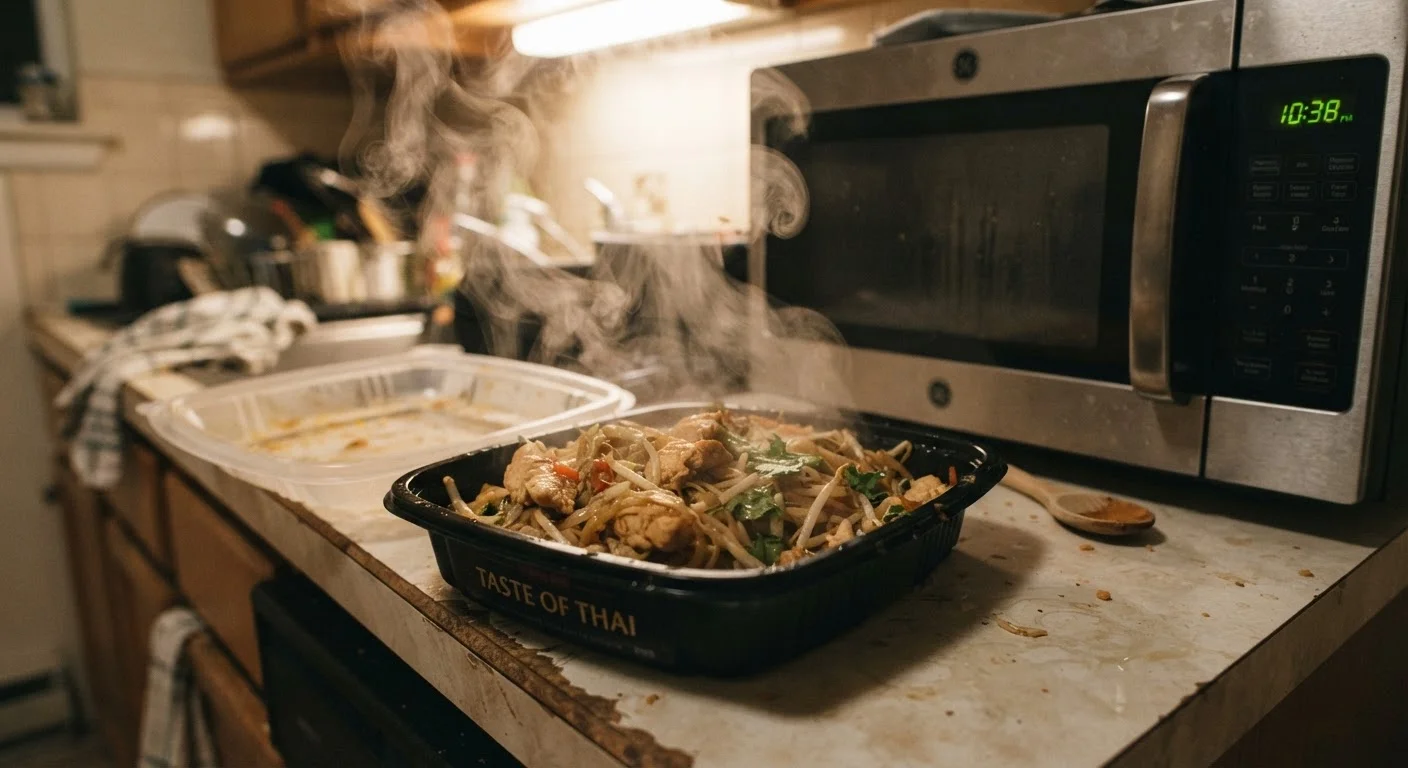
The Chemistry Behind Flavor Loss
When a chef plates your dish, it's the product of precise heat, timing, and technique working together at exactly the right moment. The second that food leaves the kitchen, a slow unraveling begins. Volatile aromatic compounds - the molecules your nose detects as a dish's characteristic scent and flavor - start to dissipate immediately into the air. By the time leftovers reach your refrigerator, a meaningful portion of that aromatic complexity is simply gone.
Oxidation compounds the problem. The fats in meat, sauces, and oils react with oxygen during storage, producing new compounds that can smell stale or off. This is the same process that makes butter go rancid, just operating on a shorter timeline. Proteins also begin to break down structurally, which is why rested proteins that were tender at the restaurant can feel dry or tough the next day.
Starches undergo a process called retrogradation: the starch molecules in rice, bread, and pasta re-crystallize as they cool, making them denser and less palatable. Reheating reverses this partially, but not completely - which is why day-old rice or pasta rarely matches the freshly cooked version.
Not All Flavor Loss Is Preventable
Even with perfect storage and reheating technique, some flavor and texture change in leftovers is unavoidable. Many of the aromatic compounds lost during cooling cannot be restored by any reheating method. Setting realistic expectations - and choosing dishes known to hold up well - is often more effective than trying to perfectly recreate restaurant conditions at home.
Texture: The Biggest Casualty of Storage
Flavor isn't the only thing that suffers. Texture changes are often even more jarring. Moisture migrates constantly inside stored food - moving from drier components into wetter ones and vice versa. A breaded cutlet that was shatteringly crispy becomes soggy as the coating absorbs moisture from the protein beneath it. Fried foods are particularly vulnerable because their texture depends on a structural crispness that is destroyed almost immediately by steam and condensation.
Knowing which cooking method produced the dish also helps you choose the right reheating approach. A dish finished under a broiler - designed to create surface char or caramelization - will never recreate that quality in a microwave. The oven or a dry skillet is far more effective at restoring surface texture.
165°F
Safe internal temperature for reheated leftovers
The USDA recommends reheating all leftovers to an internal temperature of 165°F to ensure food safety.
3-4 days
Recommended fridge storage window for leftovers
According to USDA food safety guidelines, cooked leftovers should be consumed or discarded within three to four days of refrigeration.
2 hours
Maximum time cooked food should sit out
The USDA advises that cooked food left at room temperature for more than two hours enters the bacterial growth danger zone and should be discarded.
Why Some Dishes Actually Improve Overnight
Not all leftovers disappoint. Dishes that rely on slow-developed, fat-soluble flavor compounds - braises, stews, curries, chili, and many soups - often taste noticeably better the next day. As the dish sits, the flavors continue to meld; spices fully infuse into fats and liquids, and the overall profile deepens and rounds out. Meat in a braising liquid continues to absorb flavor even off the heat.
This is worth keeping in mind when dining out. Ordering a curry or a slowly cooked braise makes for a particularly satisfying leftover experience. Conversely, dishes built on freshness - ceviche, dressed salads, anything with crispy elements - rarely survive storage gracefully.
Practical Ways to Reheat Smarter
The method you use to reheat leftovers matters as much as how you stored them. The microwave is fast, but it creates steam pockets and uneven hot zones that degrade texture rapidly. For most proteins and grain dishes, a covered skillet over medium-low heat with a small amount of water or broth produces noticeably better results. The oven works well for anything you want to restore some surface texture to - think roasted vegetables or baked dishes.
Separating components before storage helps considerably. If a dish arrives with fries, sauce, and protein together, store them in separate containers. Combining them only at reheating preserves each element's individual integrity longer. Understanding sensory cues for doneness also applies to reheating: food is ready when it's steaming evenly and hot to the touch throughout, not just when the timer goes off.
When ordering takeout specifically with leftovers in mind, it's worth choosing dishes that travel and store well. This is one subtle way the rise of delivery-only concepts has changed expectations - as explored in the broader discussion of ghost kitchens vs. traditional restaurants. Understanding these variables doesn't just salvage tonight's dinner - it helps you eat out more strategically every time.
Store Components Separately When Possible
When bringing restaurant food home, ask for sauces, toppings, and sides in separate containers. Keeping wet and dry elements apart until you reheat dramatically slows texture degradation. A dish stored in unified form will almost always disappoint faster than one kept in thoughtfully separated parts.
Frequently Asked Questions
Chicken proteins tighten and expel moisture during reheating, making the texture denser and chewier than freshly cooked meat. Overcooking during reheating accelerates this. Adding a small splash of broth or water before reheating and using a lower, gentler heat can reduce toughness.
Aromatic compounds - the molecules responsible for a dish's fresh scent - are volatile and dissipate rapidly after cooking. Refrigeration also mutes smell temporarily, and fat oxidation can introduce new, sometimes off-putting odors. Reheating briefly restores some aroma but rarely fully recreates the original.
Braised meats, stews, curries, soups, and grain-based dishes tend to hold up well or even improve after a day in the fridge. Fried foods, pasta with cream sauces, and anything with a deliberate crispy texture typically suffer the most.
Generally yes, as long as leftovers were refrigerated within two hours of serving and are reheated to an internal temperature of 165°F. Follow USDA food safety guidelines and consume refrigerated restaurant leftovers within three to four days.
Microwaves heat unevenly and can create hot spots that overcook parts of the food while leaving others cold. For many dishes, the stovetop or oven produces more consistent, better-tasting results. The microwave is convenient but not always the best tool.
The content on this site is provided for informational purposes only and should not be considered a substitute for professional advice. While we strive to provide accurate and up-to-date information, we make no guarantees regarding its completeness or accuracy. Always consult a qualified professional for advice specific to your circumstances before making any decisions.