

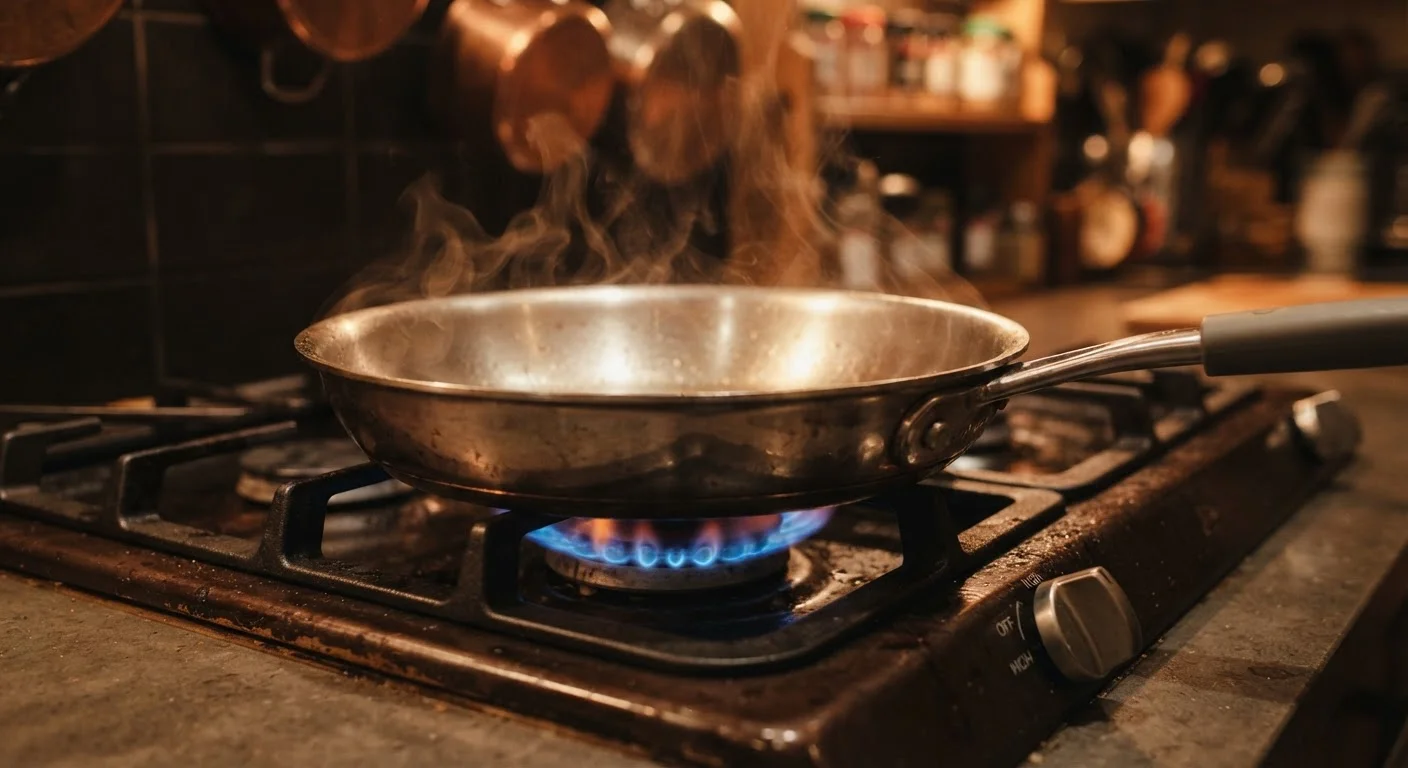
Why a Cold Pan Is the Source of Most Sticking Problems
If you've ever watched a chicken breast weld itself to a stainless steel pan, you've experienced what happens when food meets metal that isn't ready. The culprit isn't the pan's quality or a lack of oil - it's temperature.
Metal is porous at a microscopic level. When a pan is cold or barely warm, those tiny surface irregularities are open, and food proteins physically bond into them before enough heat can build a protective crust. A proper sear - the browned, flavorful exterior that also releases cleanly from the pan - only forms when the food hits hot metal immediately. That rapid contact is what creates the crust before bonding can occur.
Think of it this way: a well-preheated pan gives food a reason to leave the surface. A cold pan gives it every reason to stay.
Test Your Pan Before Adding Oil
Flick a few drops of water onto the pan surface. If they evaporate immediately with a sizzle, the pan is approaching readiness. If they skitter across the surface as tight beads (the Leidenfrost effect), the pan may be too hot - reduce heat slightly before adding oil. This quick test costs nothing and saves a burned meal.
What Actually Happens When You Add Oil to a Hot Pan
Once the pan is fully preheated, adding oil triggers a quick and useful chain reaction. The oil spreads rapidly and evenly across the hot surface, reaching its cooking temperature in seconds rather than slowly warming from a cold start. This even spread means no hot or cold patches - your food cooks consistently from edge to edge.
You'll notice the oil shimmers and flows loosely when the pan is ready. That shimmer is your visual cue. At this point, the surface tension of the oil has dropped, meaning it coats the pan in a thin, even layer rather than pooling. This is the moment to add your food.
For more on how different oils behave under heat, see common myths about cooking oils that trip up many home cooks.
Which Pans Benefit Most - and the Exception You Need to Know
Stainless steel and cast iron respond best to the hot-pan-cold-oil approach. Both materials have surfaces that genuinely improve with preheating - cast iron distributes heat evenly once hot, and stainless steel's pores contract when heated, reducing the surface area where food can stick.
Carbon steel pans behave similarly to cast iron and reward the same technique. These are the workhorses of professional kitchens for exactly this reason.
The important exception: non-stick pans. PTFE-coated non-stick cookware should never be heated empty on high heat. Overheating damages the coating and can release fumes. With non-stick pans, add a small amount of oil before the heat goes on, then warm both together over medium or low heat. This is one place where the standard rule is reversed.
This connects directly to choosing the right pan for what you're cooking - a concept explored further in matching your cooking method to the food.
A Practical Preheat Routine That Works Every Time
Building this habit takes only a small change in how you sequence your cooking prep. Place the pan on the burner and turn the heat to medium or medium-high. Walk away for 60-90 seconds for thinner pans, or 3-5 minutes for cast iron. During that time, prepare your ingredients - another confidence-building habit covered in setting up your kitchen before you cook.
To test readiness without a thermometer, hold your palm 3-4 inches above the surface. Consistent, even heat radiating upward means the pan is ready. Add your oil, watch for the shimmer, and add your food confidently.
Getting this sequence right is a foundational step in the broader set of skills covered in cooking fundamentals that make every recipe easier. Once the habit is automatic, you'll notice sticking becomes rare and browning becomes reliable - two results that make cooking feel far more manageable.
~400°F
Typical searing temperature for proteins
Food science resources generally cite surface temperatures of 375-425°F as the range where the Maillard reaction - responsible for browning and flavor - occurs most effectively.
60-90 sec
Minimum preheat time for thinner pans
Culinary educators commonly recommend at least 60-90 seconds over medium heat for thin stainless or carbon steel pans before oil is added.
Frequently Asked Questions
Most pans need 1-3 minutes over medium heat before you add oil. Thicker pans like cast iron take longer, sometimes 4-5 minutes. A simple test: hold your hand a few inches above the pan surface - when you feel consistent radiant heat, it's ready.
Not in the same way. Non-stick pans should never be preheated empty on high heat, as this can damage the coating and release harmful fumes. For non-stick cookware, add oil before heating and use medium or low heat.
Watch for the oil to shimmer and move fluidly across the pan when you tilt it. A small drop of water flicked in should sizzle and evaporate immediately. Avoid waiting until the oil smokes - that means it's overheated.
Sticking is almost always a heat issue, not an oil quantity issue. If the pan wasn't hot enough when the food went in, the food bonds to the surface before a sear can form. More oil won't fix an under-preheated pan.
Yes, and this is actually a useful technique. Preheating on medium-high and then reducing to medium before adding oil gives you a well-heated pan without overshooting your target cooking temperature.
The content on this site is provided for informational purposes only and should not be considered a substitute for professional advice. While we strive to provide accurate and up-to-date information, we make no guarantees regarding its completeness or accuracy. Always consult a qualified professional for advice specific to your circumstances before making any decisions.