

Why So Many Oil Myths Have Stuck Around
Cooking oil advice travels fast and sticks hard. A relative warns you never to cook with olive oil. A cooking show host insists you need a separate oil for every task. The internet confidently declares that anything above a certain smoke point will poison you. Most of these claims contain a kernel of truth stretched far beyond what the evidence supports.
Understanding how oils actually behave in your kitchen - not just in a chemistry lab - makes you a more confident and less wasteful cook. The myths below are among the most common ones home cooks carry, and correcting them can meaningfully improve the food you make every day. For a related look at technique, see our guide on why your pan should be hot before the oil goes in.
The Most Persistent Cooking Oil Myths - Corrected
Each of the following myths is widespread enough that professional cooking instructors regularly have to address them. Work through the corrections and you'll approach your stovetop with a clearer picture.
Myth
You should never cook with extra-virgin olive oil because it has a low smoke point and becomes toxic when heated.
Fact
Extra-virgin olive oil has a smoke point of roughly 375-405°F, which is adequate for most stovetop cooking, and its stability under heat is actually quite good due to high antioxidant content.
The smoke point of extra-virgin olive oil (EVOO) is often cited as around 320°F in older references, but more recent measurements place it between 375°F and 405°F - higher than typical sautéing temperatures. More importantly, smoke point is only one factor in an oil's heat stability. EVOO's high concentration of oleic acid (a monounsaturated fat) and natural antioxidants means it resists oxidation and the formation of harmful compounds better than some refined oils with higher smoke points. For pan-frying a chicken thigh or roasting vegetables at 400°F, EVOO performs well.
Myth
A higher smoke point always means a healthier, safer oil for cooking.
Fact
Smoke point tells you when an oil starts to visibly smoke, but it does not tell you how quickly it breaks down or how many potentially harmful compounds it produces during that process.
Some highly refined oils have very high smoke points precisely because processing has stripped away the antioxidants, flavor compounds, and minor components that would otherwise burn first. That processing also removes much of the nutritional value. An oil's oxidative stability - how resistant it is to breaking down and forming free radicals and aldehydes - matters more for health than smoke point alone. Oils rich in saturated and monounsaturated fats tend to be more oxidatively stable than those high in polyunsaturated fats, regardless of smoke point.
Myth
Vegetable oil is a single, consistent product you can rely on for any cooking task.
Fact
"Vegetable oil" is a catch-all label that can refer to soybean oil, canola oil, corn oil, sunflower oil, or blends - each with different fatty acid profiles, smoke points, and flavor characteristics.
When a recipe calls for vegetable oil, it usually means a neutral-flavored, refined oil - but what's actually in the bottle varies by brand and can change over time based on commodity availability. Soybean oil and corn oil, both common in generic vegetable oil blends, are high in polyunsaturated omega-6 fats, which degrade relatively quickly at high heat. If precision matters for your cooking or dietary goals, choosing a specifically labeled oil is more reliable than defaulting to whatever is labeled "vegetable."
Myth
You can reuse frying oil indefinitely as long as you filter it after each use.
Fact
Filtering removes food particles but does not reverse chemical degradation. Oil that has been repeatedly heated breaks down progressively and should be discarded when it darkens significantly, smells off, or becomes viscous.
Each heating cycle causes some of the oil's fatty acids to oxidize and polymerize. Filtering removes charred food bits - which do accelerate further breakdown - but the oil's molecular structure still degrades with each use. Signs that oil has reached the end of its useful life include a dark brown color, a sharp or rancid smell, excessive foaming, and a noticeably thicker texture. Using badly degraded oil affects the flavor of fried food and is worth avoiding simply on culinary grounds, quite apart from any other considerations.
Myth
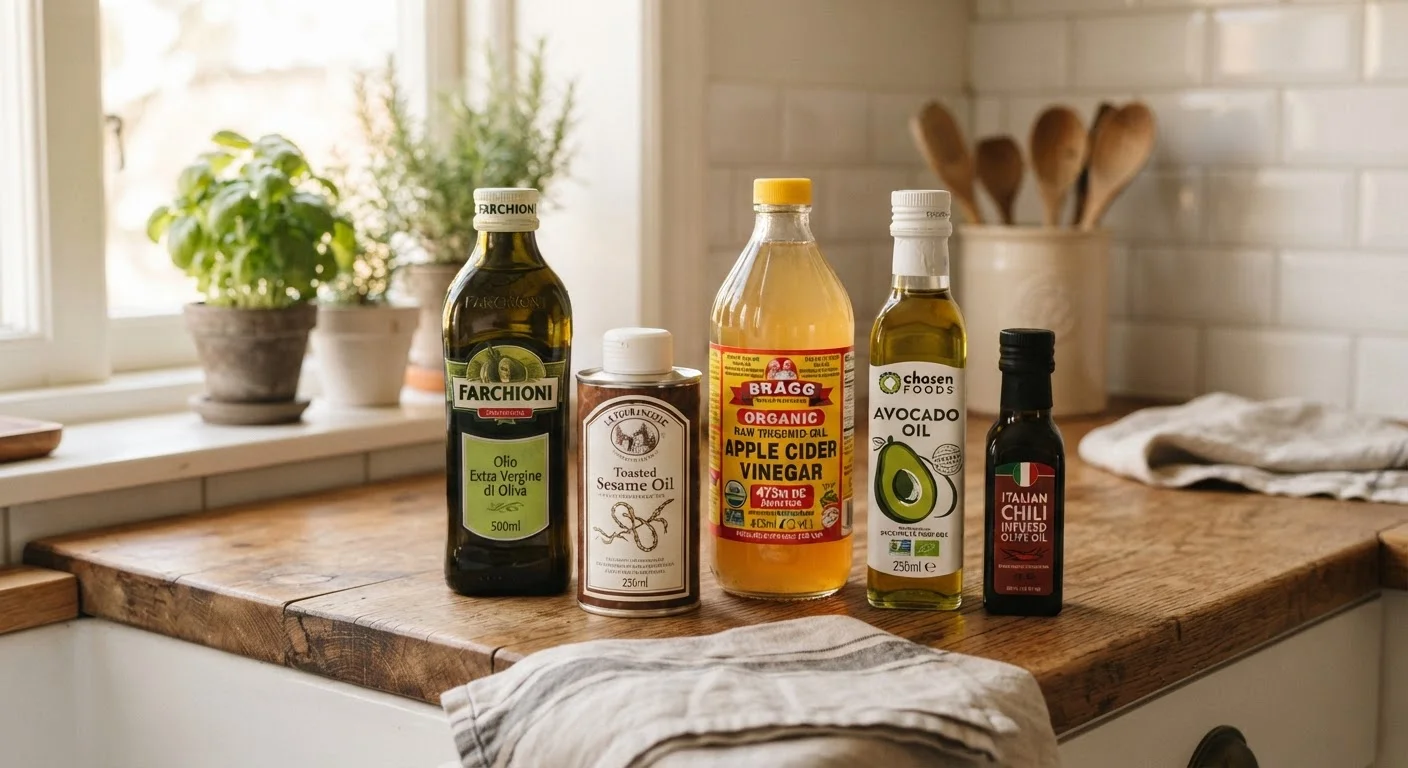
Storing cooking oil on the countertop in a pretty glass bottle is a perfectly fine long-term storage method.
Fact
Heat, light, and air are the three main enemies of cooking oil freshness. A clear bottle on a warm countertop near the stove exposes oil to all three simultaneously.
Oxidation is what makes oil go rancid, and it is accelerated by light exposure (especially sunlight and UV), heat, and contact with oxygen. Oils stored in clear containers next to a stove - where they experience daily temperature swings and light exposure - can go rancid in a matter of weeks, sometimes before the bottle is even half empty. A cool, dark cupboard away from the stove is the correct storage location. If you buy oil in large quantities, consider decanting a small working amount into a dark or opaque container for daily use.
Choosing the right oil also intersects with choosing the right cooking method. Our overview on matching cooking methods to what you're making covers that ground in more depth.
Practical Takeaways for Everyday Cooking
You don't need a pantry stocked with a dozen specialty oils. For most home cooks, a good extra-virgin olive oil for everyday sautéing, salad dressings, and lower-heat roasting, plus a neutral high-heat oil such as refined avocado or refined sunflower oil for searing and deep frying, covers the vast majority of situations.
375-405°F
Smoke point range of extra-virgin olive oil
Laboratory measurements reported in peer-reviewed food science literature place EVOO's smoke point well above the temperature of typical stovetop sautéing.
~350°F
Typical temperature for pan sautéing
Most everyday sautéing and pan-frying tasks occur well below the smoke points of common cooking oils, making oil selection less critical than storage and freshness.
Store all your oils away from heat and light - inside a cabinet rather than next to the stove. Buy sizes you'll use within a few months. Smell your oil before cooking; a sharp, crayon-like odor means it has gone rancid and will negatively affect the flavor of anything you make with it.
Cooking with confidence comes from understanding a handful of real principles rather than memorizing a long list of rules that often contradict each other. Oil is one of those fundamentals worth getting right.
The content on this site is provided for informational purposes only and should not be considered a substitute for professional advice. While we strive to provide accurate and up-to-date information, we make no guarantees regarding its completeness or accuracy. Always consult a qualified professional for advice specific to your circumstances before making any decisions.