

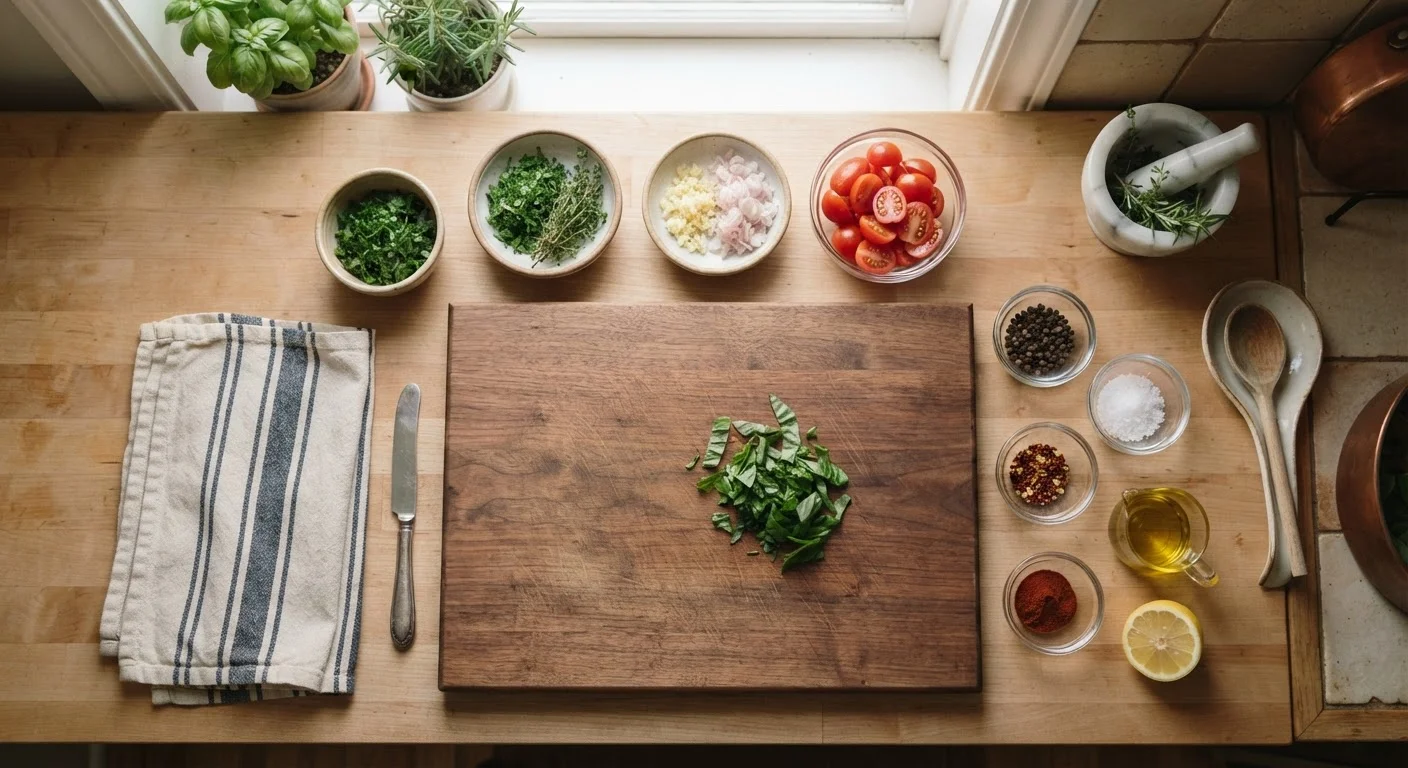
What Mise en Place Actually Means
Professional kitchens operate at a pace that would overwhelm most home cooks-and yet the food comes out precisely timed and properly seasoned, night after night. One of the core reasons is a discipline called mise en place (pronounced meez-ahn-PLAS), a French phrase meaning "everything in its place."
In practice, it means that before any heat is applied, every ingredient is washed, peeled, chopped, measured, and arranged within arm's reach. The cook's role during actual cooking is then reduced to executing technique-not scrambling to find the garlic press while onions burn.
This isn't a restaurant-only concept. It's the single most transferable habit any home cook can adopt, and it costs nothing beyond a few extra minutes at the start. This article is part of a broader guide to cooking fundamentals that covers heat, seasoning, and timing.
Why Skipping This Step Creates Chaos
Most beginner kitchen disasters don't happen because someone lacks talent. They happen because the cook is mid-chop when the butter starts to brown, or realizes the recipe requires stock they forgot to open. Cooking involves multiple simultaneous timelines, and trying to prep ingredients while managing heat is like texting while driving-something will suffer.
When garlic hits a properly preheated pan, you have roughly 30 to 60 seconds before it crosses from golden to bitter. If you're still mincing it when it goes in, timing control is impossible. Understanding why your pan needs to be hot before anything else is the natural next step once your ingredients are ready to go.
A Garbage Bowl Saves More Time Than You'd Think
Place a large bowl on your counter before you start prepping to collect vegetable trimmings, eggshells, and packaging. Making a single trip to the trash at the end-rather than stopping every 90 seconds mid-prep-keeps your momentum and your workspace cleaner. It's a small habit borrowed from restaurant prep that makes a real difference at home.
How to Set Up Your Kitchen Before You Cook
What you will need
Read the entire recipe from start to finish
Before you open the refrigerator, read the recipe completely-not just the ingredient list, but every instruction. Look for steps that require advance prep: Does the dough need to rest? Does the meat need to come to room temperature? Does the oven need 20 minutes to preheat? These details shape your timing from the start.
Gather and verify all ingredients
Pull every ingredient the recipe calls for and place it on the counter. Check quantities against what you have. This is the moment to discover you're short on olive oil or missing a key spice-not after you've already started cooking. Return anything to the refrigerator that shouldn't sit out yet, such as raw meat or dairy, but confirm it's there.
Measure spices and dry ingredients into small bowls
Spices and aromatics often go into a hot pan quickly and in rapid succession. Pre-measure them into small bowls or ramekins so you can add them in one fluid motion. This is especially important for dishes with multiple spices, since measuring on the fly while monitoring heat is a reliable way to overshoot an amount or forget one entirely.
Wash, peel, and chop all produce
Work through vegetables and aromatics methodically. Chop alliums (onions, shallots, garlic) first since they tend to be foundational to most dishes, then move to other vegetables in the order they'll be used. Place each prepped ingredient in its own bowl or a section of a large plate. Don't mix items that go in at different times-keeping them separate preserves your timing control.
Prep proteins and set them aside properly
If your recipe involves meat, poultry, or fish, pat it dry (excess moisture inhibits browning), season it if the recipe calls for it at this stage, and place it on a separate plate. Keep raw proteins physically separate from vegetables and away from ready-to-eat ingredients to avoid cross-contamination. If the protein needs to rest at room temperature before cooking, now is the time to take it out.
Arrange your workspace and start any pre-heating
Place your prepped ingredients in the order they'll be used-left to right or closest to farthest from the stove works well. Put your garbage bowl or compost bin nearby. Start preheating the oven if needed, or set pans over low heat to come up to temperature. With everything in its place, you're now ready to cook with your full attention on technique and timing rather than logistics.
What You'll Notice Once You Start Doing This
The first time you cook with full mise en place, the experience feels noticeably different. There's a calm to it. You're tasting, adjusting, and paying attention to color and sound rather than racing to catch up. You make better decisions-including decisions about seasoning. Salting at the right moments throughout cooking is only possible when your attention isn't split across a dozen prep tasks.
Once this setup routine becomes automatic, you'll also get faster. The 10 to 15 minutes of up-front prep pays back in smoother execution, fewer mistakes, and food that actually tastes like you intended. Pair this habit with a practical set of kitchen tools and you'll have the two foundations that make nearly every recipe more manageable.
The content on this site is provided for informational purposes only and should not be considered a substitute for professional advice. While we strive to provide accurate and up-to-date information, we make no guarantees regarding its completeness or accuracy. Always consult a qualified professional for advice specific to your circumstances before making any decisions.