

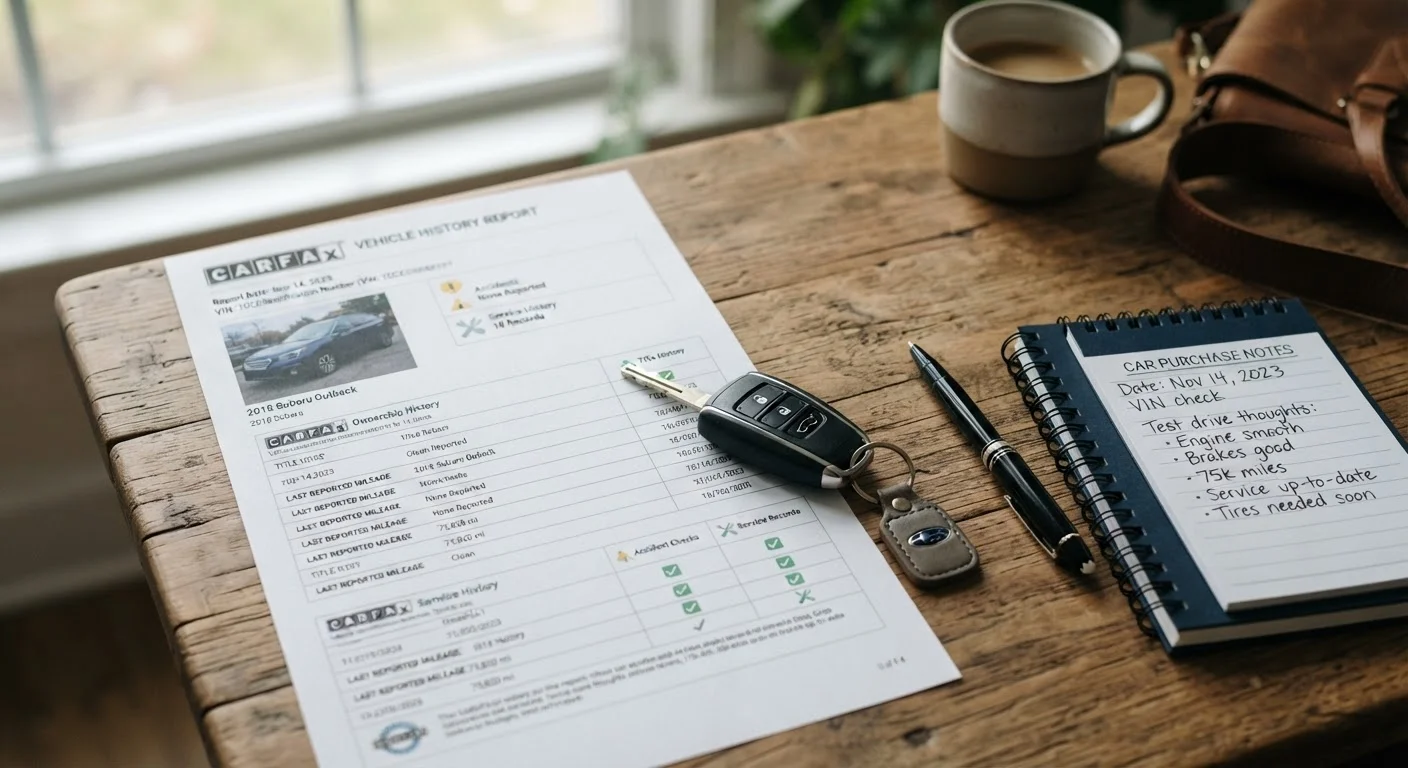
What a Vehicle History Report Actually Contains
A vehicle history report aggregates data from sources including state DMV records, insurance companies, auto auctions, and inspection stations. It's organized around a vehicle's VIN - a 17-character code unique to each vehicle. Before diving into the details, understand that these reports are only as complete as the data reported to them. Private transactions, cash repairs, and incidents that were never filed with insurance won't show up. For a fuller picture of what these reports can and can't capture, see how a vehicle history report works and what it can't tell you.
The report is typically divided into five core areas: title history, accident and damage records, odometer readings, ownership history, and service/inspection records. Each tells a different part of the story, and none should be read in isolation.
What to Look For - and What the Flags Mean
Use this section as a practical reference as you work through an actual report.
Verify the VIN Matches the Vehicle
Before reading a single line of the report, confirm the VIN on the report matches the VIN physically on the vehicle. Check the dashboard (visible through the windshield on the driver's side), the driver's door jamb sticker, and the title or registration. A mismatch is an immediate red flag - stop the transaction.
Check the Title History for Brands
Title brands are permanent designations assigned by a state DMV when a vehicle has been significantly damaged or legally altered. The most serious brands include:
- Salvage: The vehicle was declared a total loss by an insurer.
- Rebuilt/Reconstructed: A salvage vehicle was repaired and re-inspected. Drivable, but financing and insurance can be difficult to obtain.
- Flood/Water Damage: Water intrusion that may cause long-term electrical and corrosion problems.
- Lemon Law Buyback: Returned to the manufacturer under state lemon law - the underlying defect should be disclosed.
- Junk/Scrapped: Considered unfit for road use. A vehicle with this brand should never be driven.
Any title brand dramatically changes the calculus of a purchase. A clean title - meaning no brands - is the baseline minimum most buyers should require.
Review Accident and Damage Records
Accident records on a report typically come from insurance claims, police reports, and auto auction inspection records. Look at each event and note:
- The severity (minor, moderate, severe - or airbag deployment noted)
- Which area of the vehicle was damaged (front-end structural damage is more serious than a bumper scuff)
- Whether the damage was repaired, and if so, by whom
Multiple accidents don't automatically disqualify a vehicle, but undisclosed structural damage - especially to the frame - is a dealbreaker. A certified mechanic can use a frame measurement tool to verify structural integrity.
Scrutinize the Odometer Readings
Reports log odometer readings every time a vehicle is inspected, registered, or processed through an auction. Read them chronologically. The mileage should increase steadily over time. Watch for:
- Rollback: A later entry showing fewer miles than an earlier one - a strong fraud indicator.
- Large unexplained gaps: A jump from 40,000 to 95,000 miles in one year may be legitimate (a high-mileage driver or fleet use) or may indicate missing records. Ask for an explanation.
- Odometer discrepancy flag: Some reports explicitly flag inconsistencies - treat this as a serious concern.
Evaluate Ownership History and Use Type
The report will typically show how many owners the vehicle has had and, in many cases, the type of use. Key distinctions:
- Personal use: Generally preferred, though not a guarantee of good care.
- Rental or fleet use: Often means higher mileage and variable maintenance discipline, though fleet vehicles are sometimes well-serviced.
- Taxi or ride-share: Very high mileage accumulation and heavy wear patterns - factor this into any mechanical assessment.
A high number of short-term owners (three owners in two years, for example) may indicate recurring problems that buyers discovered after purchase.
Review Open Recalls
Some reports include open safety recall information tied to the VIN. A recall means the manufacturer has identified a safety defect and is required to fix it at no cost to the owner. An open recall is not necessarily a dealbreaker - but the repair should be completed before or immediately after purchase. You can also verify open recalls independently using the NHTSA VIN lookup tool at nhtsa.gov, which is the authoritative source for U.S. recall data.
A Clean Report Is Not a Guarantee
Vehicle history reports can only reflect what was officially reported. Unreported accidents, private cash repairs, and undisclosed mechanical problems will not appear. Always treat a clean report as a necessary condition for purchase consideration - not a sufficient one. A professional pre-purchase inspection remains essential.
After reviewing all flags, always cross-reference the title status with the state's official DMV records. A report may lag behind recent title changes. For a plain-language explanation of how titles, liens, and transfers work, see the paperwork side of owning a vehicle.
Putting the Report in Context
A vehicle history report is a starting point, not a verdict. A vehicle with two minor fender-bender records repaired properly at a body shop may be perfectly sound. A vehicle with a clean report but deferred maintenance can be a money pit. That's why the report should always be paired with a hands-on pre-purchase physical inspection and, when possible, a diagnostic check by a trusted independent mechanic.
Service records listed in the report also provide useful signal. Consistent oil changes and scheduled maintenance logged at dealerships or recognized shops suggest the vehicle was cared for. If the service history is sparse or disappears for years at a time, ask why. Building your own records going forward is equally important - a consistent log protects your investment and tells the next owner the car's full story. Our guide on keeping a vehicle maintenance log walks through how to do that simply and consistently.
Finally, remember that context matters across the whole vehicle-buying process. A history report is one document among several you should review before committing to any used vehicle purchase.
The content on this site is provided for informational purposes only and should not be considered a substitute for professional advice. While we strive to provide accurate and up-to-date information, we make no guarantees regarding its completeness or accuracy. Always consult a qualified professional for advice specific to your circumstances before making any decisions.