

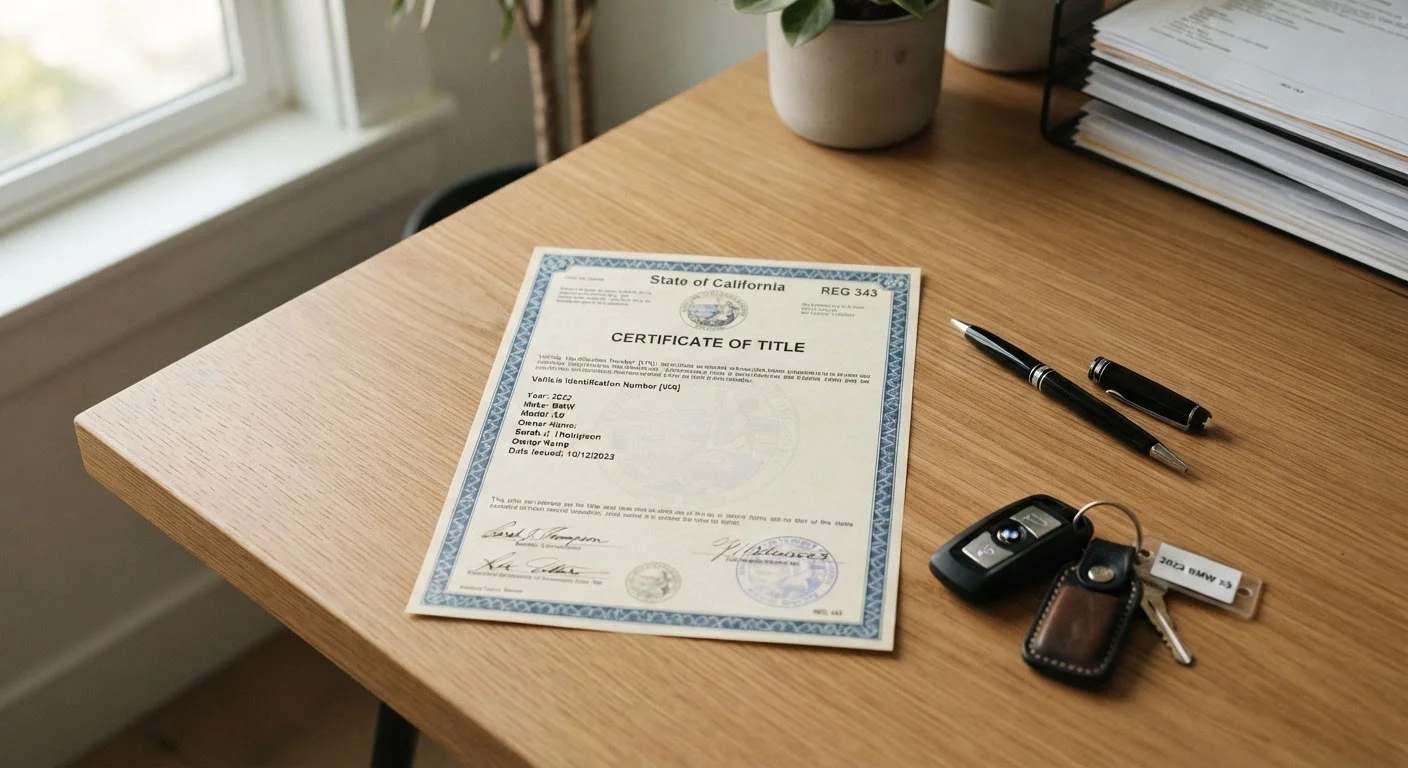
What a Vehicle Title Actually Is
A vehicle title is a legal document issued by your state's motor vehicle agency that establishes who owns a specific vehicle. Think of it as the deed to a house - it names the owner, describes the property, and records any financial claims against it. Every car, truck, or motorcycle registered for road use in the U.S. has a corresponding title on file.
The title includes the vehicle identification number (VIN), the make, model, year, and the name and address of the registered owner. It also indicates whether a lienholder - typically a lender - has a financial claim on the vehicle. If you financed your vehicle, the lender's name appears on the title until the loan is paid off.
Before signing anything on a used vehicle purchase, checking the title status is essential. Our guide to reading vehicle history reports walks through title flags - like salvage or rebuilt designations - that can significantly affect a vehicle's value and insurability.
Vehicle Title
A legal document issued by a state that identifies the registered owner of a vehicle and records any financial claims against it. It is the primary proof of ownership.
Lien
A legal claim a lender holds on a vehicle used as collateral for a loan. The vehicle cannot be freely sold or transferred until the lien is released.
Lienholder
The financial institution or individual that holds a lien on a vehicle - typically a bank, credit union, or auto lender that financed the purchase.
Lien Release
A document or electronic notification confirming that a loan has been repaid and the lender's claim on the vehicle has been removed.
Clean Title
A title with no active liens, legal judgments, or problematic designations such as salvage or rebuilt status. Indicates straightforward, unencumbered ownership.
Title Transfer
The formal process of updating a vehicle's title to reflect a new owner, completed through the state's DMV after a sale or gift.
Salvage Title
A title designation indicating a vehicle was declared a total loss by an insurance company, typically due to major damage. Salvage-titled vehicles face restrictions on registration and insurance in many states.
Odometer Disclosure
A required statement on the title transfer document where the seller certifies the vehicle's mileage at the time of sale. Federal law mandates this for most vehicles under ten years old.
Liens, Releases, and Clean Titles
A lien is a legal claim a lender holds against a vehicle used as collateral for a loan. When you finance a vehicle purchase, the lender becomes a lienholder on the title. This means you cannot legally sell or transfer the vehicle without satisfying - or arranging the payoff of - that loan.
Once a loan is fully repaid, the lender is required to release the lien. This typically happens in one of two ways:
- Electronic release: In most states, lenders notify the DMV electronically, and the lien is removed from the state's records automatically.
- Paper release: The lender mails you a signed lien release document, which you then bring to your DMV to update the title.
A title with no active liens is called a clean title. If you're buying a used vehicle outright from a private seller, confirming the title is clean - and that the seller's name matches the title - is a non-negotiable step. If the title still shows a lender, the seller must pay off the loan at or before the time of sale.
Completing your purchase transaction correctly is just one piece of a broader process. See our step-by-step car-buying walkthrough for context on the full sequence of events from offer to ownership.
Transferring a Title: What Sellers and Buyers Both Need to Do
When a vehicle changes hands, the title must be formally transferred through your state's DMV. The process differs slightly by state, but the core steps are consistent:
| Who issues vehicle titles | State DMV or equivalent motor vehicle agency |
| Time to transfer a title (typical) | 2-6 weeks after DMV submission (Varies by state) |
| Odometer disclosure required | Yes, for most vehicles under 10 years old (Federal Truth in Mileage Act) |
| Lien release method | Electronic (most states) or paper document from lender |
| Duplicate title fee range | Typically $5-$25, varies by state |
- Seller signs the back of the title. This section includes a space for the sale price, odometer reading, and the seller's signature. Leaving any field blank creates legal exposure for both parties.
- Buyer submits the signed title to the DMV. Along with the title, buyers typically need proof of insurance, a completed application for title/registration, and payment of applicable fees and taxes.
- New title is issued. The DMV processes the transfer and issues a new title in the buyer's name, usually within a few weeks.
One common mistake: both parties assuming the other will handle the paperwork. If a buyer drives away with a signed title but never registers the vehicle, the seller can remain on the hook for traffic violations or liability - because the title still reflects their name in many states' records until updated.
Private-party transfers and dealer sales each have slightly different documentation requirements. After the transfer is complete, new owners also need to address insurance, registration renewals, and other ongoing responsibilities - our article on what new owners should know in their first year covers those practical next steps.
Title and transfer rules vary by state. Always verify current requirements with your state's motor vehicle agency before completing any transaction.
The content on this site is provided for informational purposes only and should not be considered a substitute for professional advice. While we strive to provide accurate and up-to-date information, we make no guarantees regarding its completeness or accuracy. Always consult a qualified professional for advice specific to your circumstances before making any decisions.