

Summary
22 items · 45-90 minutes on-site
Why a Checklist Matters Before You Buy
Used vehicles are priced on trust - and that trust has to be earned through evidence, not a salesperson's word. Whether you're buying from a dealership or a private seller, every used car carries an undocumented history that the seller may not fully know, or may choose not to share. A structured walk-around inspection gives you a systematic way to surface problems before money changes hands.
If you're still weighing whether used makes sense for your situation, our breakdown of new vs. used trade-offs covers the key financial and reliability factors worth thinking through first.
This checklist is organized into four areas: exterior condition, mechanical basics, interior checks, and paperwork. Work through them in order during your visit - don't skip ahead to the test drive before you've done the walk-around.
Exterior Condition
Mechanical Basics
Interior Checks
Paperwork and Documentation
Tools to Bring and Documents to Request
You don't need a garage full of equipment to do a solid pre-purchase inspection. A few inexpensive items will meaningfully improve what you're able to catch on-site. On the paperwork side, certain documents are non-negotiable - request them before your visit if possible so you're not reviewing them under time pressure at the seller's location.
OBD-II scanner (basic code reader)
Reads stored and pending diagnostic trouble codes from the vehicle's computer, which may not trigger a visible warning light.
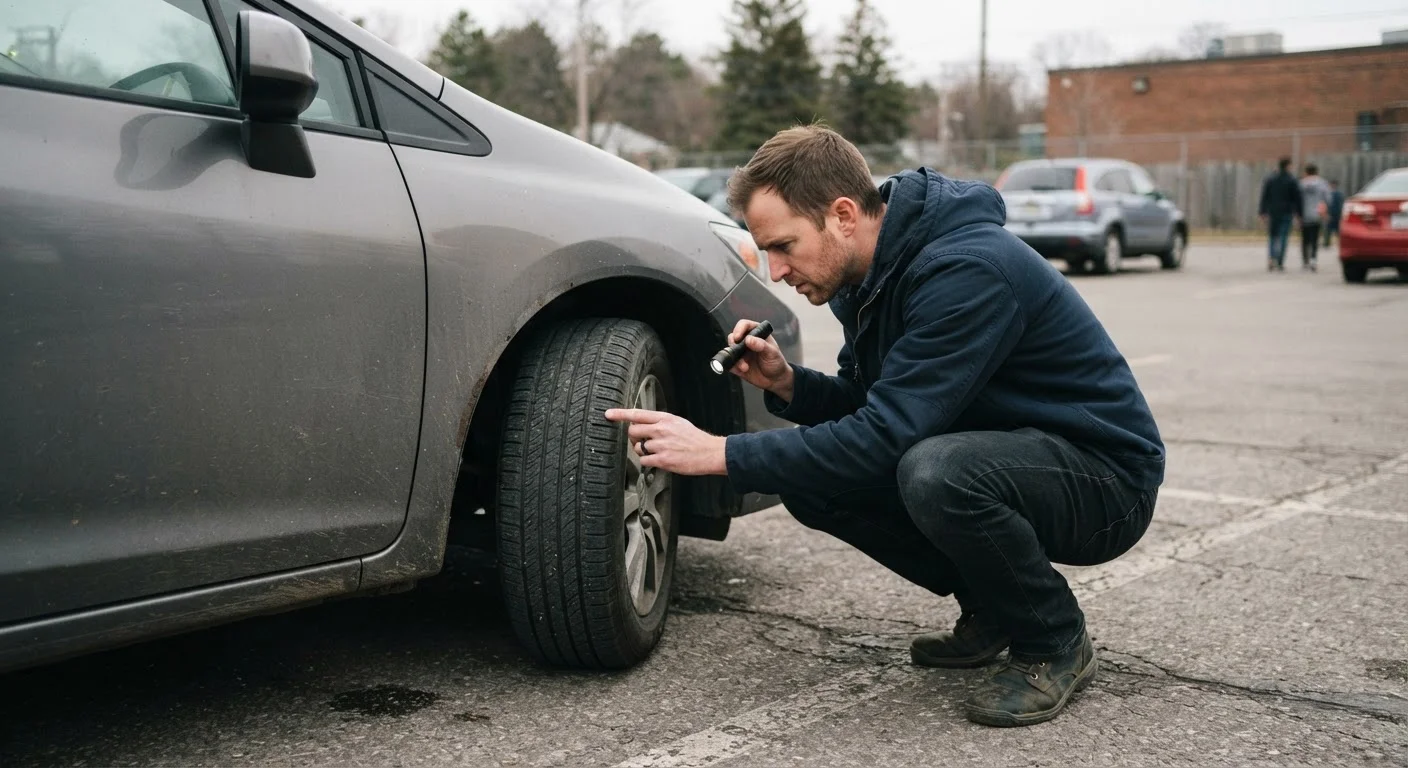
Flashlight or phone torch
Illuminates the engine bay, undercarriage, and interior corners that are difficult to see in showroom lighting.
Tire tread depth gauge
Gives you an objective measurement of remaining tread on each tire rather than a visual estimate.
Vehicle history report (VIN-based)
Provides documented records of accidents, title status, prior owners, and odometer readings reported to data providers.
Small magnet
Can detect body filler (Bondo) used to hide rust or collision damage - a magnet won't stick to filled areas the way it does to bare metal.
For a deeper guide on making sense of what a vehicle history report actually shows you - accident records, title issues, odometer discrepancies - see how to read a vehicle history report.
Never Skip the Independent Mechanic Inspection
A dealership's in-house inspection serves the dealership's interests, not yours. Before finalizing any used vehicle purchase, have a mechanic you choose independently inspect the vehicle on a lift. This step regularly uncovers issues - worn suspension components, exhaust leaks, underbody rust - that are invisible during a standard walk-around and test drive.
Rebuilt and Salvage Titles Carry Lasting Consequences
A vehicle with a salvage or rebuilt title has been declared a total loss by an insurer at some point in its history. These vehicles can be roadworthy, but they typically carry reduced resale value, may be harder to insure, and can disqualify the vehicle from certain loan programs. Always confirm title status before investing time in an inspection.
After the Inspection: Next Steps
If the vehicle passes your checklist review and the documents check out, the next step is an independent pre-purchase inspection (PPI) by a licensed mechanic of your choosing - not one recommended by the seller. A PPI typically costs between $100 and $200 and can identify issues that aren't visible to the naked eye, such as frame straightness, fluid leaks, and compression problems. Any seller who refuses to allow a PPI should be treated as a serious red flag.
Once you own the vehicle, keeping up with routine maintenance is how you protect that investment. Our car maintenance hub covers the essential upkeep your vehicle will need over time. And if you ever need to take it in for service, preparing before you visit the mechanic will help you walk in with the right information and the right questions.
This article is for general informational purposes only. Always consult a qualified mechanic for a professional vehicle assessment before making a purchase decision. Document requirements vary by state - verify title and odometer disclosure rules with your local DMV or equivalent authority.
The content on this site is provided for informational purposes only and should not be considered a substitute for professional advice. While we strive to provide accurate and up-to-date information, we make no guarantees regarding its completeness or accuracy. Always consult a qualified professional for advice specific to your circumstances before making any decisions.