

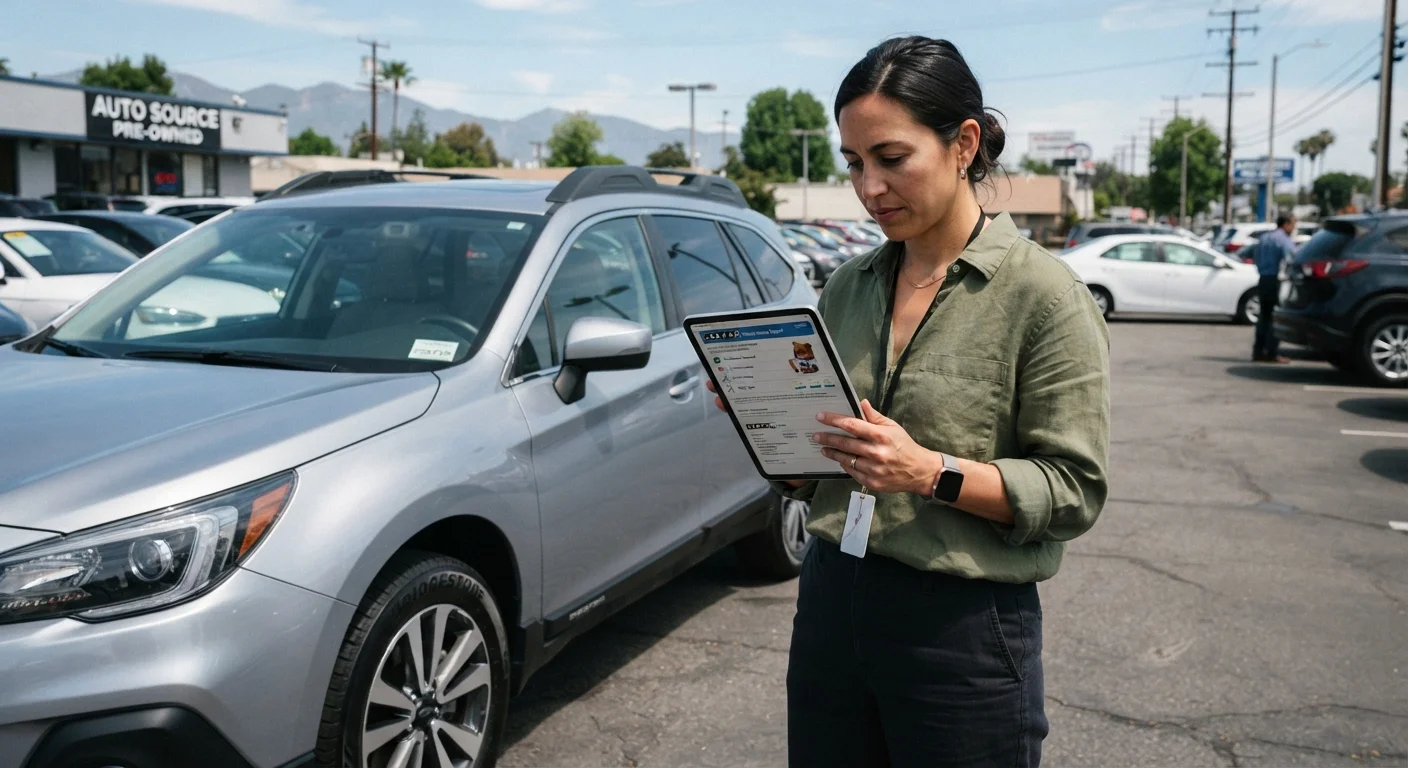
Where the Data in a History Report Actually Comes From
Every vehicle history report starts with the VIN - a 17-character identifier unique to each vehicle. Report providers aggregate data from a patchwork of sources: state department of motor vehicle records, insurance company claims databases, federal odometer disclosure statements, salvage and auction records, and repair shops that voluntarily participate in reporting networks.
That last point matters. Participation is not universal. A franchise dealership service center is far more likely to report a repair than an independent shop down the street. An accident repaired at a body shop that doesn't feed data to the major databases simply won't appear. What you see in the report reflects only what made it into those systems - and that's a fraction of a vehicle's real story.
Understanding this helps you use the report as a filter rather than a verdict. For a deeper look at how to interpret specific flags once you have a report in hand, see how to read a vehicle history report without getting lost in the details.
What a Report Can Legitimately Tell You
Despite its limitations, a vehicle history report surfaces genuinely valuable information when used correctly.
- Title status: Salvage, rebuilt, flood, lemon law buyback, and junk titles are serious flags. These designations are publicly recorded and reliably appear in reports.
- Number of owners and ownership locations: A vehicle that's had five owners in three years raises different questions than one with a single long-term owner. Regional history also matters - a car from a high-humidity or heavy-road-salt area may have accelerated rust exposure.
- Odometer readings over time: Reports often capture odometer disclosures from registration renewals, inspections, and sales. A reading that goes backward - or jumps suspiciously - is a serious red flag for odometer fraud.
- Reported accidents and insurance claims: While not comprehensive, any accident that triggered an insurance claim will typically appear, along with a rough indication of severity.
- Recall and registration history: Some reports flag open safety recalls that haven't been addressed - worth verifying directly with the manufacturer using the NHTSA database.
~40%
Used vehicles with undisclosed damage history
Industry estimates suggest a significant share of used vehicles on the market have damage or title events not fully disclosed by sellers, underscoring why independent verification matters.
17 characters
Length of a standard VIN
Every vehicle sold in the U.S. since 1981 carries a standardized 17-character VIN, which serves as the unique key for pulling any history report.
$100-$200
Typical cost of a pre-purchase inspection
An independent mechanic's pre-purchase inspection is widely regarded as one of the highest-value steps in buying a used vehicle, often revealing issues no history report can capture.
The Real Blind Spots You Need to Know
This is where many buyers get into trouble - they treat a clean report as proof of a clean car. Here's what a report structurally cannot tell you:
Unreported damage. A collision fixed privately, without an insurance claim, leaves no data trail. A car could have significant frame damage repaired at a cash-only shop, and the report would show nothing.
Mechanical condition. Reports don't capture engine wear, transmission health, suspension issues, or any of the mechanical realities that determine whether a car will be reliable next year. A vehicle with a spotless report could be due for a major repair.
Private maintenance history. Owners who change their own oil or use shops outside the reporting network leave no visible service record. This doesn't mean those services weren't done - it means you have to ask. A seller who can produce physical receipts is worth more credit than one who simply says "I kept up with everything." For perspective on what good maintenance documentation looks like, see why a vehicle maintenance log matters.
Cosmetic or interior condition. Reports say nothing about upholstery, trim, rust spots, paint fade, or interior wear. Eyes and hands are the only tools for that.
How to Use a History Report Wisely in a Purchase Decision
The right mental model: a vehicle history report is a screening tool, not a final answer. Use it to eliminate candidates with serious red flags - salvage titles, odometer fraud indicators, flood damage designations - before you invest time and money in a deeper look.
Once a car passes the report screen, the next step is a physical inspection. For a practical checklist of what to look for in person, see what to inspect before buying a used vehicle. After that, for any vehicle you're seriously considering, a pre-purchase inspection by an independent, qualified mechanic is money well spent - typically $100-$200, and it can surface mechanical issues no report will ever capture.
Always Cross-Check the VIN on the Car Itself
Before relying on any report, confirm the VIN printed on the report matches the VIN physically on the vehicle - on the dashboard, the door jamb, and the title. A mismatch is a serious warning sign. This simple step takes under a minute and can save you from significant trouble.
Finally, don't overlook the seller's own records. Ask for service receipts, oil change records, and any repair documentation. A seller who has kept organized records is giving you real information. One who can't produce anything is giving you silence - and silence has a cost when it comes to used vehicles. For broader context on vehicle ownership responsibilities, including ongoing costs and upkeep, that context matters before you sign anything.
This article is for general informational purposes only. Always verify vehicle records, title status, and safety recalls through official sources, and consult a qualified mechanic before making any purchase decision.
Frequently Asked Questions
No. A report is a useful first filter but has significant blind spots - it only captures events that were officially reported. You should always combine it with a thorough physical inspection and, ideally, a pre-purchase inspection by an independent mechanic.
A salvage title means an insurance company declared the vehicle a total loss at some point - typically due to a severe accident, flood, or theft. A vehicle can be repaired and retitled as 'rebuilt,' but structural integrity may still be compromised. This flag warrants extra scrutiny.
No. Only accidents that were reported to an insurance company or law enforcement and entered into a database will appear. Minor fender benders paid out of pocket, or collisions repaired without filing a claim, will not show up.
The VIN is a 17-character code found on the dashboard near the windshield on the driver's side, on the driver's door jamb sticker, and on the vehicle's title and registration documents.
Only if the service was performed at a participating shop that submitted the data. Oil changes done at home, or at a shop not in the reporting network, will not appear. Ask the seller directly for any physical maintenance receipts.
A VIN clone occurs when a stolen vehicle is given the VIN of a legitimate, similar vehicle to disguise its identity. A history report that looks clean could theoretically belong to a different car. Always verify the VIN on the physical vehicle matches the report and all documents.
The content on this site is provided for informational purposes only and should not be considered a substitute for professional advice. While we strive to provide accurate and up-to-date information, we make no guarantees regarding its completeness or accuracy. Always consult a qualified professional for advice specific to your circumstances before making any decisions.