

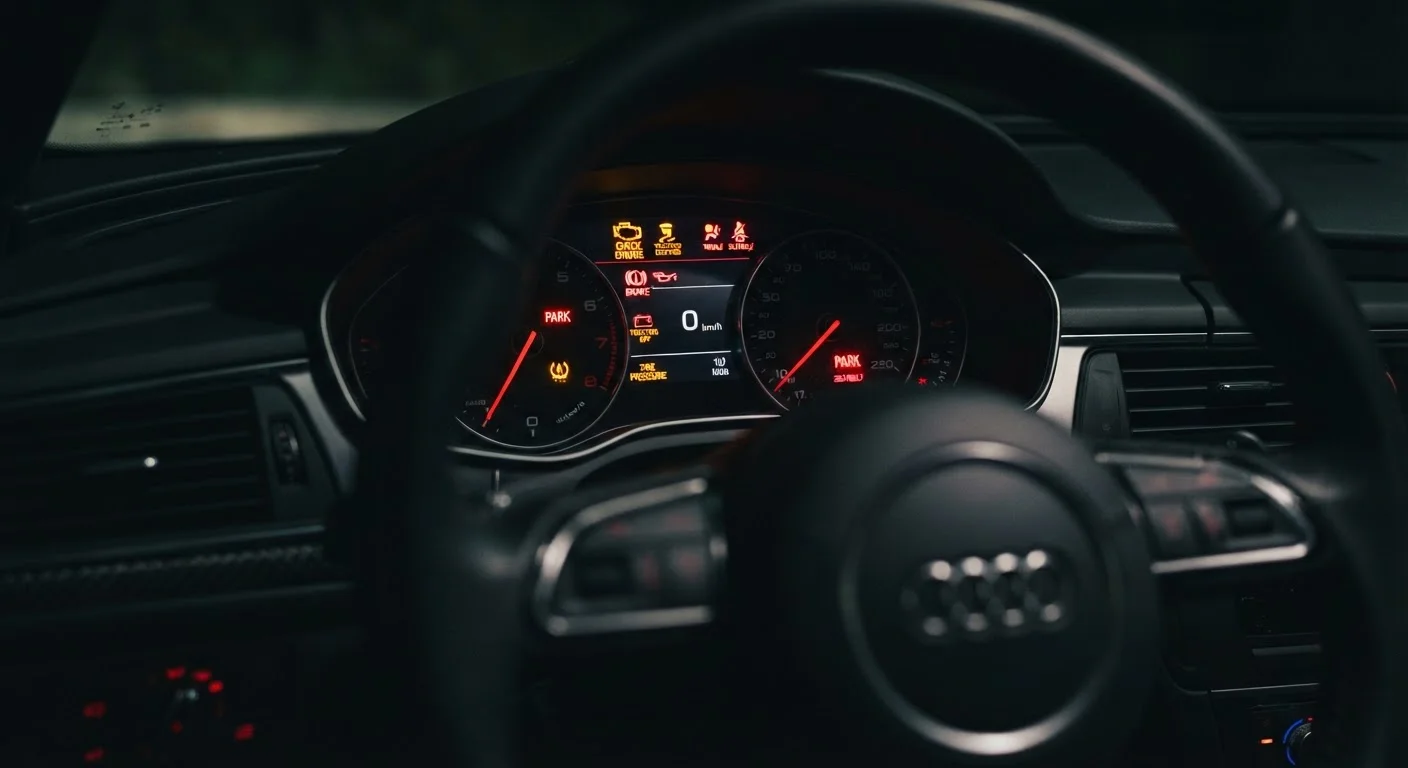
Why Warning Lights Exist - and Why You Should Never Ignore Them
Modern vehicles are equipped with an onboard diagnostic system (OBD-II) that monitors dozens of sensors across your engine, transmission, brakes, and emissions system. When something falls outside normal operating parameters, the system triggers a dashboard warning light to alert you. Think of these lights as an early-warning network - catching small problems before they become expensive failures.
Not every light signals a crisis. Some indicate routine maintenance needs. Others demand you pull over immediately. Learning to distinguish between the two is one of the most practical skills any driver can have. Your owner's manual is the definitive reference for your specific vehicle - see our guide on reading your owner's manual maintenance section to get familiar with that resource.
OBD-II
Onboard Diagnostics II - a standardized system required on most vehicles sold in the U.S. since 1996 that monitors engine, transmission, and emissions systems and stores fault codes when problems are detected.
Fault Code (DTC)
A Diagnostic Trouble Code generated by the OBD-II system when a sensor reading falls outside acceptable limits. Codes follow a standardized format (e.g., P0300) that identifies the system and type of fault.
TPMS
Tire Pressure Monitoring System - sensors inside each wheel that alert the driver when tire pressure drops significantly below the recommended level.
Catalytic Converter
An exhaust system component that converts harmful combustion byproducts into less harmful emissions. It can be damaged by engine misfires, which is why a flashing check engine light requires prompt attention.
Charging System
The combination of the alternator, battery, and connecting wiring that generates and stores electrical power while the engine is running. A failure can leave a vehicle without electrical power mid-drive.
The Color Code: Red, Amber, and Green
Dashboard lights follow a near-universal color logic that mirrors traffic signals:
- Red lights indicate serious or potentially dangerous conditions requiring immediate attention. Stop driving as soon as it is safe to do so and assess the situation.
- Amber or yellow lights signal a fault or maintenance need that should be addressed soon - typically within a few days to a couple of weeks - but does not necessarily require stopping immediately.
- Green or blue lights are informational, confirming that a system (like high beams or turn signals) is active. No action is needed.
Some vehicles also use white or orange variants, but the red-versus-amber distinction is the most consequential for driver response.
| Warning light colors | Red (urgent), Amber/Yellow (service soon), Green/Blue (informational) |
| OBD-II required since | 1996 (U.S. vehicles) (U.S. Environmental Protection Agency) |
| Check engine light - flashing vs. steady | Flashing = urgent; Steady = schedule service |
| Oil pressure loss risk | Engine damage can occur within minutes of oil pressure failure |
| TPMS threshold | Activates when a tire is 25% or more below recommended pressure (National Highway Traffic Safety Administration) |
| Free OBD-II scans | Available at many auto parts retailers at no charge |
High-Priority Lights: Stop or Pull Over Now
These red-lit warnings signal conditions that can cause immediate vehicle damage or create a safety hazard:
- Oil Pressure Warning (oil can icon): Low or lost oil pressure can destroy an engine within minutes. Pull over safely, shut off the engine, and check the oil level only after the engine has cooled. Do not continue driving until the cause is identified by a qualified mechanic.
- Engine Temperature Warning (thermometer in water icon): Your engine is overheating. Pull over, turn off the engine, and allow it to cool before opening the hood. Driving while overheating can warp cylinder heads - a repair that can cost thousands of dollars.
- Battery / Charging System Warning (battery icon): The charging system isn't maintaining battery voltage. You may have limited driving time before the vehicle loses electrical power. Reduce electrical load and head to a shop promptly.
- Brake System Warning: If this light appears with the parking brake released, it can indicate low brake fluid or a fault in the hydraulic system. Test brake pedal feel immediately - if the pedal is soft or sinks to the floor, do not drive the vehicle.
If you're unsure what a brake symptom means, understanding brake noises and sensations can help you interpret what your car is telling you.
Amber Lights: Schedule a Service Soon
These warnings don't require an immediate stop, but shouldn't be ignored for weeks on end:
- Check Engine Light (engine outline icon): This is the most misunderstood light on the dashboard. It can represent anything from a loose gas cap to a misfiring cylinder. A steady light means schedule a diagnostic scan soon. A flashing check engine light, however, indicates an active misfire that can damage the catalytic converter - treat a flashing light as urgent.
- Tire Pressure Monitoring System (TPMS): One or more tires is significantly under- or over-inflated. Check pressures with a gauge when safe - don't rely on visual inspection alone.
- Traction Control / Stability Control: If this light stays on (rather than flashing during a slippery moment), a sensor or system fault has been detected.
- Transmission Temperature Warning: The transmission fluid is running hot. Ease off towing or aggressive driving and have the system inspected.
Before heading to a shop, review our pre-shop preparation checklist so you arrive informed and ready to describe symptoms clearly.
Getting a Diagnosis and Deciding Next Steps
Any warning light that isn't clearly resolved (for example, TPMS after inflating tires) should be scanned with an OBD-II diagnostic tool to retrieve the stored fault code. Many auto parts retailers offer this scan at no charge, though interpreting the code accurately often requires mechanical knowledge. A fault code narrows down the system involved - it rarely pinpoints the exact failed part.
Once you have a code and a symptom description, you can make an informed decision about whether this is a job for a qualified mechanic or something straightforward. Our guide on DIY maintenance versus professional service walks through how to make that call safely.
Keep in mind that clearing a warning light without fixing the underlying problem only hides the fault - the light will return, and the damage may compound. Treat warning lights as information, not inconveniences, and your vehicle will reward you with a longer, more reliable service life.
This article provides general educational information about vehicle warning systems. Always consult a qualified mechanic for diagnosis and repair of any warning light condition. Refer to your vehicle's owner's manual for model-specific guidance.
The content on this site is provided for informational purposes only and should not be considered a substitute for professional advice. While we strive to provide accurate and up-to-date information, we make no guarantees regarding its completeness or accuracy. Always consult a qualified professional for advice specific to your circumstances before making any decisions.