

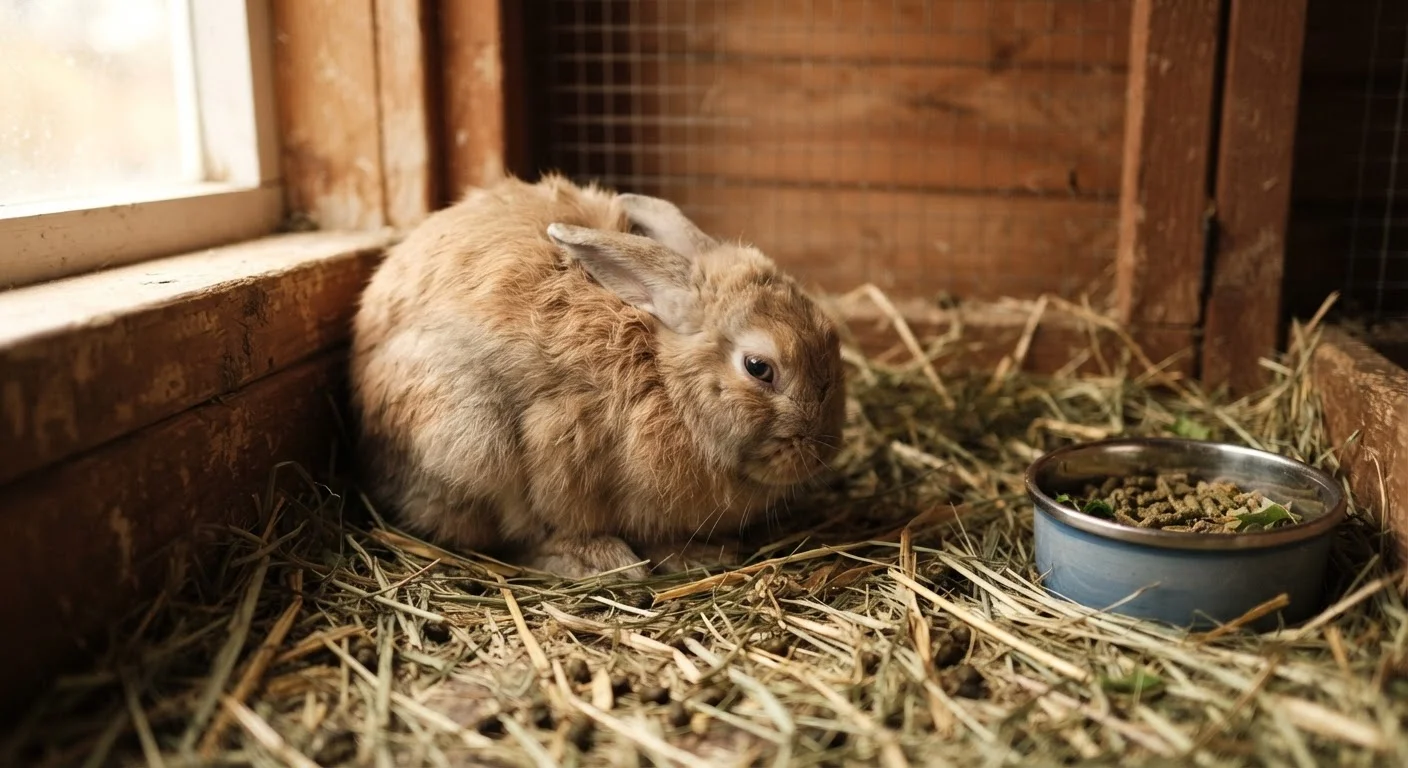
Why a Rabbit's Gut Is Different - and Why That Matters
Rabbits are hindgut fermenters, meaning most of their digestion happens in the cecum - a large pouch near the end of the intestine - where billions of bacteria break down fibrous plant material. This system works beautifully, but only when food keeps moving through it continuously.
Unlike dogs or cats, a rabbit's digestive tract has virtually no ability to restart itself once it stops. The beneficial bacteria that live in the gut begin to die off, gas accumulates, and the rabbit quickly enters a state of discomfort and danger. This is why appetite loss in a rabbit is never a "wait and see" situation the way it might be in some other animals.
If you're new to rabbit ownership, our guide on what life with a rabbit actually looks like covers the baseline care commitments that help prevent these health crises.
Track Droppings Daily - It Takes Seconds
Making a quick habit of checking your rabbit's litter box each morning gives you an invaluable health baseline. Healthy rabbits produce dozens of round, firm droppings daily. A sudden decrease in number, a change in size or shape, or no droppings at all is often the earliest detectable sign of GI trouble - well before a rabbit visibly appears unwell.
Common Reasons Rabbits Stop Eating
Understanding the most likely causes helps you act quickly and give your vet useful information.
- GI stasis: The most serious cause, in which gut motility slows or halts. It can be triggered by insufficient hay, dehydration, pain, or stress - and it compounds rapidly.
- Dental disease: Rabbits' teeth grow continuously throughout their lives. Overgrown incisors or sharp molar spurs cause significant pain when chewing. A rabbit may approach its bowl with interest, then back away - a key behavioral clue.
- Stress and environmental change: A new home, a change in routine, loud construction, or even the smell of a predator animal can shut down a rabbit's appetite. Stress-related anorexia still carries the risk of GI stasis if it persists.
- Pain from an underlying condition: Urinary tract infections, bladder sludge, musculoskeletal pain, or internal infections can all suppress appetite. The rabbit may look uncomfortable, grind its teeth softly, or adopt a hunched posture.
- Sudden diet change: Switching foods abruptly disrupts gut bacteria. Our article on feeding mistakes that quietly harm small pets explains why gradual transitions matter.
~80%
Portion of a rabbit's diet that should be hay
House Rabbit Society guidelines consistently recommend grass hay as the dietary cornerstone, with insufficient hay being a leading preventable cause of GI stasis.
12 hours
Maximum safe window without eating or droppings
Rabbit-care veterinarians broadly agree that any rabbit that has not eaten or produced droppings for 12 hours needs same-day veterinary evaluation.
1 in 3
Rabbit vet visits involving digestive issues
GI-related conditions, including stasis and blockages, are among the most frequently cited reasons for urgent rabbit veterinary consultations according to exotic animal practice data.
Warning Signs That Mean Call the Vet Now
Knowing your rabbit's normal baseline makes warning signs much easier to catch. Reading your rabbit's body language can help you tune into the subtle shifts that precede a health crisis.
Seek same-day veterinary care if your rabbit shows any of the following:
- No eating for 12 or more hours - including refusing hay, which should never happen in a healthy rabbit.
- No droppings, or droppings that are tiny, misshapen, or strung together with fur - signs of slowing gut motility.
- A bloated, hard, or painful-feeling abdomen - gas pressure can be extreme and is an emergency.
- Loud or continuous teeth grinding (as opposed to the soft, contented grinding called purring) - indicates pain.
- Lethargy, hiding, or reluctance to move - particularly alarming in a rabbit that is usually active.
- Drooling, dropping food, or difficulty chewing - classic dental disease signs.
For comparison, appetite loss in other small pets follows a different but similarly urgent pattern - our piece on when a cat stops eating illustrates how species-specific the risks can be.
What You Can Do While Waiting for Veterinary Care
Getting your rabbit to a vet should be the priority. While you arrange that appointment, a few supportive measures may help - but none replace professional treatment.
- Keep hay available at all times. Even a few bites of long-strand grass hay can support gut motility.
- Ensure fresh water is accessible - dehydration worsens gut slowdown significantly.
- Encourage gentle movement - short, supervised exercise can help stimulate the gut, as long as your rabbit is not in acute pain.
- Keep the environment calm and warm. Stress and cold both slow digestion further.
Do not give your rabbit over-the-counter pain relievers intended for humans or other animals. Do not attempt to syringe-feed without veterinary guidance, as forcing food into a rabbit with a blockage can cause serious harm.
This article is for general informational purposes only and is not a substitute for professional veterinary advice. If you are concerned about your rabbit's health, consult a qualified veterinarian promptly.
Frequently Asked Questions
A rabbit should not go more than 12 hours without eating or producing droppings. Their digestive system relies on near-constant food movement to function, and a prolonged pause can rapidly escalate into GI stasis. If your rabbit hasn't eaten by the 12-hour mark, contact a rabbit-savvy vet promptly.
Yes. Loud noises, new environments, the presence of predator-smelling animals, or changes in household routine can cause rabbits to refuse food temporarily. However, if the stress-related anorexia continues beyond a few hours, it still carries the risk of triggering GI stasis and warrants a call to your vet.
Watch for fewer or smaller droppings, a hunched posture, teeth grinding, a bloated or hard abdomen, and reluctance to move. A rabbit that was active and sociable suddenly becoming still and withdrawn is a red flag. These signs together strongly suggest GI stasis and require same-day veterinary care.
Gentle belly massage and encouraging movement can provide minor support, but they are not a substitute for veterinary treatment. Do not give human medications or attempt to force-feed without veterinary guidance. Given how fast rabbits can deteriorate, a vet consultation should always come first.
Absolutely. Overgrown teeth, sharp spurs on molars, and abscesses are common in rabbits and cause significant pain when chewing. A rabbit with dental disease may drop food from its mouth, drool, or lose weight despite seeming interested in eating. A vet examination that includes checking the back teeth is essential.
A healthy rabbit may temporarily snub a new food while still eating hay and drinking water - that is normal pickiness. True illness typically involves refusing hay (their dietary staple), producing fewer droppings, and showing behavioral changes like lethargy or hiding. When in doubt, err on the side of calling your vet.
The content on this site is provided for informational purposes only and should not be considered a substitute for professional advice. While we strive to provide accurate and up-to-date information, we make no guarantees regarding its completeness or accuracy. Always consult a qualified professional for advice specific to your circumstances before making any decisions.