

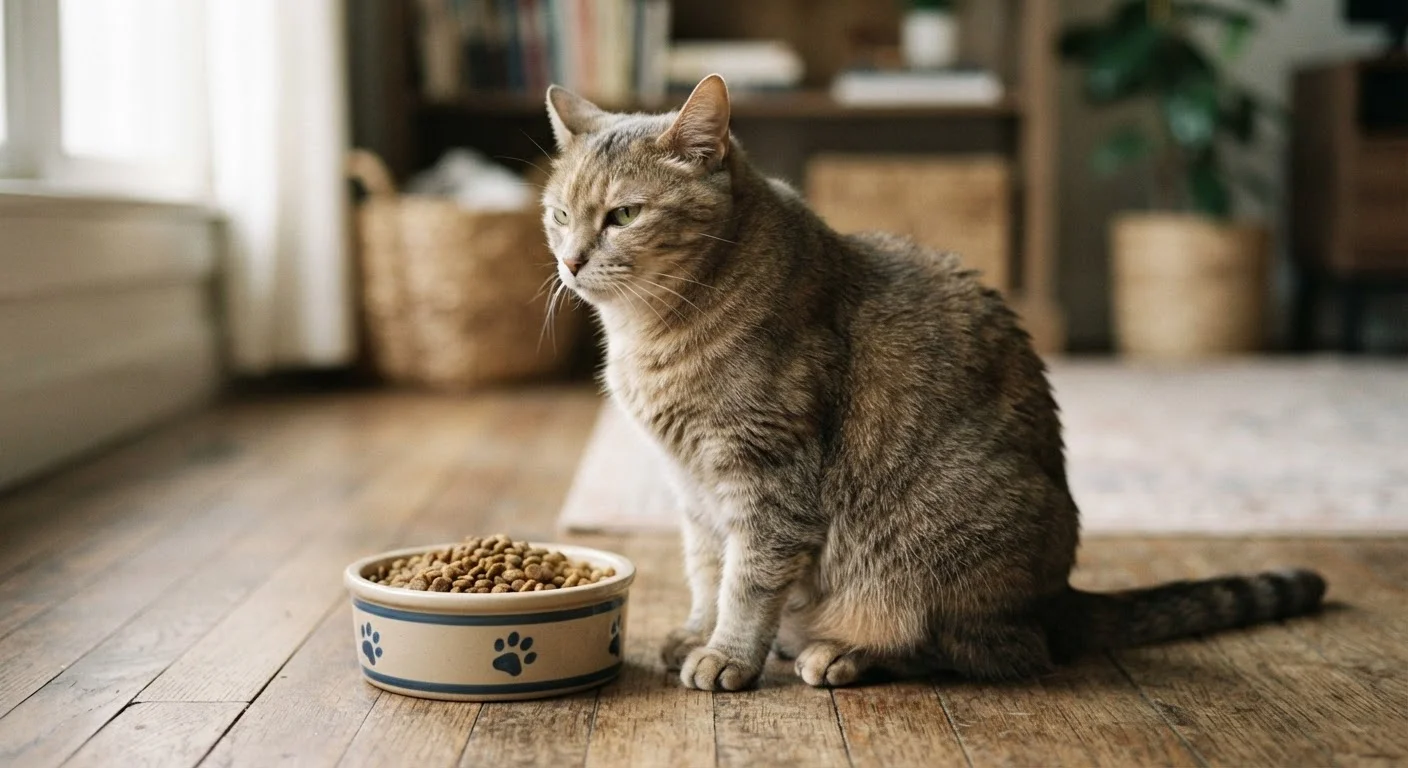
Why a Cat Refusing Food Is Never a Small Matter
Unlike dogs, cats have a metabolic quirk that makes skipping meals genuinely dangerous. When a cat stops eating - even for a couple of days - the body begins mobilizing fat reserves for energy. In cats, this process can overwhelm the liver, leading to hepatic lipidosis (fatty liver disease), a potentially life-threatening condition. This is why appetite loss in cats deserves faster attention than it might in other pets.
Appetite loss itself is a symptom, not a diagnosis. It can stem from something relatively minor - a new food texture, a recent home move, or mild nausea - or from something serious, such as kidney disease, dental pain, or an intestinal blockage. The challenge for owners is distinguishing between brief pickiness and a genuine health red flag. Paying attention to how long the cat has been off food and what else has changed is the starting point for that assessment. Check whether litter box habits have shifted too - our guide on litter box signals you shouldn't ignore explains what those changes can indicate.
Common Mistakes Cat Owners Make When Their Cat Stops Eating
The instinct to help is strong, but several common responses can delay proper care or create new problems. Recognizing these mistakes - and understanding why they happen - can make a real difference in your cat's recovery.
Waiting too long before seeking veterinary care, assuming the cat is simply being picky.
Why it happens: Cats have a reputation for fussiness, so owners often interpret food refusal as a preference issue rather than a potential health signal.
Switching to multiple new foods rapidly in an attempt to tempt the cat into eating.
Why it happens: Offering variety feels like a caring response, and owners hope a different flavor or texture will spark interest.
Force-feeding or syringe-feeding a cat without veterinary instruction.
Why it happens: Owners understandably want to get nutrition into a cat that won't eat, and syringe feeding seems like an actionable solution.
Overlooking environmental or emotional triggers as a possible cause.
Why it happens: Stress-related appetite loss is less visible than physical illness, so owners may not connect a cat's food refusal to a recent move, new pet, or change in household routine.
Ignoring accompanying symptoms that could indicate urgency.
Why it happens: When focused on the food bowl, owners sometimes don't connect lethargy, hiding behavior, or vomiting as part of the same picture.
When to Call the Vet - and What to Tell Them
A general rule supported by veterinary guidance: if your cat has eaten nothing for 24 hours, contact your vet. If your cat is very young, elderly, or has a known health condition, don't wait that long. For senior cats in particular, appetite changes can be an early sign of age-related illness - senior cat care after age 10 covers how nutritional needs and health monitoring shift as cats age.
48-72 hrs
Time before hepatic lipidosis risk rises significantly
Veterinary internal medicine sources indicate that cats who go without food for 48-72 hours face meaningfully elevated risk of developing hepatic lipidosis, particularly in overweight individuals.
~30%
Proportion of ill cats presenting with appetite loss
Appetite loss (anorexia) is among the most common presenting complaints in feline veterinary medicine, reflecting how nonspecific - and how broadly significant - this symptom can be.
When you call, be ready to share: how long your cat hasn't eaten, any recent changes (food, household, medications), whether vomiting, diarrhea, or unusual thirst is present, and the cat's current weight if you know it. This information helps your vet triage urgency and prepare for the visit. A consistent feeding routine also gives you a reliable baseline - if you know exactly when and how much your cat normally eats, deviations become much easier to spot early.
Hepatic Lipidosis Can Develop Fast
Fatty liver disease is one of the most serious short-term risks when a cat stops eating, especially in overweight cats. Unlike many conditions, it can develop within just a few days of complete food refusal. If your cat has not eaten anything for 48 hours, this is a veterinary emergency - do not delay seeking care while hoping the appetite returns on its own.
The content on this site is provided for informational purposes only and should not be considered a substitute for professional advice. While we strive to provide accurate and up-to-date information, we make no guarantees regarding its completeness or accuracy. Always consult a qualified professional for advice specific to your circumstances before making any decisions.