

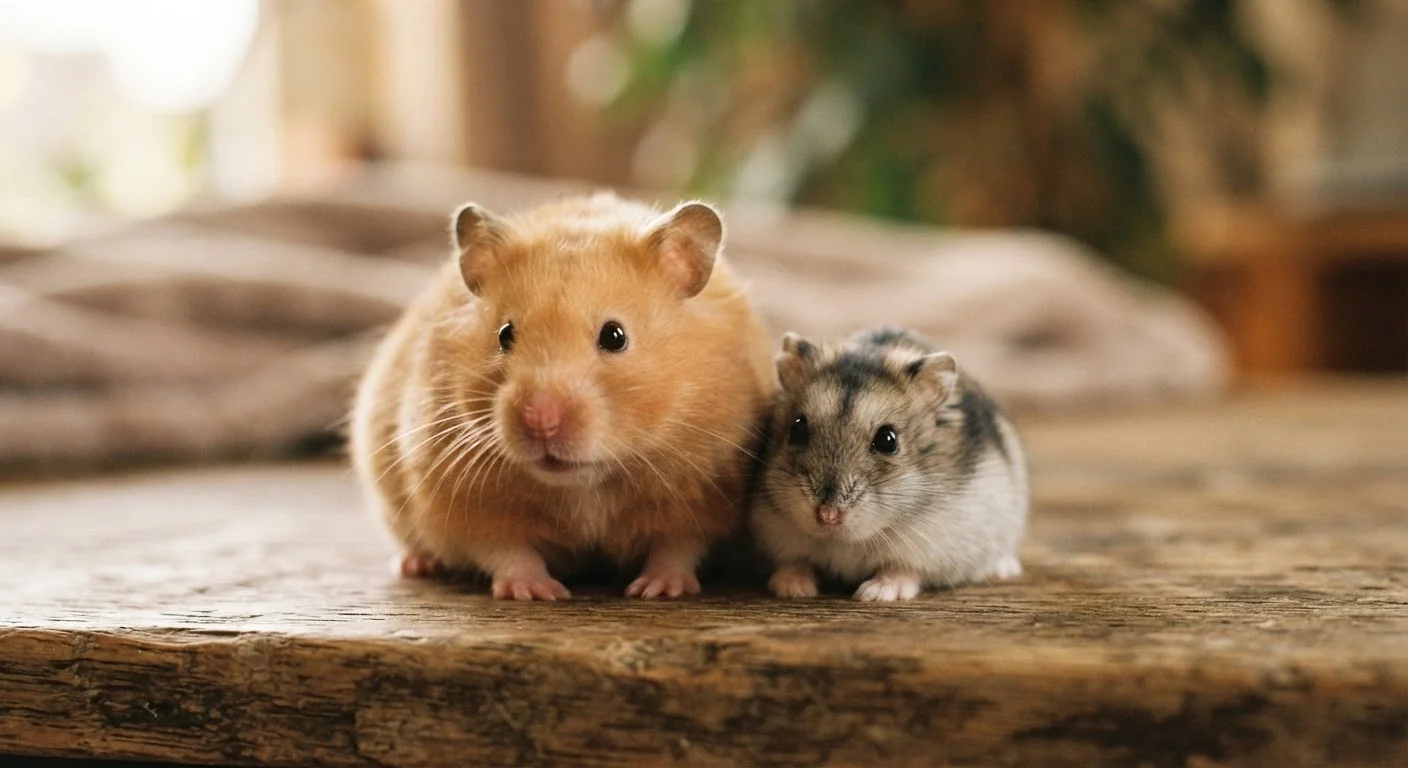
Option A
Syrian Hamster
The larger, solo-living classic companion.
Best for: Owners who want a single, handleable pet that is easier to bond with through daily interaction.
Option B
Dwarf Hamster
The compact, potentially social small-pet option.
Best for: Owners comfortable with faster-moving pets who may enjoy watching hamster pairs coexist.
Size, Appearance, and What to Expect
Syrian hamsters - sometimes called golden hamsters - typically grow to 5-7 inches in length and weigh between 4 and 8 ounces at adulthood. They come in a wide variety of coat colors and patterns. Dwarf hamsters, which include the Winter White, Campbell's, Roborovski, and Chinese species, generally reach only 2-4 inches and weigh 1-2 ounces. That size difference is significant in practice: a dwarf hamster can slip through fingers or gaps that a Syrian cannot.
Because of their small stature, dwarf hamsters are noticeably faster and more agile. Handling sessions can feel unpredictable, especially for new owners. Syrians move more deliberately, which makes it easier to read their body language and respond before a bite or escape occurs. If you or your household members are new to small animals, that extra mass and slower pace matters more than most people expect.
Social Needs and Housing Rules
This is the most critical difference between the two types. Syrian hamsters are strictly solitary. In the wild, adults actively defend large territories and will attack any hamster that enters their space. Keeping two Syrians together - even briefly - can result in severe wounds. Each Syrian must have its own enclosure, no exceptions.
Certain dwarf species have more flexible social structures. Roborovski and Winter White dwarfs can sometimes be housed in same-sex pairs or small groups, particularly when raised together from a young age. However, this is not guaranteed: even well-bonded dwarfs can begin fighting, and owners should always have a second enclosure on hand as a precaution. Campbell's dwarfs are especially prone to cage aggression as they mature.
| Criterion | Syrian Hamster | Dwarf Hamster |
|---|---|---|
| Adult size | 5-7 inches, 4-8 oz | 2-4 inches, 1-2 oz |
| Can be housed with others | No - strictly solitary | Sometimes, species-dependent |
| Ease of handling | Generally easier to tame | More variable; often faster |
| Diabetes risk | Low | Higher (Campbell's especially) |
| Minimum wheel size | 10-11 inches | 6-8 inches |
| Typical lifespan | 2-3 years | 2-3 years |
| Best for beginners | Yes | With research and patience |
If you're also considering other small companions, our guide to keeping pet gerbils explores another species where social housing is actually recommended rather than optional.
Handling, Temperament, and Bonding
Syrian hamsters have a well-established reputation as the more handleable of the two types. With consistent, patient daily interaction - ideally starting when the hamster is young - most Syrians will readily climb onto a hand and tolerate being held for short sessions. Their relatively large size makes it easier to detect subtle stress signals like freezing or flattened ears before they escalate to biting.
Dwarf hamsters can be tamed, but the process often takes longer and results vary more by individual. Roborovski dwarfs, in particular, are widely considered more of a "watch and enjoy" pet than a handling-focused companion - they're extremely fast and rarely settle long enough for extended contact. Campbell's and Winter Whites fall somewhere in between, with patient handling sometimes producing calm, curious individuals.
Regardless of species, always handle hamsters in the evening when they are naturally more alert, keep sessions short at first, and never wake a sleeping hamster - a startled hamster bites reflexively.
Enclosure, Diet, and Daily Care
Both Syrian and dwarf hamsters share many basic care requirements. A solid-bottom enclosure with deep substrate for burrowing, a species-appropriate wheel (at least 10-11 inches in diameter for Syrians, 6-8 inches for dwarfs), hiding spots, and foraging enrichment are non-negotiables for either type. A minimum enclosure floor area of 450 square inches is a widely cited welfare guideline for hamsters of all sizes, though more space is always better.
Diet is broadly similar: a quality hamster mix supplemented with small amounts of fresh vegetables and occasional protein sources such as mealworms or plain cooked egg. Dwarf hamsters - particularly Campbell's - have a documented genetic predisposition to diabetes, so sugary treats and fruit should be offered only rarely or avoided entirely for that species. Syrian hamsters are less prone to this issue but still benefit from a low-sugar diet.
Lifespan for both types averages two to three years, though individual variation exists. Health monitoring, a clean enclosure, and prompt veterinary attention at the first sign of illness - wet tail, weight loss, changes in activity - apply equally to both.
The content on this site is provided for informational purposes only and should not be considered a substitute for professional advice. While we strive to provide accurate and up-to-date information, we make no guarantees regarding its completeness or accuracy. Always consult a qualified professional for advice specific to your circumstances before making any decisions.