

Summary
28 items · 1.5-3 hours
Why Puppy-Proofing Matters Before Day One
A new puppy experiences the world almost entirely through smell, touch, and taste. That means anything at floor level - and plenty of things above it - is fair game for chewing, swallowing, or knocking over. Veterinary emergency clinics routinely treat puppies for ingesting household toxins, swallowing foreign objects, and suffering electrical burns from chewed cords. Most of these incidents happen in the first few weeks, when the dog is curious, unsupervised, and in an unfamiliar space.
Puppy-proofing isn't about creating a sterile environment - it's about removing the most predictable dangers before your dog has a chance to find them. Think of it like childproofing, but for an animal that moves faster, fits into smaller spaces, and has no concept of "off limits" without training. Before you check out our complete starting point for new dog owners, work through this room-by-room checklist to make your home genuinely safe for arrival day.
Don't Rely on Supervision Alone
Even attentive owners lose visual contact with a puppy for a few seconds - long enough for a dangerous item to be swallowed. Physical barriers and secured storage are the primary defense; supervision is a backup layer, not a substitute. Plan your environment as though you will be briefly distracted, because you will be.
Tools and Supplies to Have Ready
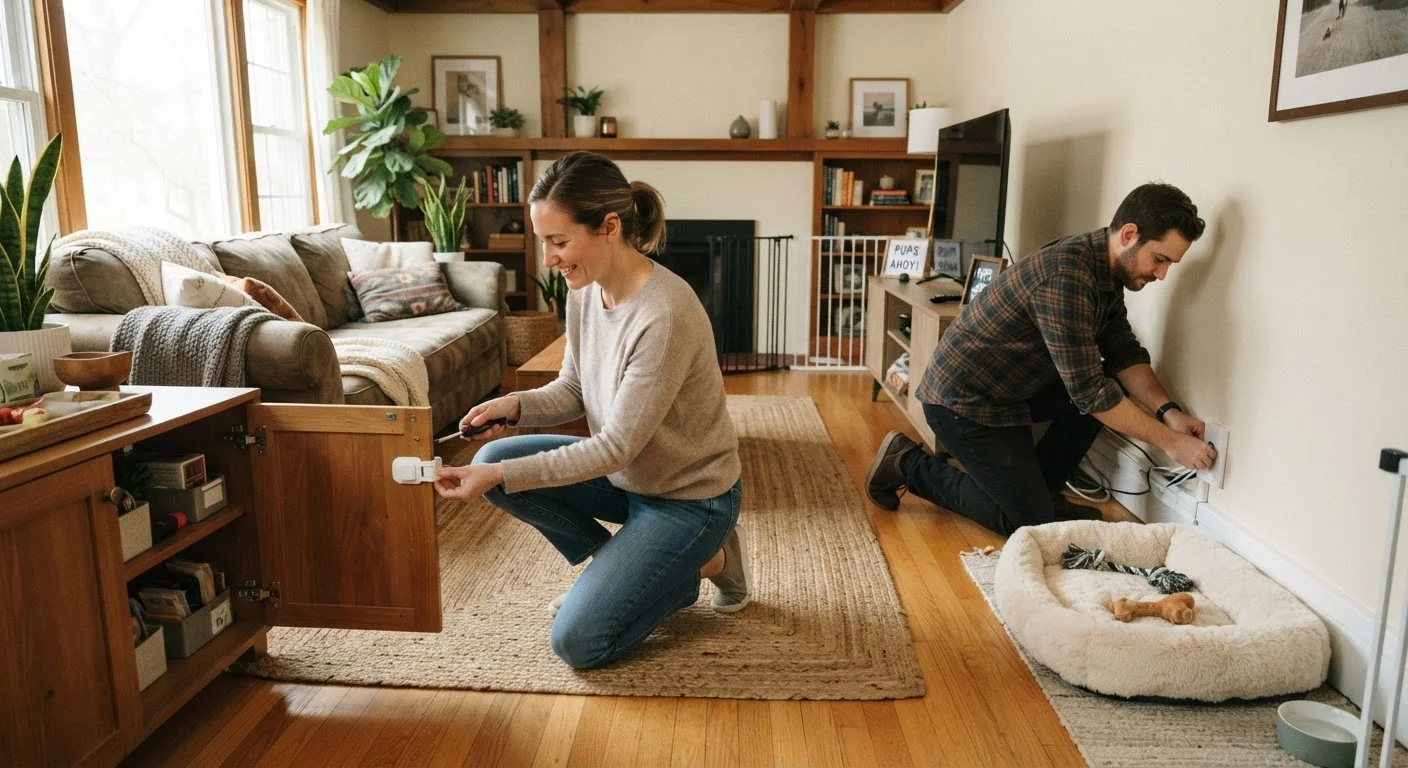
Before you start walking through your home, gather the items below. Having these on hand lets you fix hazards in the same pass rather than making multiple trips.
Cabinet and drawer safety latches
Prevent puppies from nosing open lower cabinets storing toxic cleaning products or food.
Baby gates or exercise pen
Restrict puppy access to unsupervised rooms or create a safe starting zone.
Cord management sleeves or split loom tubing
Protect electrical cords from chewing, which can cause burns or electrocution.
Locking trash can
Stop a puppy from raiding garbage for toxic foods, sharp objects, or packaging materials.
Non-toxic plant reference list
Cross-check every houseplant and yard plant against a vet-reviewed toxicity database before the puppy arrives.
Bitter-taste deterrent spray
Applied to baseboards, furniture legs, and remaining exposed cords to discourage chewing.
Outlet covers
Seal unused electrical outlets at floor level as an added precaution.
Room-by-Room Safety Checklist
Work through each room systematically. Get down to puppy eye level - literally crouch or kneel - to spot hazards you'd normally overlook from standing height. Pay special attention to the kitchen, bathroom, and any utility spaces, which tend to concentrate the most dangerous items.
Kitchen
Bathroom
Living Areas and Bedrooms
Garage, Laundry, and Utility Spaces
Outdoor and Yard Areas
Once you've completed the physical sweep, designate one small, fully secured area - a pen, a gated room, or a crate introduced positively - as your puppy's starting home base. This gives them a manageable, safe zone while you gradually introduce the rest of the house under supervision.
If you're also welcoming other species, the room-setup logic applies broadly - our small pet preparation checklist walks through habitat and hazard planning for smaller animals.
Save These Numbers Before Arrival Day
Before your puppy comes home, save the contact details for your veterinarian and the ASPCA Animal Poison Control Center (a fee-based hotline available around the clock in the US) in your phone. In a poisoning emergency, every minute matters and you won't want to be searching for numbers. Confirm your nearest emergency veterinary clinic as well - standard vet offices are often closed evenings and weekends.
After the Checklist: Ongoing Safety Habits
Puppy-proofing is not a one-time event. As your dog grows, they'll reach higher surfaces, develop stronger jaws, and explore rooms that were previously off-limits. Revisit this checklist after the first month and again at six months. Reinforce good habits - always close cabinet doors, never leave food unattended at counter height, and keep trash cans secured even once the puppy phase feels behind you.
Understanding how much space and freedom your dog ultimately needs is also part of long-term safety planning. Our article on indoor vs. outdoor dog lifestyles can help you think through how your home setup should evolve as your puppy matures. The goal isn't permanent restriction - it's building toward earned, supervised freedom in a home you've already made as safe as possible.
This checklist is for general informational purposes only. If your puppy ingests a potentially toxic substance, contact your veterinarian or an animal poison control hotline immediately.
The content on this site is provided for informational purposes only and should not be considered a substitute for professional advice. While we strive to provide accurate and up-to-date information, we make no guarantees regarding its completeness or accuracy. Always consult a qualified professional for advice specific to your circumstances before making any decisions.