

Our Verdict
For most dogs, a primarily indoor life with structured daily outdoor exercise offers the safest and most socially fulfilling routine. Full-time outdoor living carries meaningful risks - from weather and parasites to loneliness - that require serious mitigation. The right balance depends on the individual dog's breed, health, temperament, and the owner's ability to meet their needs consistently.
| Best for | Recommended |
|---|---|
| Owners wanting the closest bond and easiest health monitoring | Indoor lifestyle |
| Working or herding breeds with high energy and space to roam safely | Mixed indoor/outdoor with secure outdoor access |
| Senior or health-compromised dogs needing climate stability | Indoor lifestyle |
| Dogs in rural settings with secure enclosures and daily owner interaction | Managed outdoor arrangement with indoor rest periods |
What These Lifestyles Actually Mean
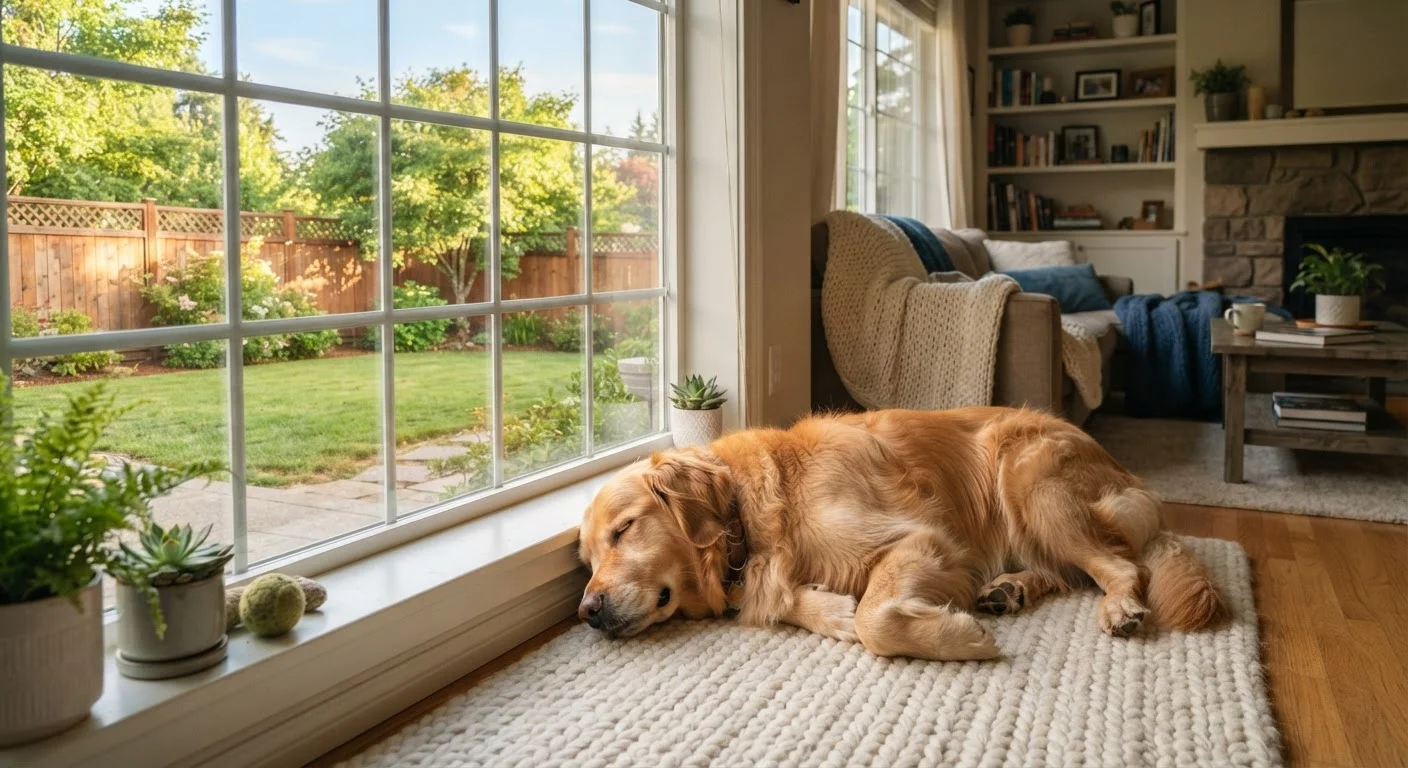
When people debate indoor versus outdoor dogs, they are rarely describing a black-and-white choice. An indoor dog lives primarily inside the home, sleeping indoors and spending the bulk of each day near family members. Time outside happens through structured walks, play sessions, or yard time - but the dog returns inside. An outdoor dog lives primarily outside, typically in a kennel run, fenced yard, or on a tether, with limited or no access to the home's interior.
A third reality - dogs who move freely between inside and outside throughout the day - is probably the most common arrangement for pet dogs in the U.S. Understanding what each approach demands helps owners set up routines that genuinely serve their dogs rather than simply reflecting habit or convenience.
If you're still building a care foundation, the New Dog Owner's Complete Starting Point covers the essentials worth establishing before settling on a daily routine.
The Case for Keeping Dogs Primarily Indoors
Dogs are domesticated social animals with evolutionary wiring tuned for life alongside humans. Indoor living lets owners catch subtle changes in behavior, appetite, or gait - early signals that something may be wrong medically. Temperature extremes are also a genuine health concern: dogs left outside in heat or freezing temperatures without adequate shelter can develop heatstroke or hypothermia relatively quickly, depending on breed and coat type.
Indoor dogs benefit from regular human interaction, which supports stable temperaments and reduces anxiety. Research in animal behavior consistently links social isolation with elevated stress in dogs, and a dog left alone outdoors for most of each day is, in effect, an isolated dog. That isolation can fuel repetitive behaviors, destructive habits, and excessive barking.
Make Outdoor Time Purposeful
Even for primarily indoor dogs, unstructured time in a safe, fenced yard every day provides sensory enrichment that indoor settings can't fully replicate. Sniffing different scents, feeling varied ground textures, and responding to environmental sounds all contribute to a mentally satisfied dog. Aim for at least two structured outdoor sessions daily, regardless of overall lifestyle setup.
The main challenge of indoor life is that the dog's exercise and enrichment needs must be actively provided. A dog confined indoors without sufficient walks, training sessions, or play will often find its own outlets - usually ones the owner won't appreciate. For guidance on managing time alone, see how long dogs can comfortably manage alone.
The Realities of an Outdoor Lifestyle
Some breeds - particularly working livestock dogs or large, high-energy breeds - have historically lived outdoors in appropriate climates. For those dogs, outdoor access to meaningful space can align with their physical needs. However, even these breeds require shelter, fresh water, parasite prevention, and - critically - regular human contact.
Outdoor-only arrangements carry risks that owners should weigh honestly:
- Weather exposure: Heat, cold, humidity, and storms affect dogs that cannot self-regulate their environment.
- Parasite load: Ticks, fleas, mosquitoes (which transmit heartworm), and intestinal parasites are more consistently encountered outdoors.
- Predators and toxins: Depending on the region, coyotes, venomous snakes, toxic plants, and neighborhood hazards are real concerns.
- Security: Tethered or even fenced dogs can escape or be stolen.
- Loneliness: Without daily engagement, outdoor dogs often develop problem behaviors linked to under-stimulation.
Dogs with joint issues or age-related conditions are particularly poor candidates for outdoor-only living. The care shifts that happen after age seven are worth reviewing if you have an aging dog in an outdoor arrangement.
| Indoor Lifestyle | Outdoor Lifestyle | |
|---|---|---|
| Social connection | High - constant proximity to family | Lower - depends on owner visit frequency |
| Weather risk | Minimal - climate controlled | Significant - heat, cold, storms |
| Parasite exposure | Reduced but not eliminated | Higher and more consistent |
| Exercise responsibility | Must be actively scheduled daily | Space available but structure still needed |
| Health monitoring ease | Easier - changes noticed quickly | Harder - subtle signs can be missed |
| Behavior problem risk | Boredom if under-exercised | Isolation stress and anxiety more common |
| Suitable breeds | Most breeds, especially small and flat-faced | Some large, working, or high-energy breeds |
Breed, Temperament, and Individual Needs
No lifestyle suits every dog equally. Flat-faced (brachycephalic) breeds like bulldogs and pugs are genuinely heat-sensitive and do poorly outside for extended periods. Nordic breeds built for cold weather - such as Siberian Huskies - may be more comfortable with outdoor time in winter but still suffer in summer heat. Toy breeds lose body heat quickly and are more vulnerable to temperature swings at either extreme.
Beyond breed, individual temperament matters. A dog that has not been adequately socialized during the critical early months may become more fearful if left largely outside without positive human exposure. The approach to socialising a dog who missed the early window is especially relevant if outdoor isolation has already reinforced anxiety.
Health status is another variable. Dogs managing chronic conditions benefit from owner proximity - it's simply easier to monitor a dog you live with closely.
This article is for general informational purposes. For guidance tailored to your dog's specific health, breed, or behavioral needs, consult a licensed veterinarian or certified applied animal behaviorist.
The content on this site is provided for informational purposes only and should not be considered a substitute for professional advice. While we strive to provide accurate and up-to-date information, we make no guarantees regarding its completeness or accuracy. Always consult a qualified professional for advice specific to your circumstances before making any decisions.