

Summary
18 items · 20-40 minutes
Why Annual Exams Matter More Than You Might Think
Cats are famously good at masking discomfort - a survival instinct inherited from their wild ancestors. By the time a health problem becomes obvious to you at home, it may have been quietly developing for months. That's precisely why a routine annual wellness exam is one of the most valuable things you can do for your cat, even when she seems perfectly healthy.
During a standard wellness visit, your veterinarian performs a full nose-to-tail physical assessment, reviews vaccination status, discusses parasite prevention, and screens for common conditions like dental disease, obesity, kidney stress, and thyroid changes. Think of it as a baseline snapshot - each year's exam becomes a reference point for spotting gradual shifts that no single visit could reveal on its own.
If your cat is over 10, the stakes rise further. Older cats are more susceptible to hyperthyroidism, chronic kidney disease, and arthritis - conditions that progress quietly. See our guide to senior cat care for details on why twice-yearly exams are often recommended for cats in their second decade.
Before the Appointment
During the Exam
After the Visit
How to Prepare Before You Leave the House
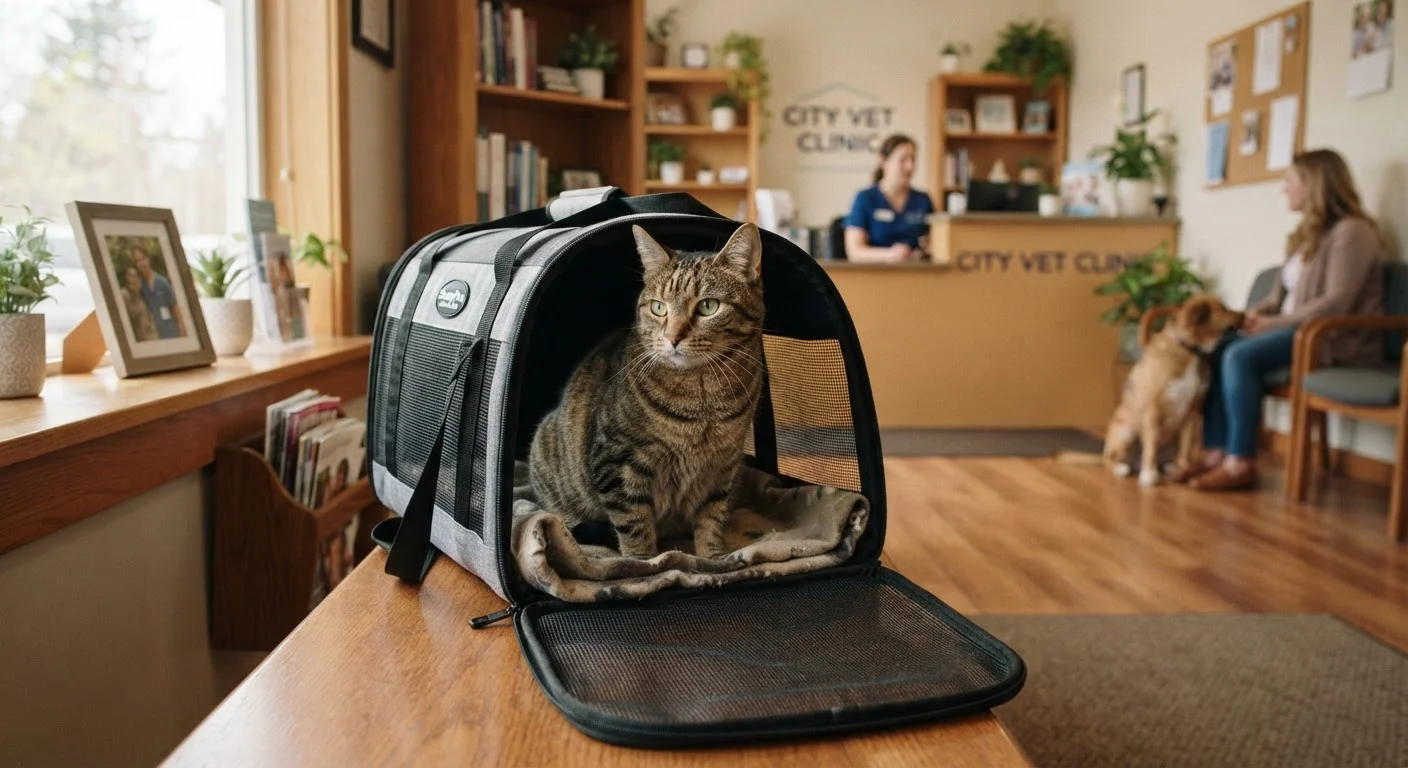
A little groundwork at home makes the exam smoother for everyone - especially your cat. The single biggest factor in a calm vet visit is how your cat feels about the carrier. If the carrier only appears on vet-visit day, most cats will bolt the moment they see it. Leave it out year-round with a soft blanket inside so it becomes familiar furniture rather than a threat.
On appointment day, spray the carrier's interior with a synthetic feline pheromone product (such as those mimicking the F3 facial pheromone) about 30 minutes before loading your cat. Avoid feeding a full meal two to three hours beforehand to reduce the chance of nausea during the drive - though check with your vet if your cat has a metabolic condition that requires timed feeding.
Come prepared with information your vet can't easily observe in a 30-minute exam window: changes in litter box habits, appetite shifts, new behaviors, or any supplements you're giving. A consistent feeding routine also gives your vet useful context about your cat's nutritional baseline.
Hard-sided or soft-sided pet carrier
Safely transports your cat to and from the clinic; hard-sided carriers often allow the top to be removed so a nervous cat can stay in the base during the exam.
Feline pheromone spray
Applied inside the carrier before travel to reduce anxiety signals in cats sensitive to environmental stress.
Written health notes or a symptom journal
Captures behavioral and physical changes you've observed at home so nothing is forgotten during the appointment.
Previous vaccination and medical records
Helps your vet confirm which vaccines are due and provides context for any ongoing health conditions.
A familiar blanket or worn T-shirt
Placed inside the carrier, familiar scents can help calm a cat during transport.
What Your Vet Will Actually Do During the Exam
Understanding what happens in the exam room helps you participate more confidently - and notice if something gets skipped that you wanted addressed.
A standard feline wellness exam typically covers the following in sequence:
- Weight and body condition score: Your vet or technician weighs your cat and assesses muscle mass and fat distribution, not just the number on the scale.
- Eyes, ears, and nose: Checked for discharge, cloudiness, polyps, or signs of infection.
- Teeth and gums: Dental disease affects a significant proportion of adult cats. Your vet will note tartar buildup, gum inflammation, or broken teeth.
- Lymph nodes, thyroid, and abdomen: Palpated for lumps, enlargement, or unusual texture - early kidney or thyroid changes may be detectable by touch.
- Coat and skin: Examined for parasites, overgrooming patterns, or dryness that may signal allergies or systemic illness.
- Heart and lungs: Auscultated with a stethoscope for murmurs, arrhythmias, or abnormal breathing sounds.
- Vaccination review: Your vet will confirm which core vaccines are due and discuss non-core options based on your cat's lifestyle (indoor-only vs. outdoor access).
Blood work or urinalysis may be recommended - particularly for cats over seven - to establish organ function baselines. These aren't always included in a standard exam fee, so ask in advance.
Don't Skip the Exam If Your Cat Seems Fine
Many serious feline conditions - including early kidney disease, hyperthyroidism, and dental infections - produce no visible symptoms until they're well advanced. A cat that appears healthy at home may already be managing a developing problem. Annual exams are specifically designed to catch these changes before they escalate, using tools and palpation techniques that aren't available at home.
Questions Worth Asking Before You Leave
The end of the appointment is your opportunity to fill gaps. Don't leave with unasked questions - write them down before you go. Good topics to raise include: whether your cat's weight trend is concerning, whether her current parasite prevention is appropriate for your region, whether her dental health warrants a professional cleaning, and what early warning signs you should watch for at home.
If you have a dog as well, it's worth understanding that feline and canine exams have meaningful differences. Our dog wellness exam guide explains what routine canine checkups involve, which can help multi-pet households know what to expect for each animal.
After the appointment, update your records at home - note the date, the vet's findings, any vaccines administered, and any follow-up tasks. That documentation will be valuable at next year's visit, especially if you see a different provider.
This article provides general information for educational purposes and is not a substitute for professional veterinary advice. Always consult a licensed veterinarian for guidance specific to your cat's health.
The content on this site is provided for informational purposes only and should not be considered a substitute for professional advice. While we strive to provide accurate and up-to-date information, we make no guarantees regarding its completeness or accuracy. Always consult a qualified professional for advice specific to your circumstances before making any decisions.