

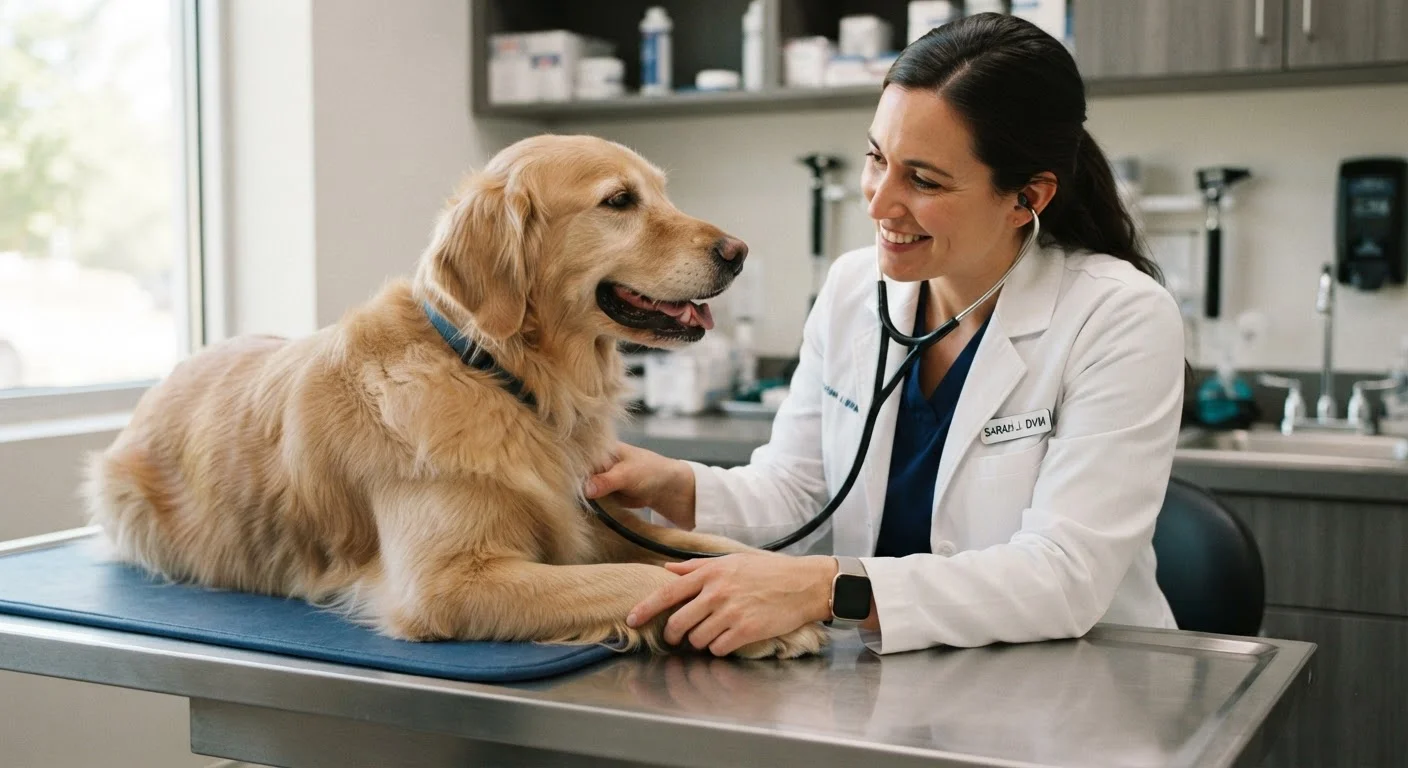
The Nose-to-Tail Physical Exam: What Your Vet Is Actually Doing
When the vet says they're doing a "physical," they mean a systematic evaluation of virtually every body system. Most owners are surprised by how much ground gets covered in a single visit.
- Eyes and ears: The vet looks for discharge, redness, cloudiness, or signs of infection. Ear infections are among the most common canine conditions and are often caught before they become painful.
- Mouth and teeth: Dental disease affects the majority of dogs over three years old. The vet checks for tartar buildup, gum inflammation, cracked teeth, and oral masses. Poor dental health has documented links to heart, kidney, and liver issues.
- Lymph nodes: Enlarged nodes can signal infection or, less commonly, cancer. Vets palpate nodes under the jaw, behind the knees, and in the groin area.
- Heart and lungs: Using a stethoscope, the vet listens for heart murmurs, irregular rhythms, and abnormal lung sounds. Early-detected murmurs can be monitored and managed before causing clinical symptoms.
- Abdomen: Gentle palpation helps the vet assess organ size, detect masses, and identify pain responses that might indicate gastrointestinal, urinary, or reproductive issues.
- Skin and coat: The vet examines for parasites, skin lesions, lumps, or coat changes that may reflect allergies, hormonal imbalances, or nutritional gaps.
- Musculoskeletal system: Gait, joint range of motion, and muscle mass are evaluated - particularly important for identifying early arthritis in middle-aged and older dogs.
- Weight and body condition: The vet assigns a body condition score (BCS), a standardized scale used to assess whether your dog is underweight, at an ideal weight, or overweight. Obesity is one of the most common preventable health problems in pet dogs.
Understanding your dog's body language can also help you flag subtle discomfort at home before your next exam.
Vaccines, Parasite Prevention, and Diagnostics
Beyond the physical, the wellness visit is when your vet reviews and updates preventive care protocols.
Vaccine Review
Your vet will check your dog's vaccination history and recommend boosters based on current guidelines from veterinary professional organizations. Core vaccines protect against rabies and the DHPP group. Lifestyle-based vaccines - Bordetella (kennel cough), Lyme disease, leptospirosis, and canine influenza - are discussed based on where you live and how often your dog encounters other dogs or wildlife.
Parasite Screening and Prevention
A fecal exam checks for intestinal parasites like roundworms, hookworms, whipworms, and Giardia. Many dogs harbor parasites without visible symptoms. The vet will also review your current heartworm prevention and flea and tick control methods, and may recommend a heartworm antigen test if due.
80%
Dogs with dental disease by age three
The American Veterinary Medical Association estimates that most dogs show signs of periodontal disease by their third birthday, often without obvious pain signals to owners.
1 in 200
Dogs test positive for heartworm annually
According to the American Heartworm Society, prevalence varies widely by region, with dogs in southern and Gulf Coast states facing significantly higher risk.
56%
Pet dogs classified as overweight or obese
The Association for Pet Obesity Prevention's surveys have consistently found that more than half of U.S. dogs carry excess body weight, making body condition scoring at wellness exams a critical tool.
Optional Diagnostics
Depending on your dog's age and history, the vet may recommend bloodwork, a urinalysis, or thyroid testing. These aren't always mandatory at every visit but become increasingly valuable as dogs age. See our guide to senior dog care to understand how screening needs evolve after age seven.
How to Make the Visit Count: Preparation and Follow-Through
The exam is only as useful as the information you and your vet exchange. A few preparation steps dramatically increase the value of each visit.
Before You Go
Note any changes in your dog's eating, drinking, energy level, bathroom habits, or behavior since the last visit. Even small shifts - drinking more water, sleeping longer, hesitating on stairs - can be clinically meaningful. Collect a fresh stool sample the morning of the appointment.
During the Appointment
Don't save questions for the end. Raise concerns as they come up during the exam, since the vet can often demonstrate what they're finding in real time. Ask what any recommended test would actually tell you and what happens if you skip it.
After the Visit
Request a written visit summary or ask how to access your records through the clinic's patient portal. If your vet recommends follow-up care - a dental cleaning, a recheck in three months, a referral - write it down and schedule it before leaving. Preventive care only works if recommendations are actually followed through.
If cost is a concern, it may be worth reviewing how pet insurance for dogs handles wellness visits and diagnostics before your next appointment. And if your household includes a cat, our companion article on your cat's annual vet visit walks through how feline exams differ.
This article is for general informational purposes only and is not a substitute for professional veterinary advice. Always consult a licensed veterinarian for guidance specific to your dog's health needs.
Frequently Asked Questions
Most routine wellness exams last 30 to 45 minutes. The time can extend if your vet identifies something that warrants closer attention, if diagnostic tests are run, or if you have several questions. Arriving a few minutes early to complete paperwork helps keep things on schedule.
Bring a fresh stool sample (collected within 24 hours), any medications or supplements your dog currently takes, and vaccination records if you're visiting a new clinic. A written list of behavioral changes, dietary shifts, or concerns you've noticed will help you make the most of your time with the vet.
Yes. Even dogs with minimal outdoor exposure can develop dental disease, internal parasites, obesity, organ dysfunction, and other conditions that a physical exam can detect. Vaccines also protect against diseases that don't require direct contact with other animals, such as leptospirosis, which spreads through contaminated water.
Not always automatically, but your vet may recommend baseline bloodwork, especially for dogs over five or six years old. A complete blood count (CBC) and chemistry panel can reveal organ function issues, anemia, and infection - often before symptoms appear. Ask your vet whether bloodwork is appropriate for your dog's age and history.
Core vaccines - rabies and the DHPP combination (distemper, hepatitis, parvovirus, parainfluenza) - are reviewed at every wellness visit. Non-core vaccines like Bordetella, leptospirosis, Lyme, and canine influenza are recommended based on your dog's lifestyle, geographic location, and risk factors.
A wellness exam is preventive and comprehensive - it looks at the whole dog even when nothing seems wrong. A sick visit is problem-focused, addressing a specific symptom or concern. Both are valuable, but they serve different purposes; a wellness exam should not be skipped simply because your dog appears healthy.
The content on this site is provided for informational purposes only and should not be considered a substitute for professional advice. While we strive to provide accurate and up-to-date information, we make no guarantees regarding its completeness or accuracy. Always consult a qualified professional for advice specific to your circumstances before making any decisions.