

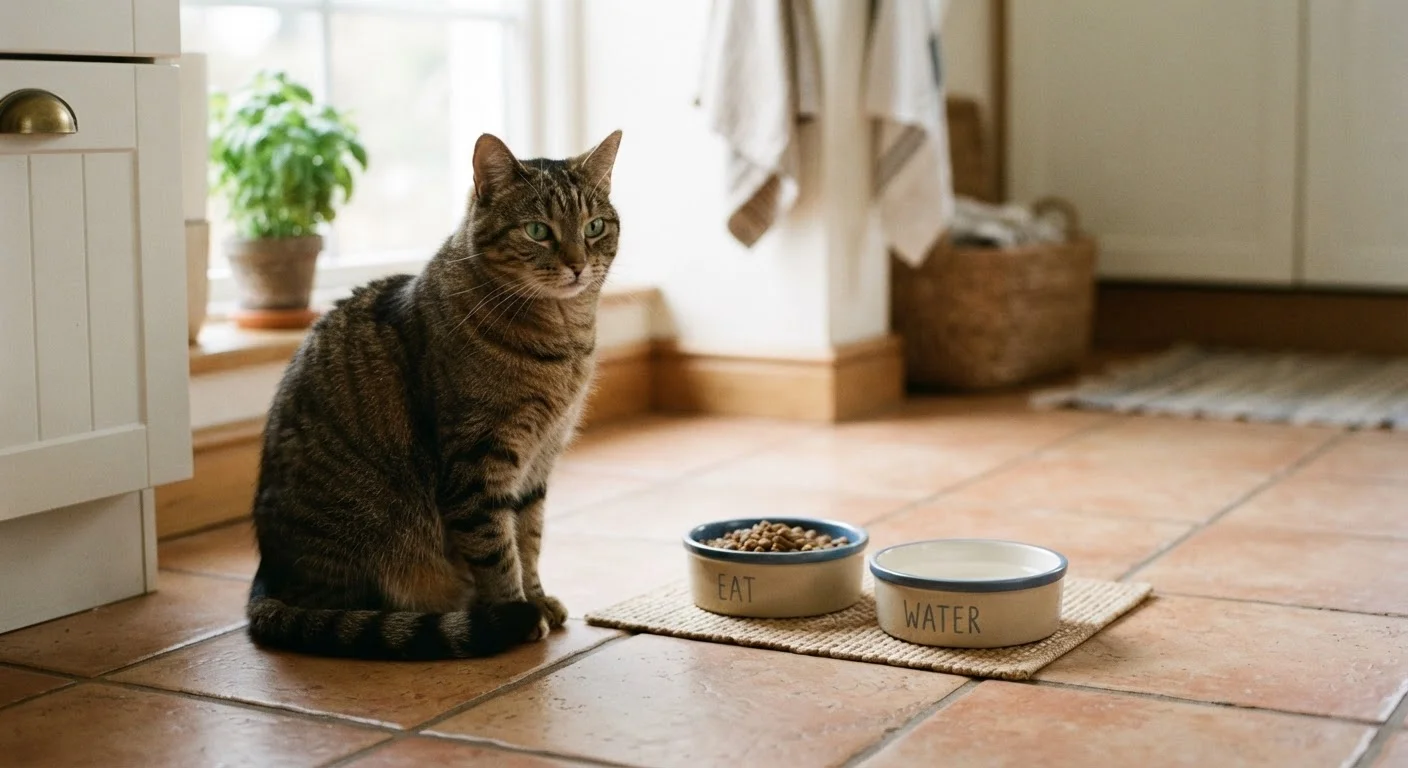
Why Routine Matters for Cats
Cats are creatures of habit in a very literal, biological sense. Their internal clocks - governed by circadian rhythms - regulate hunger, alertness, and digestion in predictable cycles. When mealtimes align with those rhythms, cats experience less stress, maintain a steadier metabolism, and are less likely to beg, yowl, or overeat.
A feeding routine also gives you a built-in health monitoring tool. When you serve meals at set times, you quickly notice if your cat is eating less, eating more slowly, or skipping a meal entirely. Those changes can be early signals worth discussing with a vet. For more on appetite changes, see when a cat stops eating.
Routine is especially valuable in multi-cat households, where it reduces competition and allows you to track each individual's intake more accurately.
Best Practices for Structuring Meals
Building a solid feeding routine doesn't require complicated equipment or rigid perfection - but it does require consistency and a few key principles.
Feed at the same times each day - ideally twice daily, roughly 12 hours apart.
Consistent timing reinforces your cat's natural hunger cycle, reduces anxiety around food, and makes portion control far easier to manage. Irregular schedules can lead to overeating when food finally appears.
Measure portions by weight or volume rather than estimating by eye.
Visual estimates are consistently inaccurate and tend to drift upward over time, contributing to gradual weight gain. Obesity is one of the most common and preventable health problems in domestic cats.
Adjust portion sizes as your cat ages, gains, or loses weight.
A kitten's caloric needs are roughly double those of an adult cat per pound of body weight. Senior cats may need fewer calories but higher protein. Using the same portion throughout a cat's life ignores significant metabolic shifts.
Avoid free-feeding dry food unless specifically directed by a veterinarian.
Leaving a full bowl of kibble available all day removes the structure that prevents overeating. Many cats will graze continuously, especially when bored, quickly exceeding their daily energy needs.
Introduce new foods gradually over seven to ten days.
Abrupt diet changes can cause digestive upset, including vomiting and diarrhea. A slow transition also helps finicky cats accept new textures or formulas without outright refusal.
If your cat's needs are shifting with age, it's worth reading our guide to senior cat nutritional changes. Older cats often require smaller, more frequent meals and different macronutrient balances than their younger counterparts.
Hydration: The Often-Overlooked Half of Nutrition
Water intake is closely tied to a cat's urinary and kidney health. Cats evolved as desert animals with a relatively low thirst drive, meaning many do not drink enough from a stationary bowl. Wet food significantly boosts daily moisture intake, which is one reason many veterinary nutritionists recommend incorporating it - or using it exclusively - for cats prone to urinary issues.
Offer fresh water in at least two locations. Some cats prefer running water and drink considerably more from a recirculating fountain. Keep bowls clean - bacteria accumulates quickly, and cats are sensitive to odors that humans may not detect.
Litter box habits are a useful downstream indicator of hydration. Concentrated, infrequent urination may suggest your cat isn't drinking enough. Our article on litter box signals outlines what to watch for and when to contact your vet.
Feeding routine also fits into a broader picture of daily care. A calm, enriched indoor environment - covered in our indoor enrichment guide - supports a cat who eats steadily and behaves predictably around mealtimes.
The content on this site is provided for informational purposes only and should not be considered a substitute for professional advice. While we strive to provide accurate and up-to-date information, we make no guarantees regarding its completeness or accuracy. Always consult a qualified professional for advice specific to your circumstances before making any decisions.