

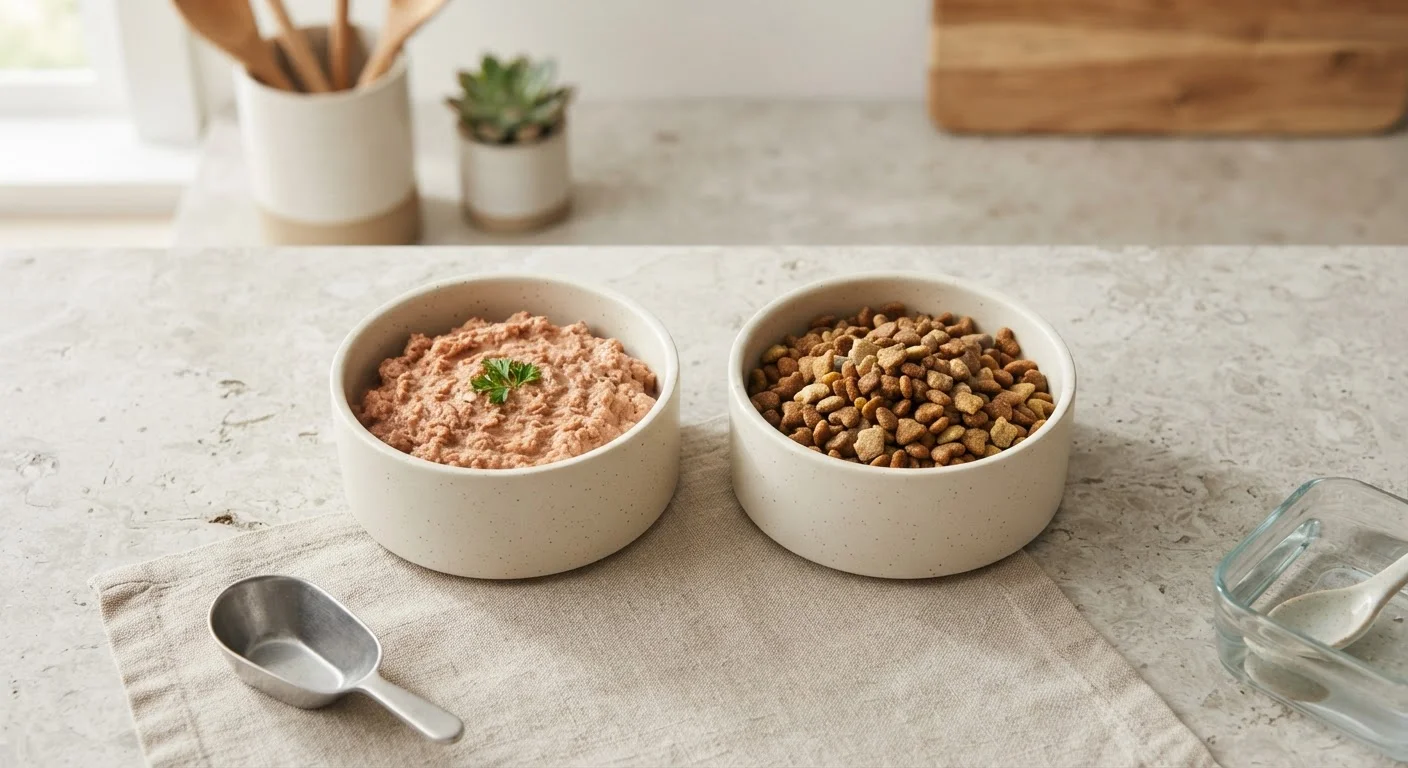
Option A
Wet Cat Food
The moisture-rich, protein-forward option.
Best for: Cats who need extra hydration, picky eaters, or those managing urinary and kidney health concerns.
Option B
Dry Cat Food (Kibble)
The convenient, shelf-stable everyday staple.
Best for: Owners seeking a cost-effective, easy-to-portion option for healthy cats with good water-drinking habits.
Why Cat Nutrition Is Different From Other Pets
Cats are obligate carnivores - meaning their bodies are biologically designed to derive energy and essential nutrients almost exclusively from animal tissue. Unlike omnivores such as dogs or humans, cats cannot synthesize certain amino acids (like taurine and arginine) on their own, and they have limited ability to process plant-based proteins efficiently.
This evolutionary reality shapes every feeding decision an owner makes. Both wet and dry commercial cat foods are formulated to meet feline requirements, but they do so with very different nutritional profiles and moisture levels. Understanding those differences helps you make informed choices - and ask better questions at your next vet visit.
If you're also navigating how activity level affects nutrition - for instance, whether your cat goes outdoors - see our guide on indoor vs. outdoor cats for context on how lifestyle influences dietary needs.
Wet Food vs. Dry Food: A Head-to-Head Comparison
The most important dimension separating wet and dry cat food isn't flavor or texture - it's moisture content. Wet food typically contains 70-80% water, while dry kibble contains only about 10%. Because cats evolved in arid environments and have a naturally low thirst drive, they often don't compensate for low-moisture diets by drinking more water - making the food itself a critical hydration source.
| Criterion | Wet Cat Food | Dry Cat Food (Kibble) |
|---|---|---|
| Moisture content | 70-80% | ~10% |
| Typical protein ratio | Higher (animal-based) | Moderate (varies by formula) |
| Carbohydrate content | Generally lower | Generally higher |
| Calorie density per gram | Lower | Higher |
| Shelf life (opened) | Refrigerate; use within 24-48 hrs | Weeks to months (sealed container) |
| Cost per serving | Typically higher | Typically lower |
| Dental benefit | Minimal | Slight (less than brushing) |
| Palatability for picky eaters | Often higher | Variable |
Beyond moisture, protein and fat ratios differ meaningfully. Quality wet foods often have higher proportions of named animal proteins relative to carbohydrates. Dry foods, by contrast, typically contain more carbohydrates to maintain their shelf-stable form - though this doesn't automatically make them harmful for otherwise healthy cats.
For a useful parallel in the dog nutrition space, our team has also explored raw diet vs. commercial kibble - a comparison that highlights how ingredient sourcing and processing affect nutritional value across species.
Reading Labels: What Actually Matters
When evaluating any cat food, start with the AAFCO nutritional adequacy statement. The Association of American Feed Control Officials sets minimum nutrient standards for pet food. Look for a statement indicating the food is formulated for your cat's life stage (kitten, adult, or senior), or that it has passed feeding trials.
After that, scan the ingredient list for a named animal protein - such as chicken, salmon, or turkey - in the first one or two positions. Ingredients are listed by pre-cooking weight, so some plant ingredients may appear higher than expected. What matters most is the guaranteed analysis panel showing minimum crude protein and fat, and maximum moisture and fiber.
The AAFCO Statement Explained
The AAFCO nutritional adequacy statement appears on every commercially sold pet food label in the United States. It tells you whether a food was formulated to meet established nutrient profiles or validated through actual feeding trials - the latter being a more rigorous standard. A food labeled 'for all life stages' meets the higher nutritional threshold set for kittens and gestating cats, making it suitable for adult cats as well. If a product lacks any AAFCO statement, it is not considered complete and balanced.
As cats age, their nutritional needs shift - senior cats often benefit from higher-quality protein and adjusted phosphorus levels. Our guide on senior cat care covers these changes in detail.
Feeding Frequency, Portions, and Practical Tips
Most adult cats do well with two measured meals per day, though some owners prefer structured grazing with dry food. Free-feeding wet food is generally not recommended because it spoils quickly at room temperature - typically within two hours, or less in warm conditions.
Portion guidance on packaging is a starting point, not a prescription. Actual needs vary by age, activity level, body condition, and any health conditions. If your cat has recently lost interest in food - regardless of type - that warrants attention. Our resource on when a cat stops eating walks through possible causes and when to seek veterinary care.
For owners ready to build a consistent routine, see our practical guide to building a feeding routine your cat can rely on - it covers meal timing, portioning, and water station placement.
This article is for general informational purposes only and does not constitute veterinary medical advice. Always consult a licensed veterinarian before making significant changes to your cat's diet, especially if your cat has an existing health condition.
The content on this site is provided for informational purposes only and should not be considered a substitute for professional advice. While we strive to provide accurate and up-to-date information, we make no guarantees regarding its completeness or accuracy. Always consult a qualified professional for advice specific to your circumstances before making any decisions.