

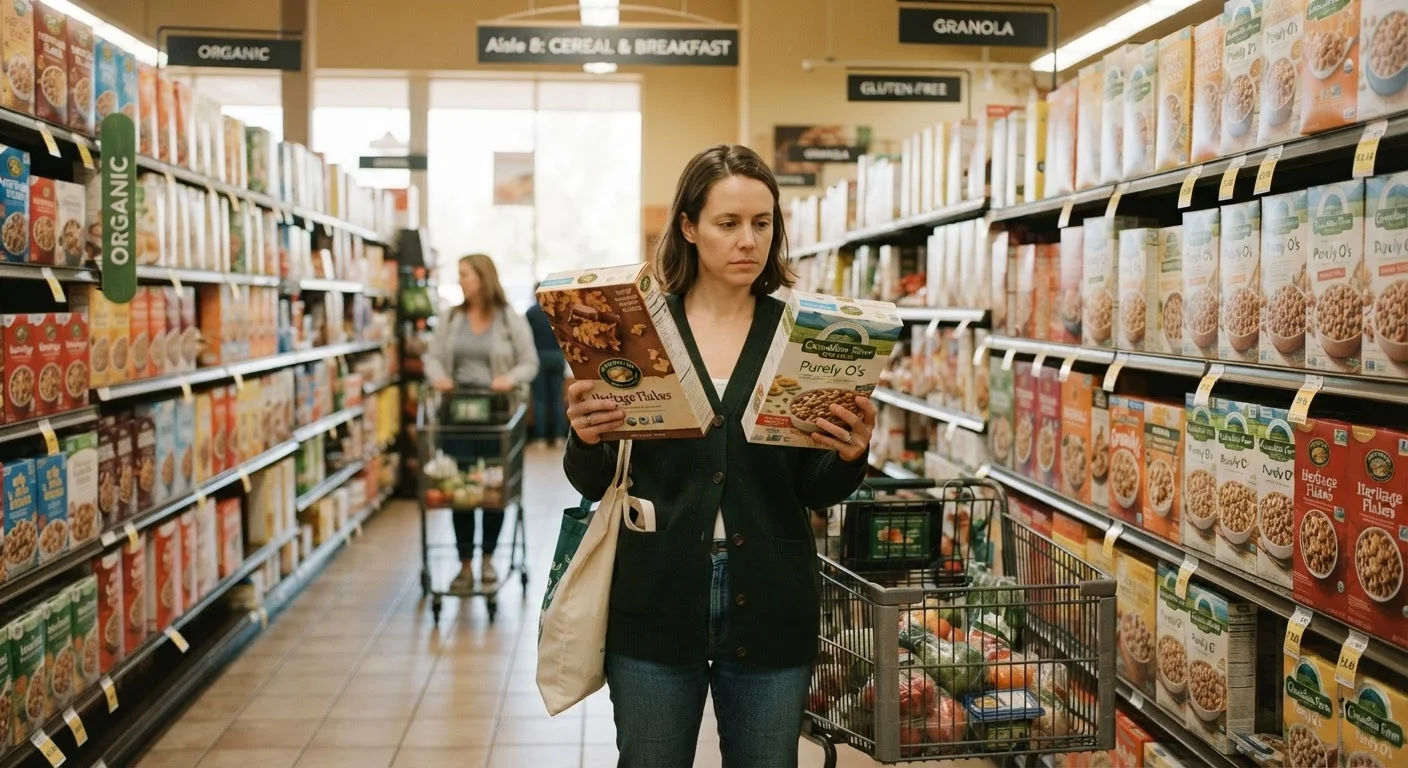
A Loyalty That Once Felt Permanent
For decades, brand loyalty was one of the most reliable forces in American retail. Families bought the same detergent, the same cereal, the same car brand their parents drove - not always because they compared alternatives, but because familiarity felt like a form of trust. That relationship between consumer and brand was both cultural and commercial.
That dynamic has shifted considerably. Consumer behavior research has documented a measurable decline in repeat brand purchasing across categories ranging from packaged food to automotive. The pattern holds across income levels, though the causes and pace vary. Understanding what's driving this shift can help consumers recognize their own decision-making more clearly - and shop with greater intention.
What's Breaking the Bond
Several forces converged to accelerate loyalty erosion, particularly after 2020.
Inflation and price sensitivity. When prices across categories rose sharply, shoppers who had always bought a particular brand found themselves weighing whether the premium was still justified. Many tried alternatives and discovered the quality gap was smaller than expected - or nonexistent. Market and price pressures have made cost a dominant filter in everyday purchase decisions in a way that habit alone can no longer override.
Digital information access. Online reviews, social media recommendations, and price comparison tools have reduced the information asymmetry that once protected established brands. A shopper uncertain about an unfamiliar product can find peer reviews in seconds, dramatically lowering the perceived risk of switching.
Improved private-label quality. Store brands and private-label products have undergone substantial quality improvements over the past decade. Retailers invested in their own supply chains, and many shoppers who switched during tight budgets found they didn't need to switch back. The quality gap between store brands and name brands is narrower than most consumers assumed.
~75%
Consumers who tried new brands during COVID-era disruptions
McKinsey consumer research from the early 2020s found roughly three-quarters of American consumers tried new shopping behaviors, brands, or retailers during supply chain disruptions.
36%
Private-label share of unit sales at major U.S. retailers
Store brands have captured a growing share of units sold in U.S. grocery and mass-market retail, according to industry trade data from the Private Label Manufacturers Association.
Generational change. Younger adult consumers were formed in an era of abundant choice, algorithmic recommendations, and influencer culture. They tend to make purchase decisions based on current social proof and stated brand values rather than inherited habits - a pattern that has reshaped baseline loyalty expectations across the market.
How Retailers and Brands Are Responding
The industry has not been passive. Loyalty programs have expanded aggressively, with retailers collecting behavioral data to offer personalized promotions. Subscription models attempt to convert one-time buyers into recurring customers by embedding convenience into the relationship.
These tools have real effects, but their limits are visible. Consumers routinely belong to loyalty programs from competing brands simultaneously, and research suggests that program membership correlates with continued purchasing but doesn't necessarily reflect emotional attachment to the brand. The loyalty is to the reward, not the label.
The broader retail transformation is also relevant here. As shopping increasingly spans both physical stores and digital channels, the points where brands can build relationships have multiplied - and so have the points where consumers can easily defect. The ongoing shift toward omnichannel retail has made every touchpoint a potential switching moment.
Some companies are responding by leaning harder into product quality and transparency rather than marketing spend - reasoning that in a high-information environment, genuine differentiation is more defensible than brand image alone.
What This Means for How You Shop
For everyday consumers, loyalty erosion is mostly a structural opportunity. More competitive markets tend to produce better pricing and product quality for shoppers willing to evaluate options rather than default to habit.
That said, flexibility requires some effort. Comparison shopping takes time, and not every category rewards switching. The trade-off between convenience and savings is real - spending mental energy on every purchase decision has its own costs.
The broader trend also intersects with a documented shift in how Americans prioritize purchases. Consumers buying fewer items but spending more per purchase suggests that when loyalty does form, it often attaches to quality - a meaningful shift from loyalty rooted purely in habit or brand recognition.
The death of reflexive brand loyalty doesn't mean the end of preference. It means that preference is increasingly earned through consistent value rather than inherited through familiarity.
A household that bought the same national-brand laundry detergent for 15 years switches to the retailer's store brand after a price increase - and continues buying it a year later.
A first-time car buyer researches vehicles almost entirely through YouTube reviews and online owner forums rather than defaulting to the brand their family always purchased.
A frequent coffee shop customer holds loyalty cards for three competing chains and chooses which to visit based on proximity and current app promotions.
After a social media post highlights quality concerns about a well-known skincare brand, thousands of followers try an alternative brand recommended in the comments.
Frequently Asked Questions
A combination of inflation, better store-brand alternatives, and easy access to online reviews has lowered the risk of trying something new. When familiar brands raise prices, shoppers have both the motivation and the information to explore other options.
Research consistently suggests that Millennials and Gen Z show lower brand loyalty than Baby Boomers. They tend to prioritize values alignment, social proof, and price over brand heritage or habit.
Loyalty programs can encourage repeat purchases, but their effectiveness has limits. Consumers now often belong to multiple competing programs and make choices based on current rewards rather than brand attachment.
In many product categories - including pantry staples, over-the-counter medications, and household supplies - store brands are manufactured to comparable standards. Quality varies by category, so it's worth evaluating products individually.
It generally creates more competitive markets, which can benefit consumers through lower prices and improved product quality across the board. Shoppers who stay flexible and comparison-shop often find equivalent or better value.
Analysts disagree on this. Some argue that structural shifts - digital transparency, cost consciousness, and generational change - are permanent. Others believe strong brands with genuine quality differentiation will retain loyal followings.
The content on this site is provided for informational purposes only and should not be considered a substitute for professional advice. While we strive to provide accurate and up-to-date information, we make no guarantees regarding its completeness or accuracy. Always consult a qualified professional for advice specific to your circumstances before making any decisions.